i30 Builders · Residential
Travertine Patios, Pool Decks and Pavers in DFW
French pattern and straight lay, patios, walkways, steps and pool decks, set on a base built to hold them.
Measured and built for your house · Written scope and locked price before any deposit · One-year workmanship warranty · Financing available
Free site visit · written scope · lump-sum price
Rated 5.0 on Google$1M GL + $1M Umbrella1-year workmanship warranty
Get a written estimate
Four fields. We call back within one business day to set up the site visit.
- GL + umbrella coverage
- $1M + $1M
- Workmanship warranty
- 1-yr
- Cities served
- 33
Who installs travertine patios and pool decks in Dallas-Fort Worth?
i30 Builders, a general contractor based in Royse City, TX, installs travertine patios, walkways, steps and pool decks in French pattern and straight lay for homeowners across Dallas-Fort Worth, centered on Rockwall, Collin, Hunt and Kaufman counties. The stone is set on a base built to hold it. Every job is measured and designed for the house, then priced in writing after a site walk, before any deposit, with permits handled.
- Pricing
- Written price after a site walk, before any deposit
- Permits
- Handled by us
- Warranty
- One-year workmanship warranty, in writing
- Where
- Dallas-Fort Worth, centered on Rockwall, Collin, Hunt and Kaufman counties
Updated
The Work
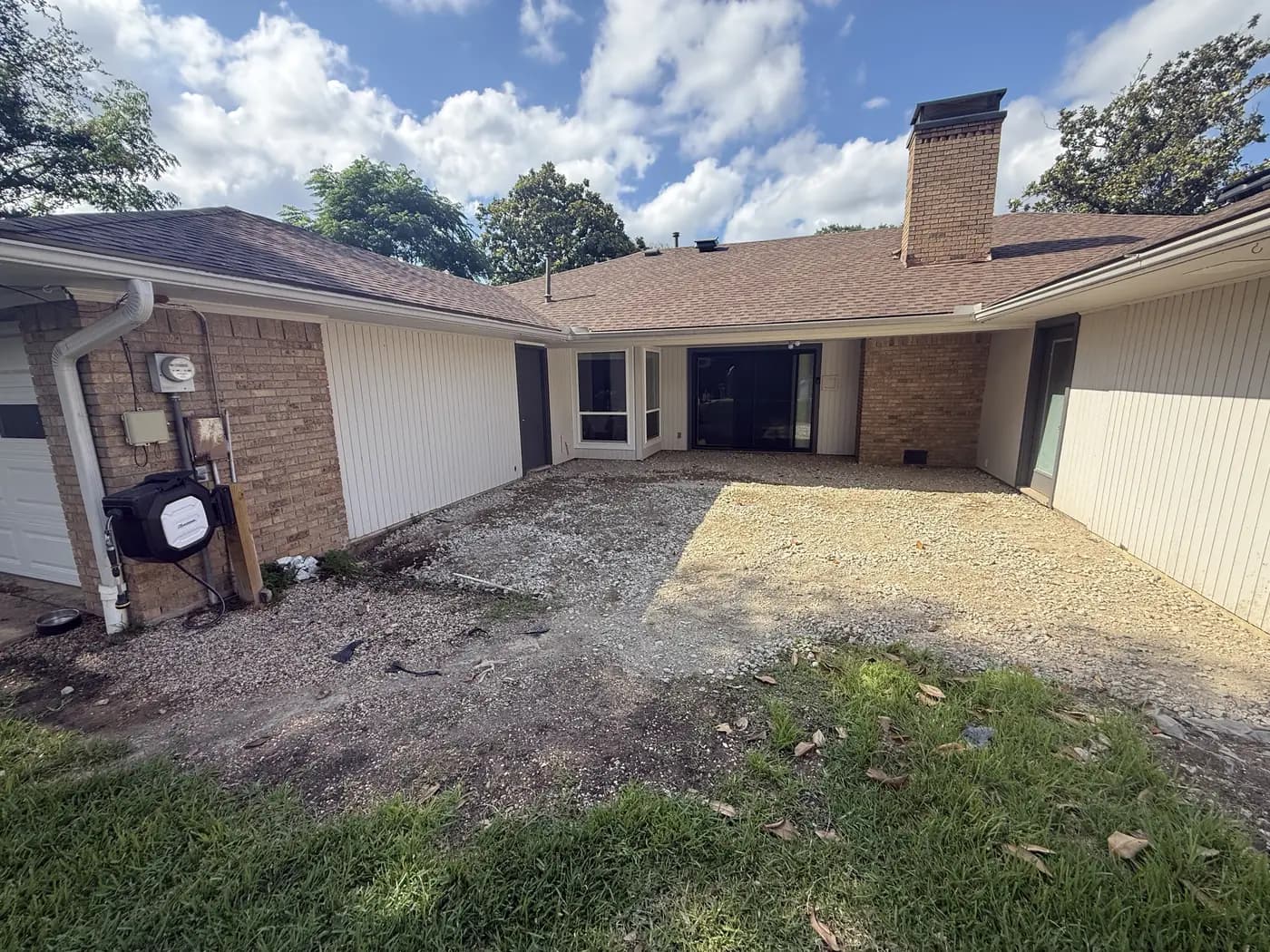
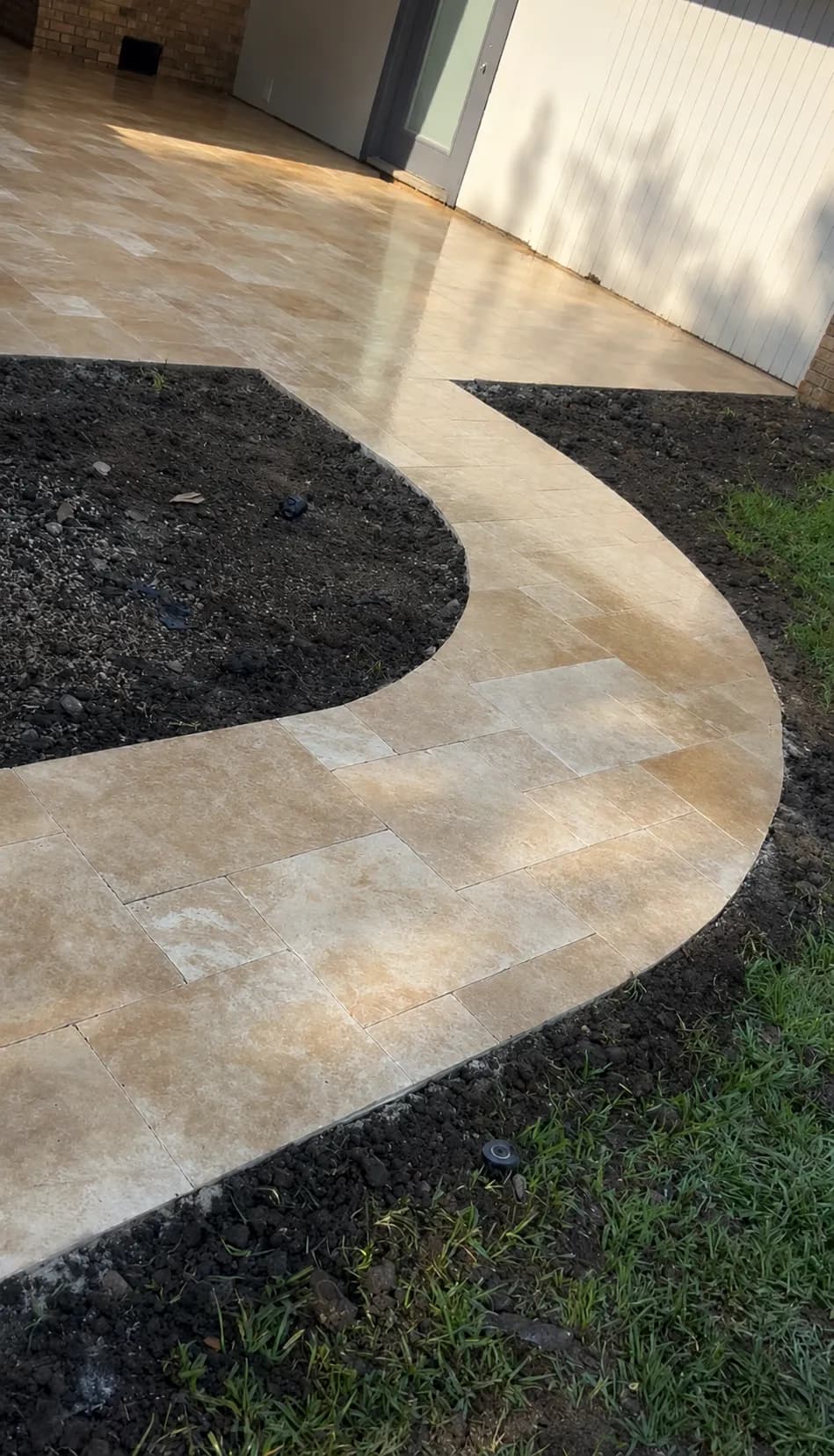
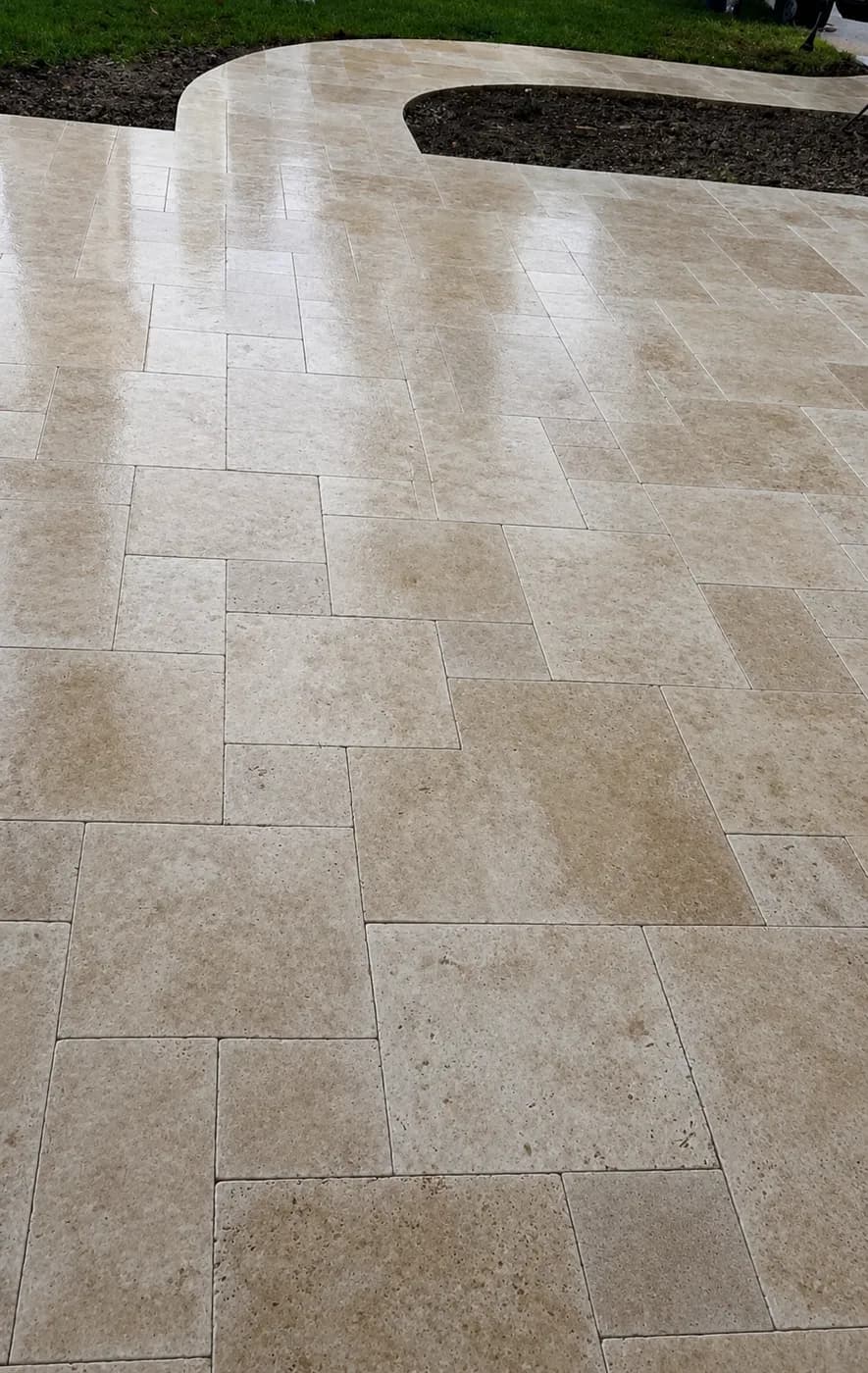
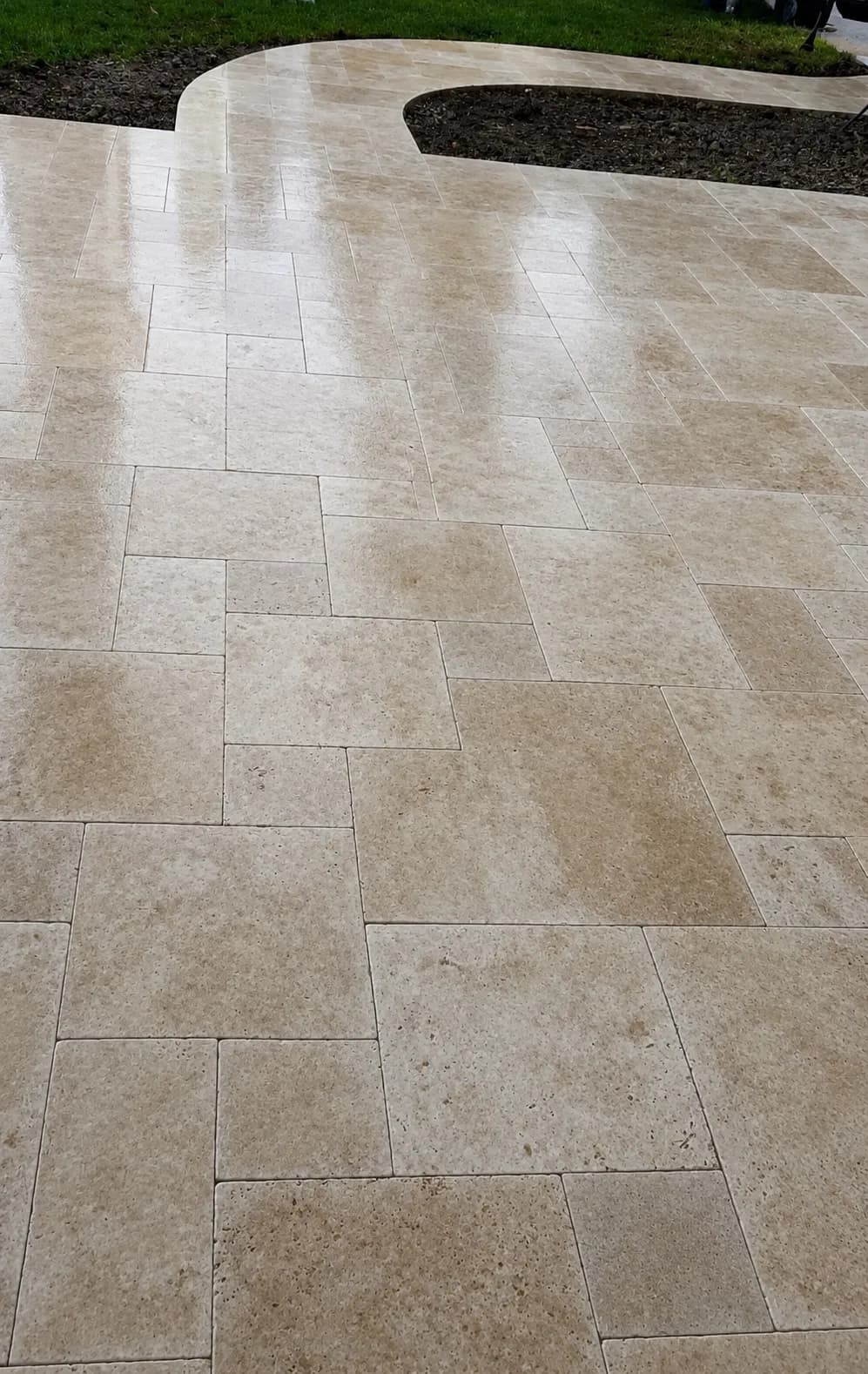
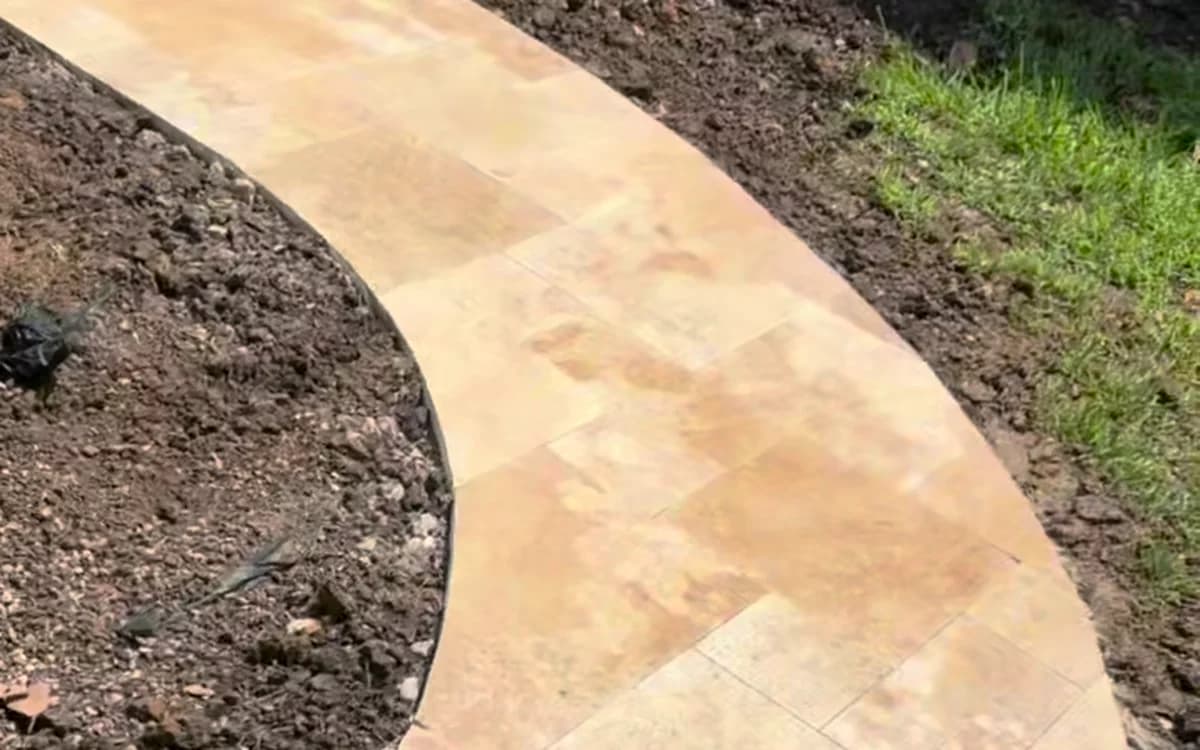
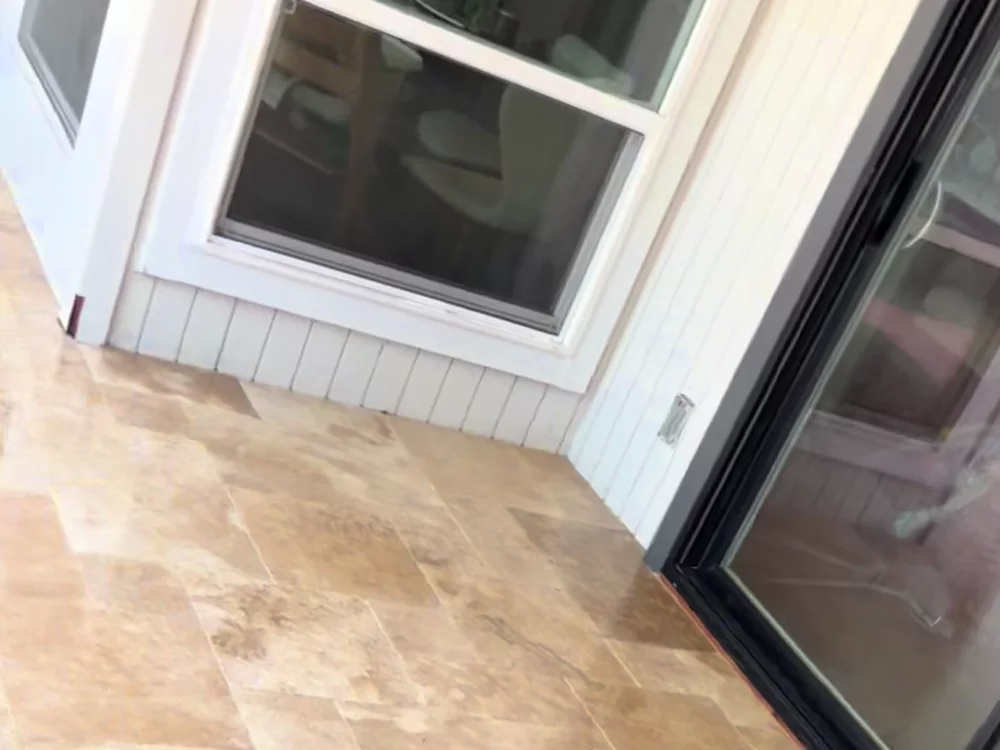
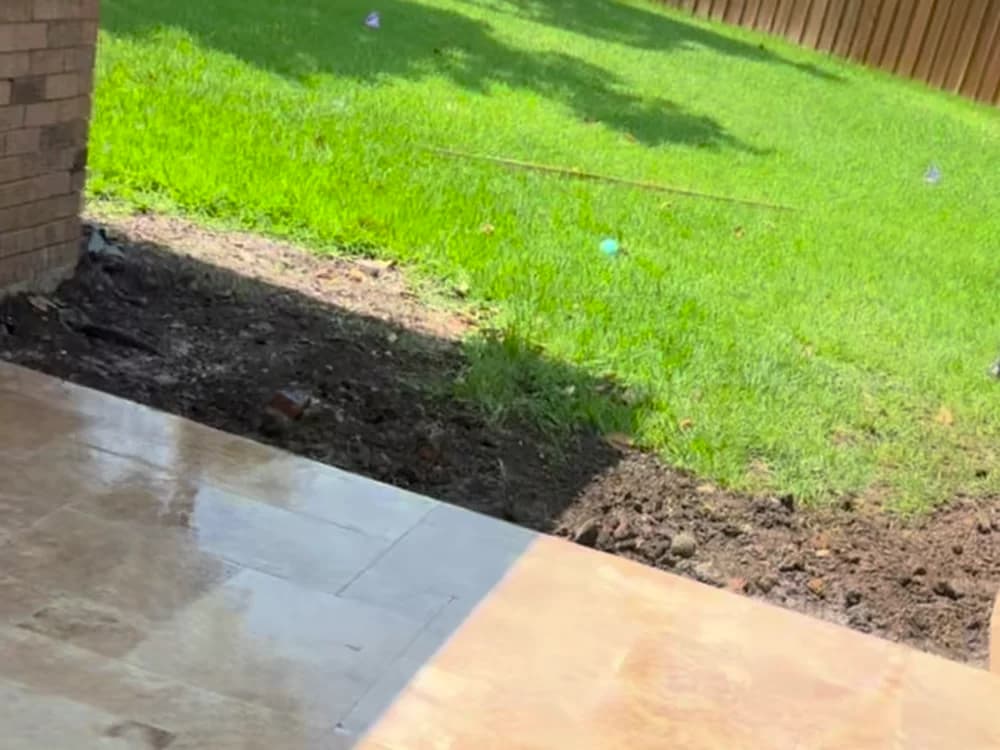
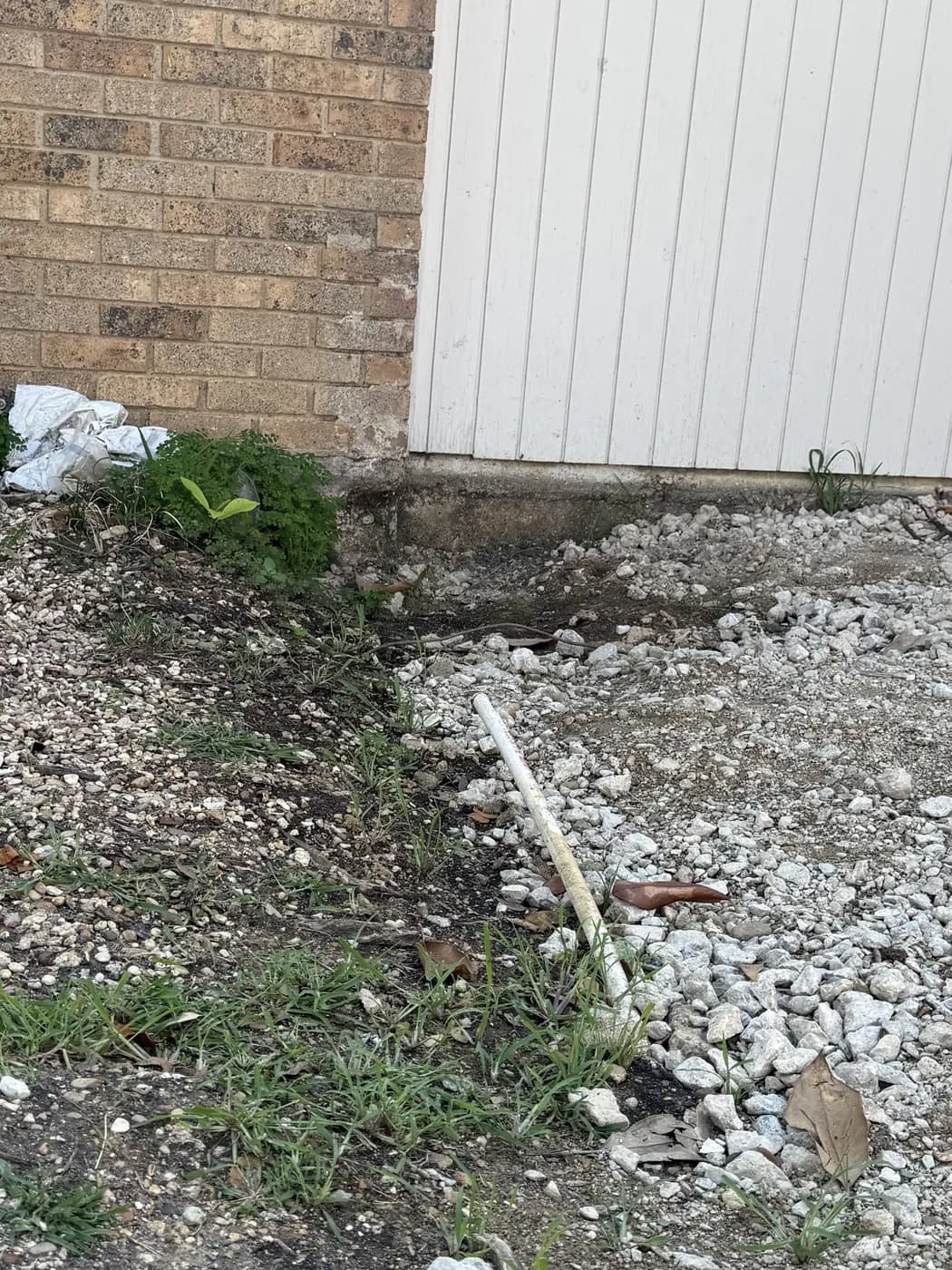
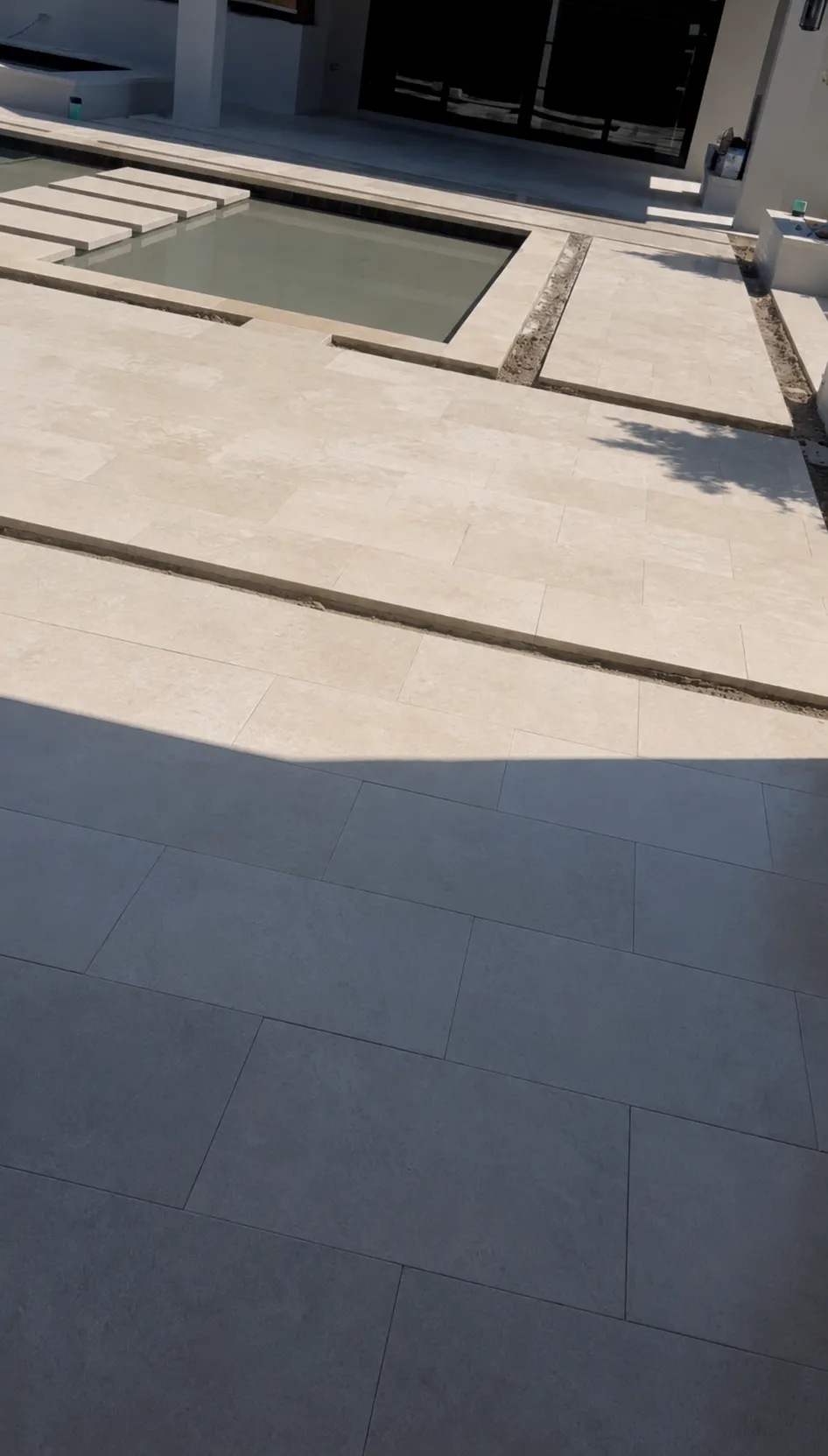
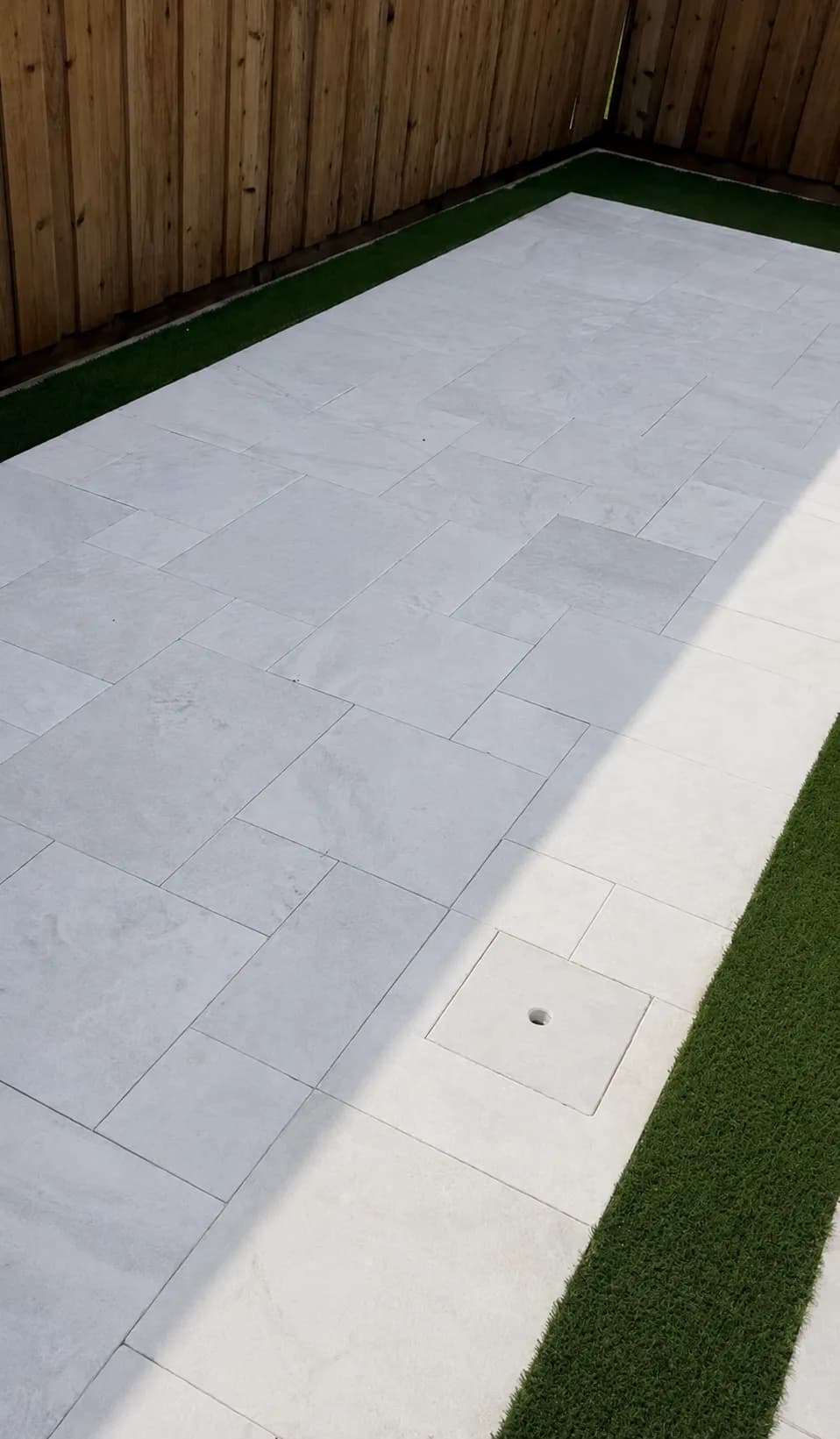
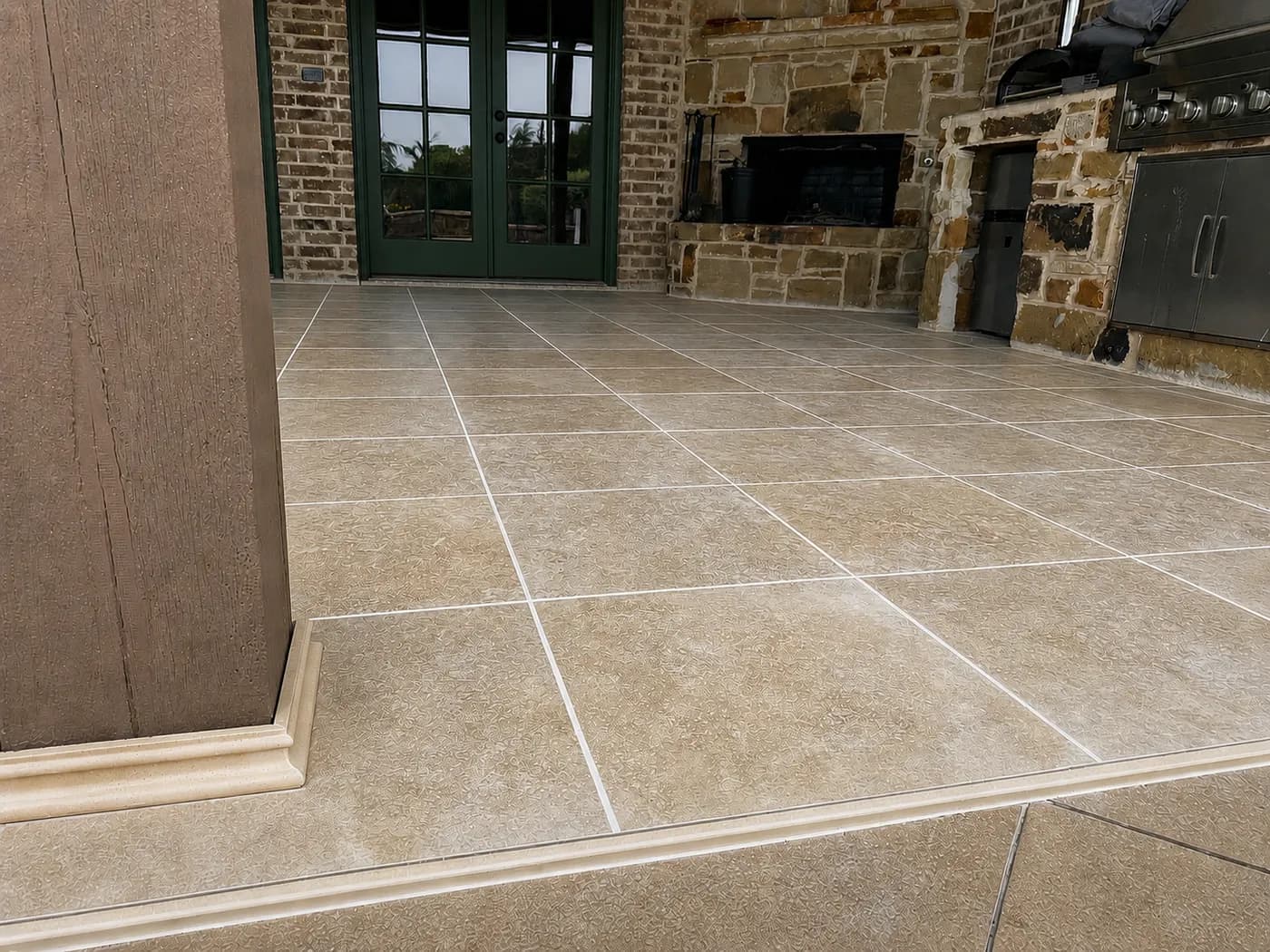
The courtyard, before and after, and more stone work.
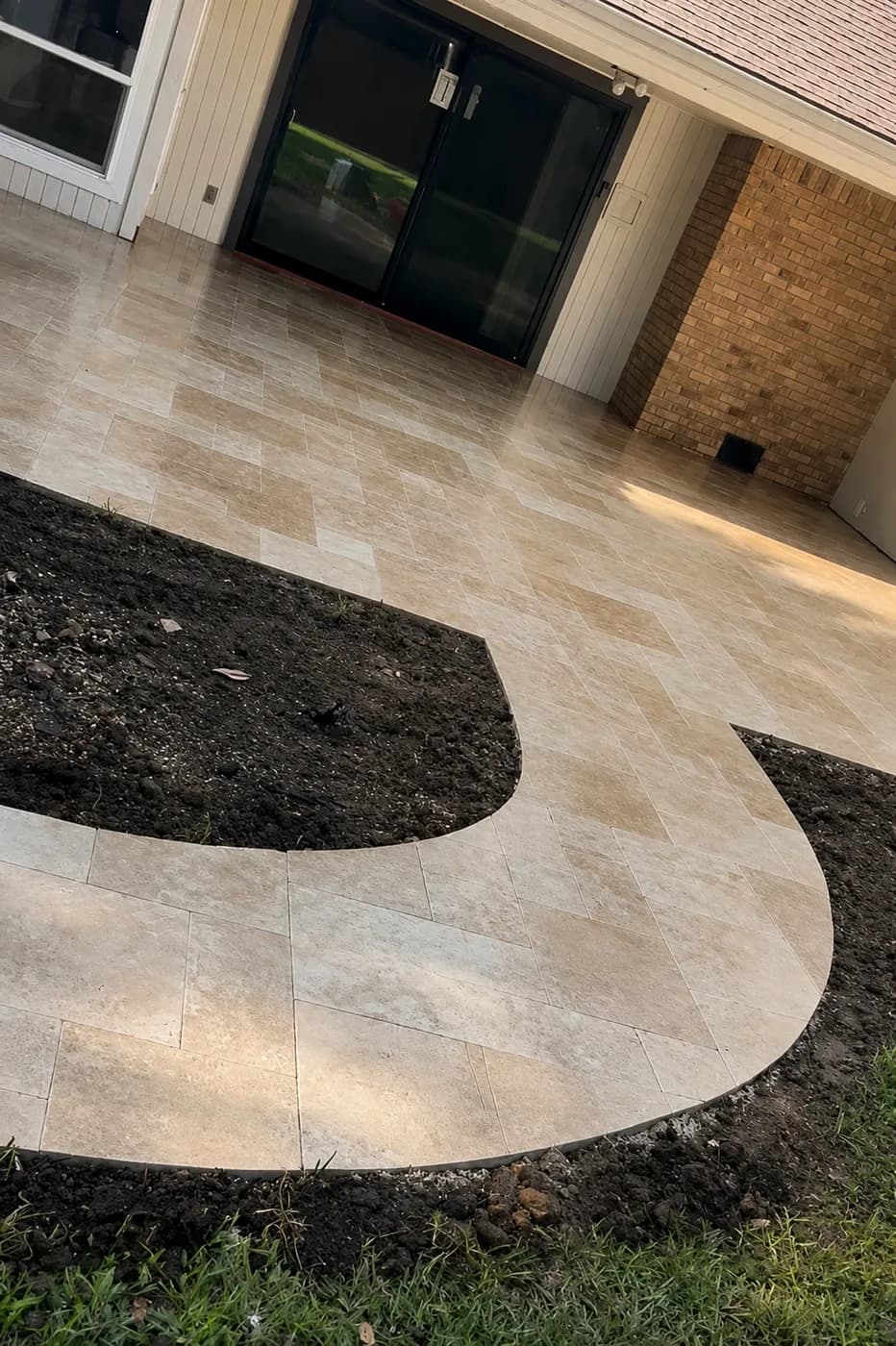
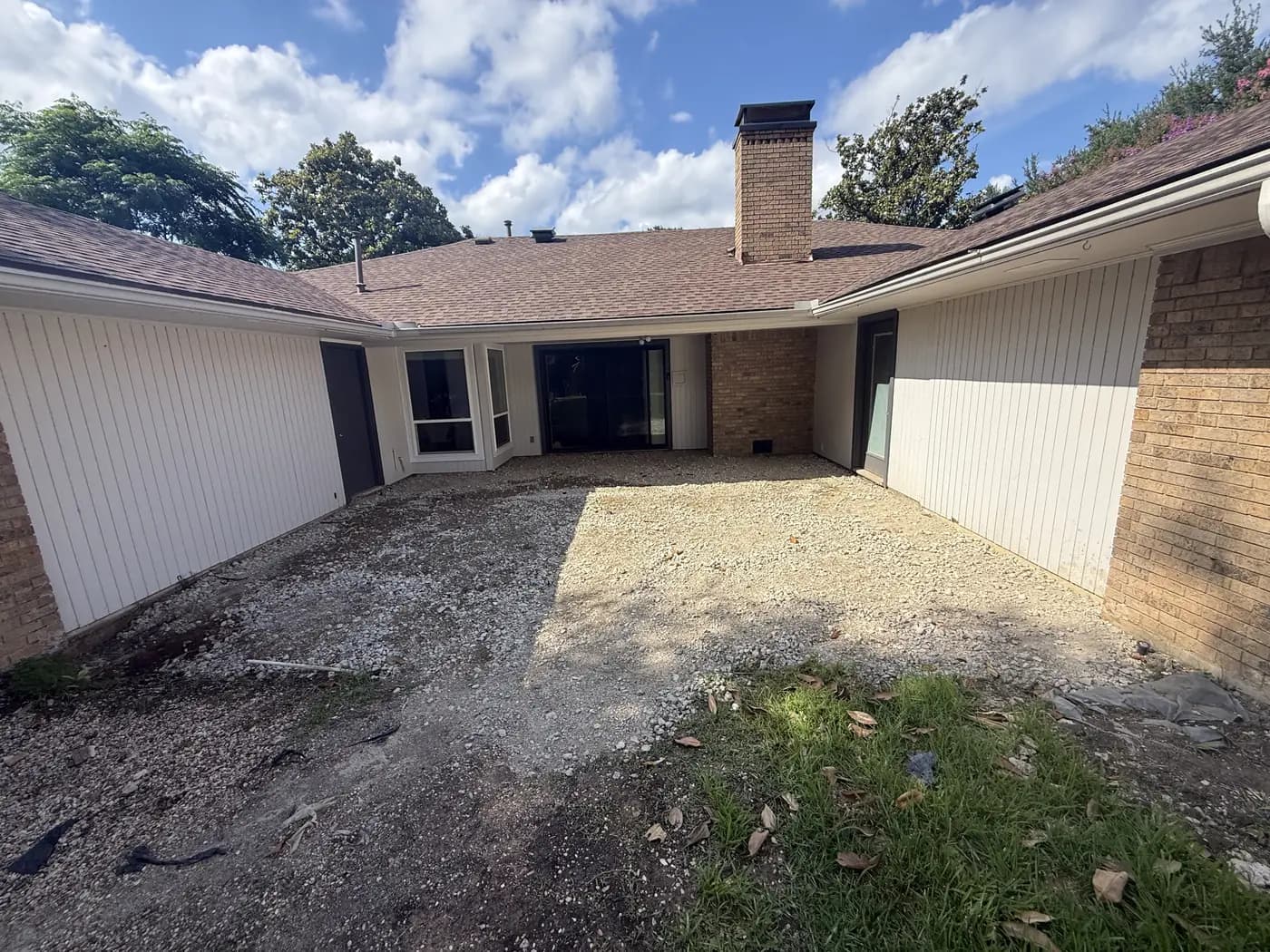
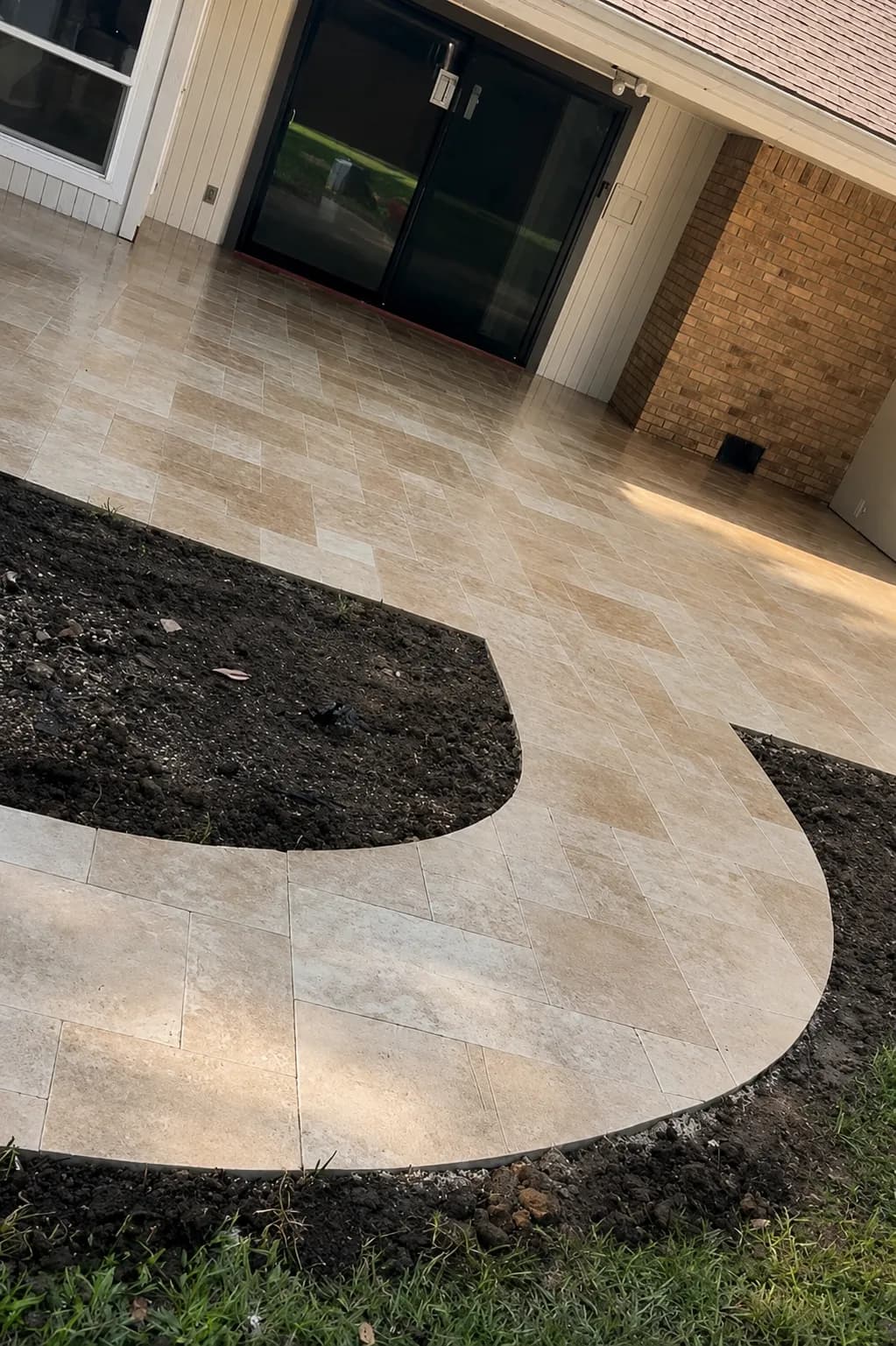
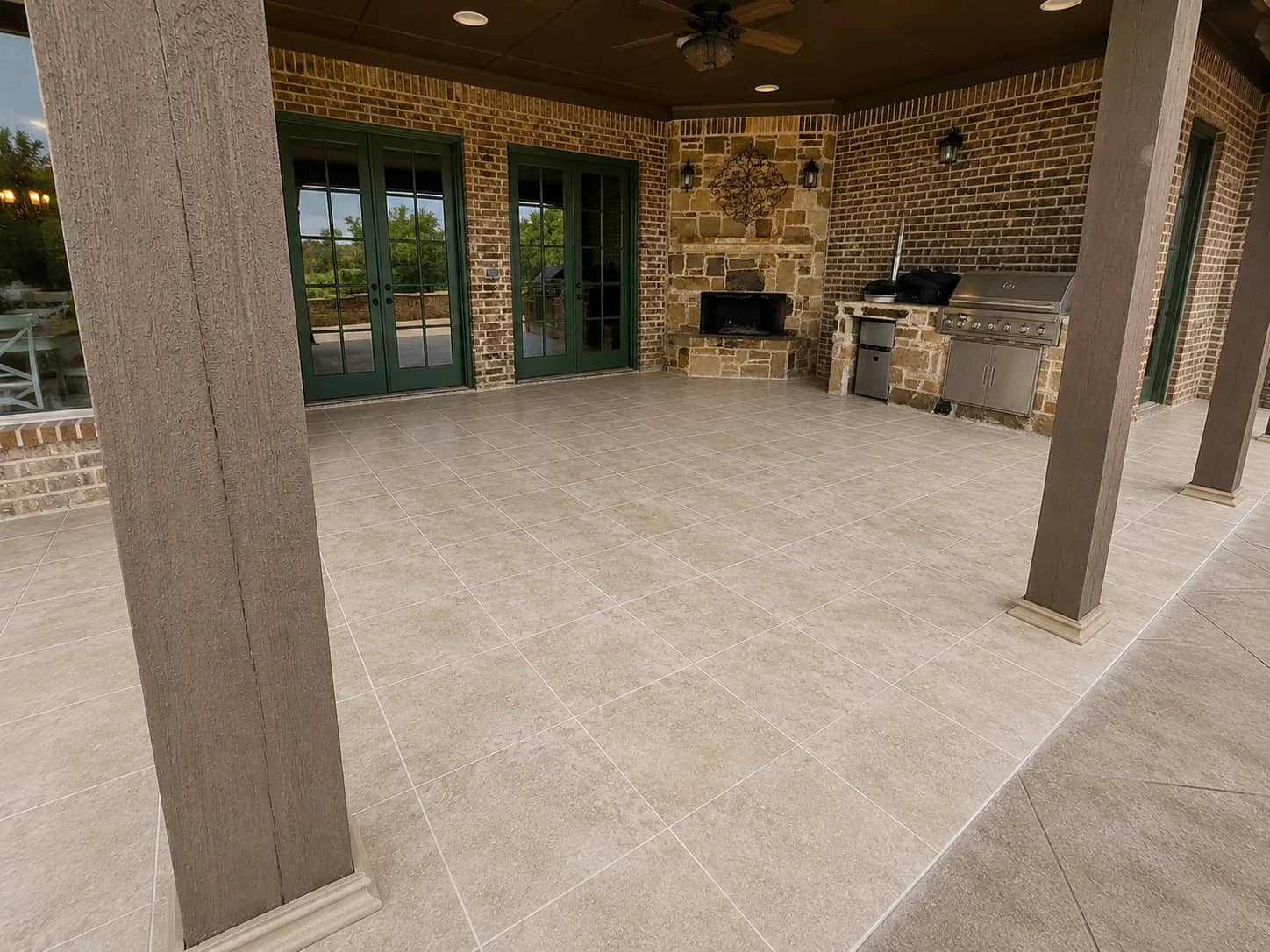
Finished jobs
Built by i30 Builders.
Dallas
Travertine Courtyard
About 470 SF of travertine pavers laid in a French pattern across a back courtyard.
Start Here
The stone is the part you see. The base is the part you pay for.
Travertine is laid dry over a compacted base, so the base decides whether the patio stays flat. A field set on soft or poorly compacted ground rocks, settles at the edges and opens its joints within a couple of summers. On our clay that happens quickly.
That is also where the price moves most. A yard with a sound existing base that only needs re-grading and compaction is a short, predictable job. A yard where the base has to be dug out and rebuilt is a different one, and we will tell you which yours is at the walk rather than after the first pallet is down.
After the base, it is the pattern, the edges and the steps. A French pattern takes more layout and more cuts than a straight lay. Every step, turn-down and curve is cut by hand. The square footage of the field is the smallest part of the conversation.
Ready to get yours planned?
A free site walk, then a written scope and one price within five business days.
Want to pay over time? See financing options · See typical costs
In every job
- Base graded, supplemented where it is low and compacted before a single paver goes down
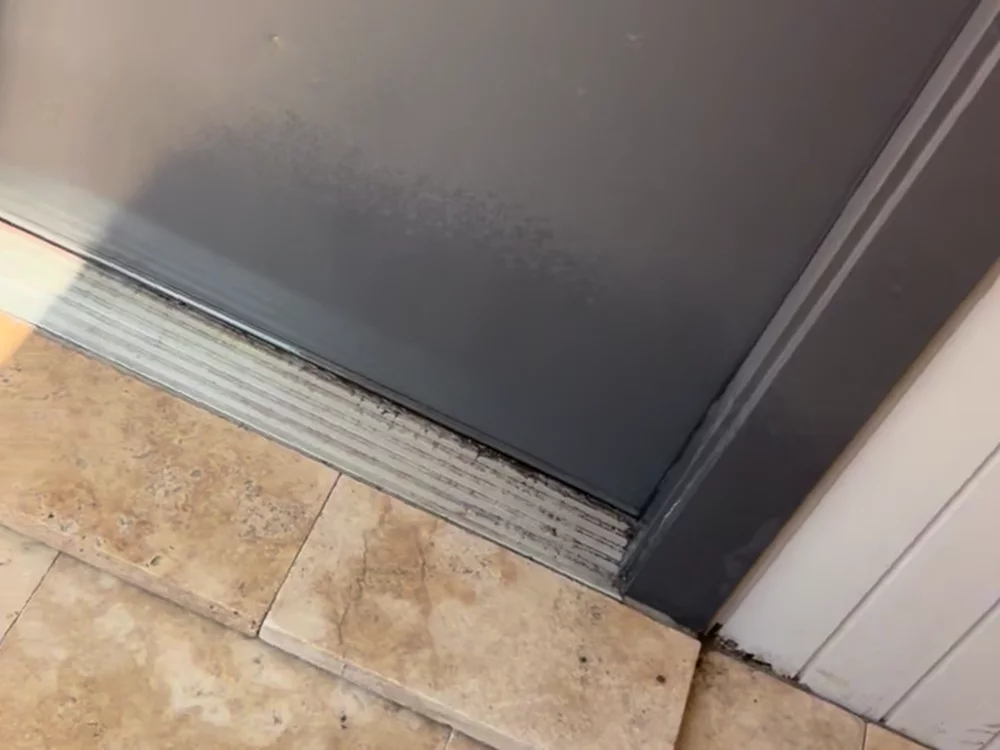
- Finished height set to the door thresholds and brick ledge, sloped to move water away from the house
- Concrete edge restraint around the field so the perimeter cannot creep
- Turn-down edges and step treads cut and fitted by hand
- Polymeric sand in every joint and one coat of penetrating sealer
- One-year workmanship warranty
How we quote it
Every job is measured and built for your house. For budgeting, our cost guide has typical ranges. Your job gets one price in writing.
A site walk, then a written scope back within five business days. The scope names the work, the materials and the price, and the price does not move unless the scope does.
Anything found behind a wall or under a slab that changes the work gets priced and approved before we touch it. That is a change of work, in writing, not a surprise on the final invoice.
Payment is by ACH, card, check or cash, on the schedule written into the contract.
What Moves the Number
Up and down, before you ask for a quote.
Pushes price up
- A base that has to be excavated and rebuilt rather than re-graded
- Pool coping and pool decks, where every edge is finished and the stone has to be rated for it
- Steps, turn-downs and curves, each of which is hand-cut stone
- Bullnose edges on exposed sides and step nosings
- Premium grade stone, or marble in place of travertine
- Color-enhancing sealer instead of a penetrating one
- Poor access, where every pallet is carried through a side gate
Keeps price down
- An existing base that is sound and only needs grading and compaction
- A simple rectangle rather than curves and wraps
- Regular grade stone, which carries more natural pitting and is the right call for most patios
- Fewer steps and level transitions
- Adding the walkway in the same visit, rather than as a second mobilization later
Common Questions
Travertine questions, answered
What goes into a travertine patio?
A recent courtyard in Dallas was about 470 square feet of regular-grade travertine in a French pattern, plus a walkway in the same stone from the patio to the driveway. The scope was grading and compacting the existing base, concrete edge restraint, turn-down edges and step treads, polymeric sand joints and a coat of penetrating sealer, and it was done in three working days. The existing base was usable, which kept the cost down. A yard that needs its base rebuilt costs more.
What does a travertine patio cost?
A typical per-foot number is in our travertine cost guide. The base under the stone moves the price more than the stone does, so yours gets one price in writing after we walk and measure it.
Is travertine a good choice in North Texas?
For patios and pool decks, yes. It stays noticeably cooler underfoot than concrete or dark pavers in full sun, and a tumbled or honed surface keeps its grip when wet. What matters here is the base under it, because our clay moves more than most. A travertine field laid on a properly compacted base with a real edge restraint stays flat. One laid on sand over loose fill does not.
French pattern or straight lay?
French pattern, also called Versailles, mixes four stone sizes in a repeating layout. It hides minor variation in the stone and reads as a finished, formal surface. Straight lay uses one size in running rows, which is cleaner and more modern. French pattern takes more layout time and more cuts at every edge. Both are installed on the same base and finished the same way.
Does travertine need to be sealed?
We seal it once after installation, and that is in the price. A penetrating sealer soaks into the stone rather than sitting on top, so it does not make the surface slick. It slows staining from leaves, grills and pool chemicals. Resealing every few years is maintenance, the same as staining a fence.
Can you lay travertine over my existing concrete?
Sometimes. If the slab is sound, level and drains away from the house, stone can be mortar set over it. If it is cracked, heaved or sits too close to the threshold, adding stone on top makes the problem permanent. We check the slab at the walk and tell you which it is.
Do I need a permit for a travertine patio?
A paver patio on grade generally does not need a building permit, and the courtyard above was contracted without one. That changes if the work touches drainage, a retaining wall or a structure, and your HOA may have its own approval. We tell you which applies at the walk.
Keep reading
Read before you build
Built here, rules here
Rules where you live
Height limits, setbacks, permit triggers and fees change at every city line, and so does the ground. Each page below is one city or county: its rules read from its own code, and what its soil does to a post or a pier.
More in hardscape, fences and yard
Prefer to give us the details now?
Tell us what you want built and roughly how big. We walk it, then price the scope in writing, and the price does not move unless the scope does.
indicates a required field
Step 1 of 2: Project info