i30 Builders · Dallas County
Fence, Deck and Patio Cover Contractor in Garland, TX
Fences, decks, patio covers and additions across Garland, TX.
Published rates · Permits handled · Written scope before any deposit
Free site visit · written scope · lump-sum price
Rated 5.0 on Google$1M GL + $1M Umbrella1-year workmanship warranty
Get a written estimate
Four fields. We call back within one business day to set up the site visit.
- GL + umbrella coverage
- $1M + $1M
- Workmanship warranty
- 1-yr
- Cities served
- 33
Who builds fences, decks and patio covers in Garland, TX?
i30 Builders, a general contractor based in Royse City, TX, builds fences, decks, patio covers, outdoor kitchens, concrete and additions in Garland, TX, and high-end kitchens and baths. Work is priced from published rates where they exist, written into a scope before any deposit, with permits handled.
- Pricing
- Published rates, written scope before any deposit
- Permits
- Handled by us
- Warranty
- One-year workmanship warranty, in writing
- Insurance
- $1M GL + $1M Umbrella, certificate on request
Updated
The Work
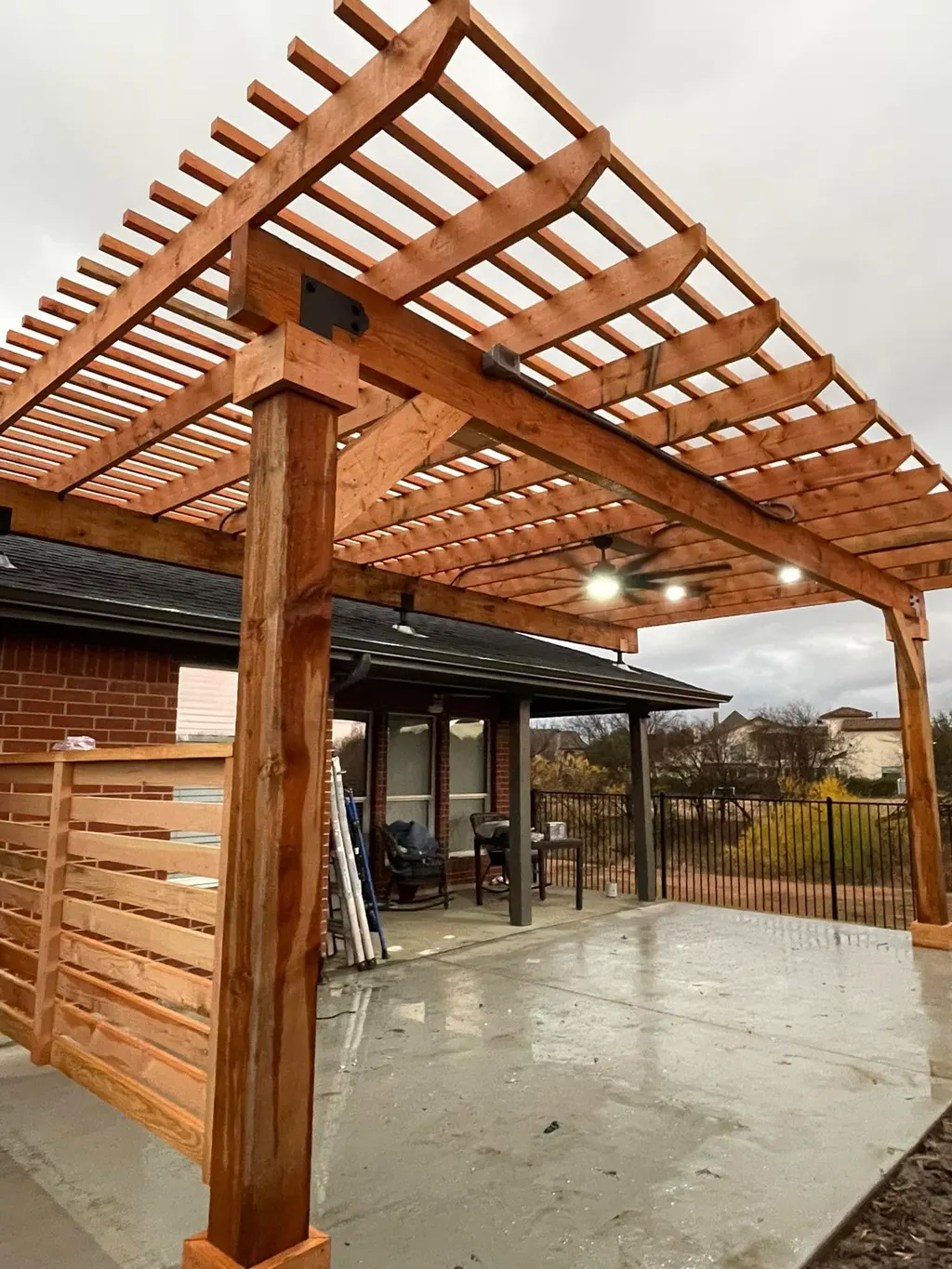
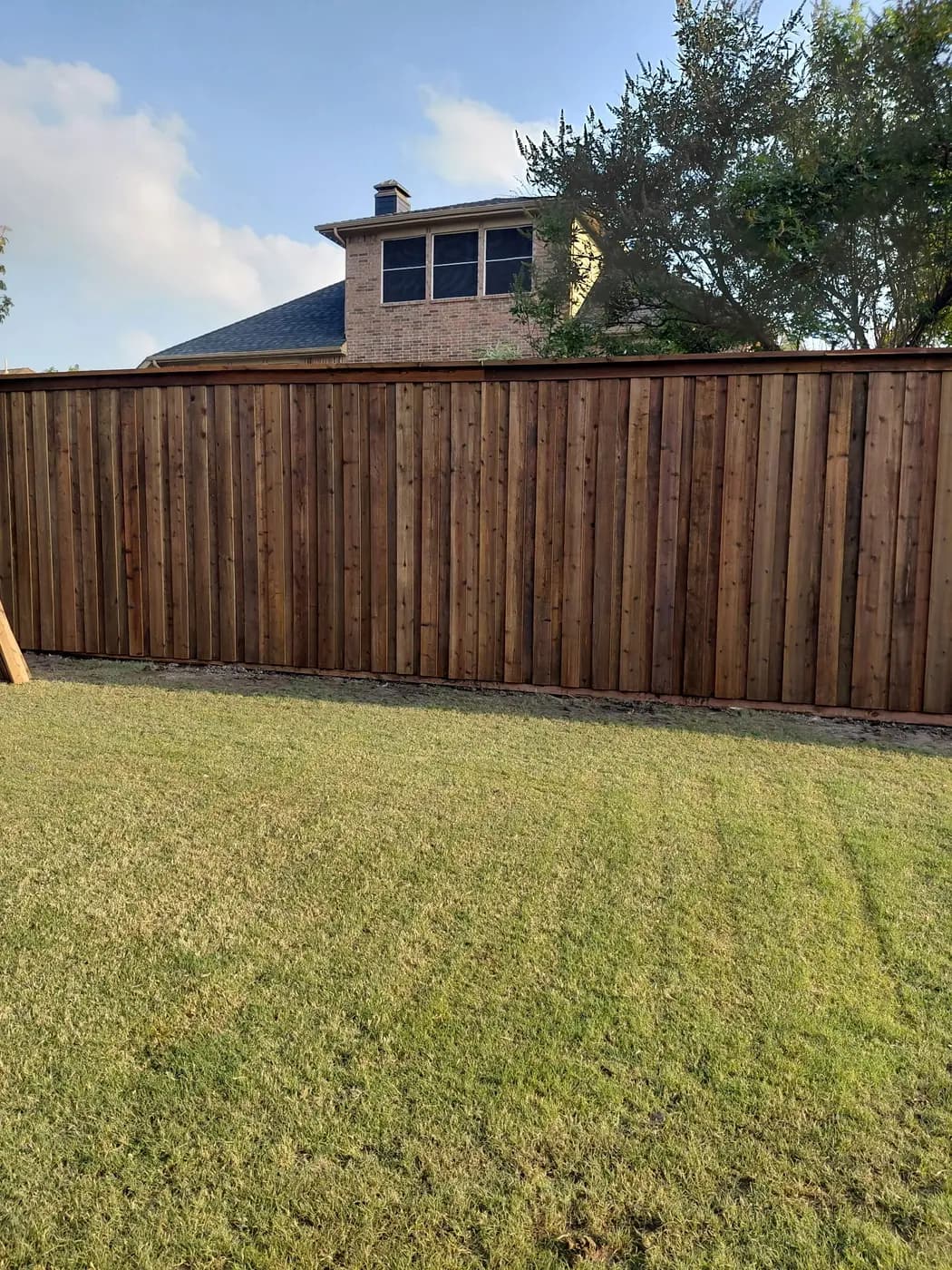
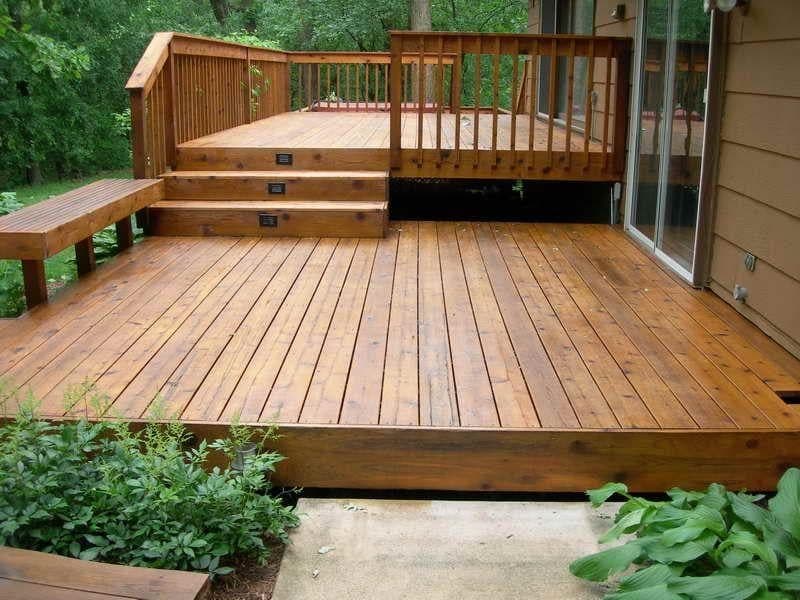
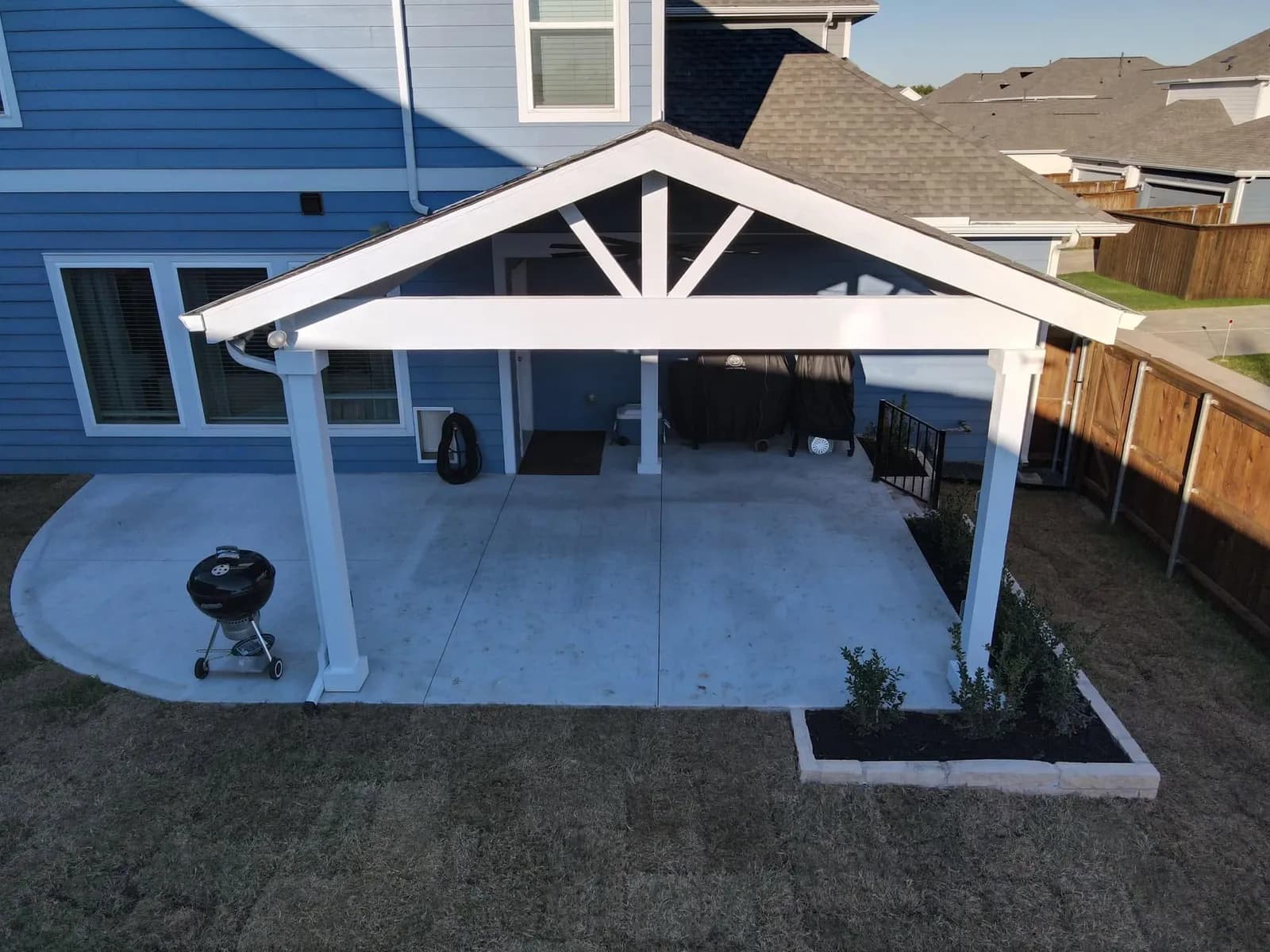
Fences, decks and patio covers.
What the City of Garland requires
Garland regulates fences under Chapter 4, Article 8 of the Garland Development Code, and an older fence article in Chapter 30 of the city code is still on the books.
- Where the two disagree, the Development Code says the most restrictive standard applies.
- A permit is required to build a fence, and replacing one is exempt only if the new fence is in the same place, of similar materials and similar height, is not in a yard next to a street or at a street and alley corner, and is not a required pool fence. Every front yard fence needs a permit.
- The residential fence permit is $150.00 on the city’s fence page, plus the 4.5 percent technology surcharge the building inspections department adds to every permit.
- Garland registers general contractors, $150.00 under the master fee schedule, and an unregistered contractor cannot pull a building permit.
- Eight feet maximum on residential property, measured from the applicant’s side.
- Front yard: wood or ornamental metal under three and a half feet, with at least four inches of open space in every linear foot and a foot of open space between horizontal members, or brick or masonry under two and a half feet, never cinder block.
- A fence on a corner lot that is not see-through needs a visibility clip, and the city sets its dimensions when it issues the permit.
- Gates over a driveway may not swing into the alley or the street.
- Not allowed: barbed or razor wire, chicken wire, hog wire, stockade panels, plywood or engineered wood panels, used materials, galvanized sheet metal, corrugated metal or fiberglass, and electric fences except two feet inside another fence in a side or rear yard.
- The Development Code wants every fence built for a 100 mile per hour wind, where the older article and the city’s 2008 fence handout say 70; the most restrictive standard applies, so we build to 100.
- A fence that leans more than ten degrees is a violation.
- Fences in utility and drainage easements are prohibited unless the Director of Engineering approves them, and then they need metal posts and removable sections and may need a license agreement with the city.
- Garland’s code sets no post depth and no finished side for a private fence.
Source: Read from the city’s Development Code, code of ordinances, master fee schedule and permit pages on 8 October 2026. Codes and fees change and city staff interpret them, so we confirm for your address before we pull the permit.
Patio covers, decks and an older code
Garland still builds to the 2015 International Residential Code, in effect since 19 September 2016, while Plano is on the 2024 edition and Murphy on 2021.
- A patio or porch cover needs a permit whether it is attached to the house or freestanding: $150.00, plus a plan review fee of 15 cents a square foot and the surcharge.
- An attached cover meets the house’s own setbacks, which the city says are typically ten feet from the rear lot line and six from the side, measured from the posts, with up to two feet of roof overhang in the rear yard.
- No cover goes in a required yard next to a street, typically 20 feet and as much as 35.
- Detached patio structures and gazebos are accessory buildings: behind the house they sit at least three feet from the side and rear lot lines, they need a permit once they pass 20 square feet, and since 1 October 2026 the fee is a flat $150.00.
- All accessory buildings on a lot together may not exceed 30 percent of the house’s floor area, though the rule never caps them below 600 square feet, and covered patios count toward lot coverage.
- The material rule is the one to read twice: Garland’s patio cover page says unpainted wood, tin, plastic, plain concrete block, corrugated metal, canvas and vinyl are not allowed, the roof cannot be corrugated metal or plastic, and shingles need at least a 2:12 pitch. Metal patio covers must be engineered.
- A natural cedar cover therefore needs a finish the city accepts, and we confirm what counts before the drawing is final.
- On decks, Garland rewrote the model code’s exemption in its own words: its list covers a deck of 200 square feet or less that is not attached to the house and does not block the required exit door, and separately names “uncovered decks not over 30 inches above grade”.
- How those two lines read together is a question we put to Building Inspection before treating any deck as exempt.
- A retaining wall needs a permit once any part of it reaches four feet, or once it holds a surcharge such as a driveway or a structure near it.
- HOA approval is separate: Garland’s permit applications say the permit does not negate the homeowner’s responsibility to get it.
If you back onto Lake Ray Hubbard
The strip between a lakefront lot and the water is the Take Area. The City of Dallas owns it and leases it to the City of Garland, which subleases eligible tracts to the owners next to them: $750.00 when the sublease is signed, then $50.00 a year.
- Nothing goes up out there until Garland issues a building permit, nothing may be built over the water without written approval from both Garland and Dallas, and no such structure may reach more than 40 feet from the shoreline.
- Garland’s Lake Edge Development Standards then set the materials.
- A deck or patio in a leased tract is limited to 36 inches in height and built of water resistant wood, such as cedar or redwood, or native stone, and any railing is water resistant wood pickets on steel tubing.
- A fence or gate there may not be wood, plastic or chain link; it is metal posts with openings under four inches.
- Dallas’s own lake structure permit rules out treated wood, and it does not let the owner do the construction.
- If you are on the water, tell us before we come out: it changes what can legally be built and it changes the paperwork, and we would rather find that out in the driveway than after you are attached to a design.
The ground under a Garland fence
A City of Garland legal notice names all three counties the city sits in, Dallas, Collin and Rockwall, but by area it is almost all Dallas County: 99.9 percent of the city’s mapped soil falls in the Dallas County soil survey.
- That soil is more mixed than Plano’s or Murphy’s.
- The USDA maps about 18 percent of Garland as Urban land, ground under buildings and pavement that it does not classify, and a quarter of the city as a complex of Houston Black clay and Urban land.
- Of the ground the survey does rate, 72 percent is high or very high for shrink-swell across the top three feet.
- Houston Black is the largest single soil at about 20 percent of the city, followed by Frio silty clay in bottomland the survey maps as frequently flooded, then Lewisville, Dalco and Branyon, Ferris on the slopes, and Heiden.
- Dalco is moderately deep and very slowly permeable and dries to cracks up to two inches wide reaching 12 inches down.
- Branyon is a very deep stream terrace clay whose cracks run up to three inches wide and 20 inches deep.
- Ferris, on the slopes, sits in the very high band as well.
- Garland’s code says nothing about post depth, so on this ground depth is the first thing to ask any bidder.
Source: Soil figures computed by us from USDA-NRCS SSURGO map units clipped to the city limits, rated by linear extensibility over the top 36 inches; these are city-level figures, not parcel-level. A specific address needs its own lookup, which we do before quoting a long run.
Our Services in Garland
What we build.
Fence Installation and Repair
Board-on-board, horizontal, and ornamental steel. Priced by the foot, quoted on the run.
From $40/LF
Deck Building and Restoration
New builds, rebuilds, and bringing a weathered deck back rather than replacing it.
Quoted from the walk
Patio Covers, Pavilions and Pergolas
Roofed cedar pavilions and open-top pergolas, on flatwork built to carry them.
Covers from $22,200
Outdoor Kitchens
Built-in grill islands and full outdoor kitchens, with the utilities run properly and a roof over them.
Quoted from the walk
Concrete Patios, Walks and Driveways
Reinforced patios, walks, pads and driveways, built on a base that expects the clay to move.
From $19/SF
Travertine Patios, Walkways and Pool Decks
French pattern and straight lay, patios, walkways, steps and pool decks, set on a base built to hold them.
Last courtyard $8,500
Retaining Walls
Stone and block walls for slopes, raised beds and level yards, built for the clay they sit in.
Quoted from the walk
French Drains and Yard Drainage
French drains, surface drains, buried downspout lines and regrading, so water leaves the yard instead of sitting in it.
Quoted from the walk
Room Additions, Sunrooms and Garage Conversions
Closing in a covered patio as a sunroom, converting a garage, screening a porch, or building from the slab up to a Certificate of Occupancy.
From $95/SF
High-End Kitchen Remodeling
Whole-room remodels, taken back to the studs where the plan needs it. Not refacing, and not a countertop swap.
Quoted on the plan
High-End Bathroom Remodeling
Primary baths, taken back to the studs and rebuilt. Not a tub-to-shower kit, and not a cosmetic refresh.
Quoted on the plan
Keep reading
Before you build in Garland
Guides
Neighborhoods we serve in Garland
From Firewheel Estates and Firewheel Farms to Camelot, Oakridge, Club Creek, Spring Park and the Shores of Eastern Hills, we build fences, decks and patio covers across Garland, along the President George Bush Turnpike, SH 78, SH 66 and I-30. Most of Garland is Garland ISD; the city says its farthest west is Richardson ISD and part of south Garland is Mesquite ISD.
- Firewheel Estates
- Firewheel Farms
- Camelot
- Oakridge
- Club Creek
- Spring Park
- Shores of Eastern Hills
- Travis College Hill
- Arbor Creek
Garland Questions
Home project questions in Garland
What does a fence permit cost in Garland?
$150.00 for a residential fence on the city’s fence page, plus a 4.5 percent technology surcharge on every permit. A 2008 city handout still says $50.00; the fence page is the current figure.
Can I replace my fence in Garland without a permit?
Sometimes. Garland exempts a replacement in the same spot, of similar materials and height, as long as it is not in a yard next to a street, not at a street and alley corner and not a required pool fence. Change any of that and it needs a permit.
Can my patio cover be natural cedar?
Garland’s patio cover page rules out unpainted wood, along with tin, plastic, plain concrete block, corrugated metal, canvas and vinyl. We confirm with the city which finish satisfies it before the drawing is final.
I back onto Lake Ray Hubbard. Can I build a deck out there?
Only on a sublease from Garland and with a Garland building permit. In the Take Area a deck or patio is capped at 36 inches high and built of water resistant wood or native stone, and Dallas’s lake structure rules bar treated wood.
How tall can my front yard fence be?
Under three and a half feet in wood or ornamental metal with open spacing, or under two and a half feet in brick or masonry. Behind the front of the house the limit is eight feet.
Is Garland on the same building code as Plano?
No. Garland is still on the 2015 International Residential Code, in effect since September 2016, where Plano has adopted the 2024 edition and Murphy the 2021. It shows up in details like the deck exemption, which Garland rewrote in its own words.
Get a written estimate in Garland
Tell us what you are looking at and roughly how much of it. We price the scope, and the price does not move unless the scope does.
indicates a required field
Step 1 of 2: Project info