i30 Builders · Collin County
Fence, Deck and Patio Cover Contractor in Plano, TX
Fences, decks, patio covers and additions across Plano, TX.
Published rates · Permits handled · Written scope before any deposit
Free site visit · written scope · lump-sum price
Rated 5.0 on Google$1M GL + $1M Umbrella1-year workmanship warranty
Get a written estimate
Four fields. We call back within one business day to set up the site visit.
- GL + umbrella coverage
- $1M + $1M
- Workmanship warranty
- 1-yr
- Cities served
- 33
Who builds fences, decks and patio covers in Plano, TX?
i30 Builders, a general contractor based in Royse City, TX, builds fences, decks, patio covers, outdoor kitchens, concrete and additions in Plano, TX, and high-end kitchens and baths. Work is priced from published rates where they exist, written into a scope before any deposit, with permits handled.
- Pricing
- Published rates, written scope before any deposit
- Permits
- Handled by us
- Warranty
- One-year workmanship warranty, in writing
- Insurance
- $1M GL + $1M Umbrella, certificate on request
Updated
The Work
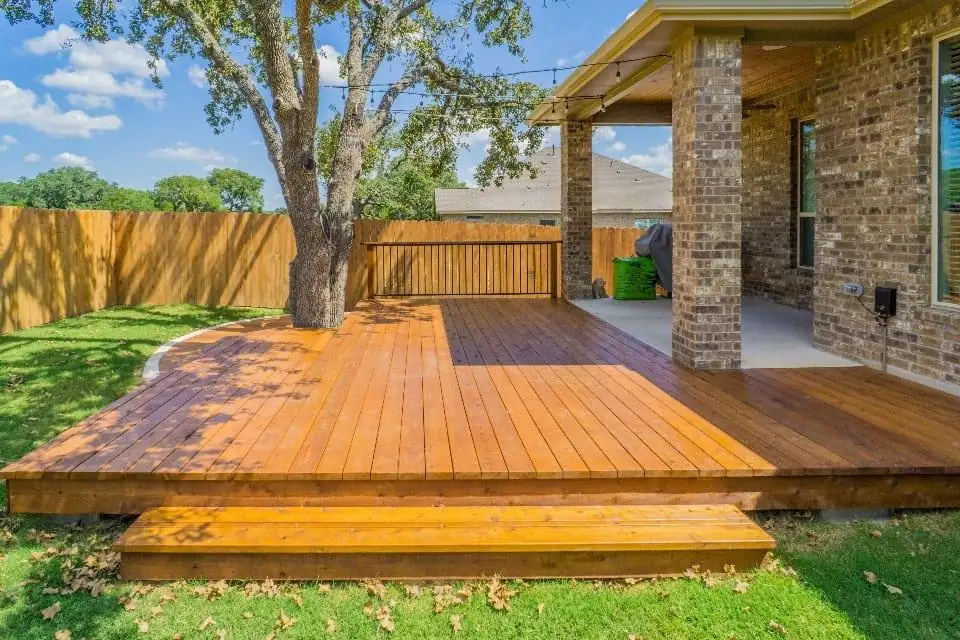
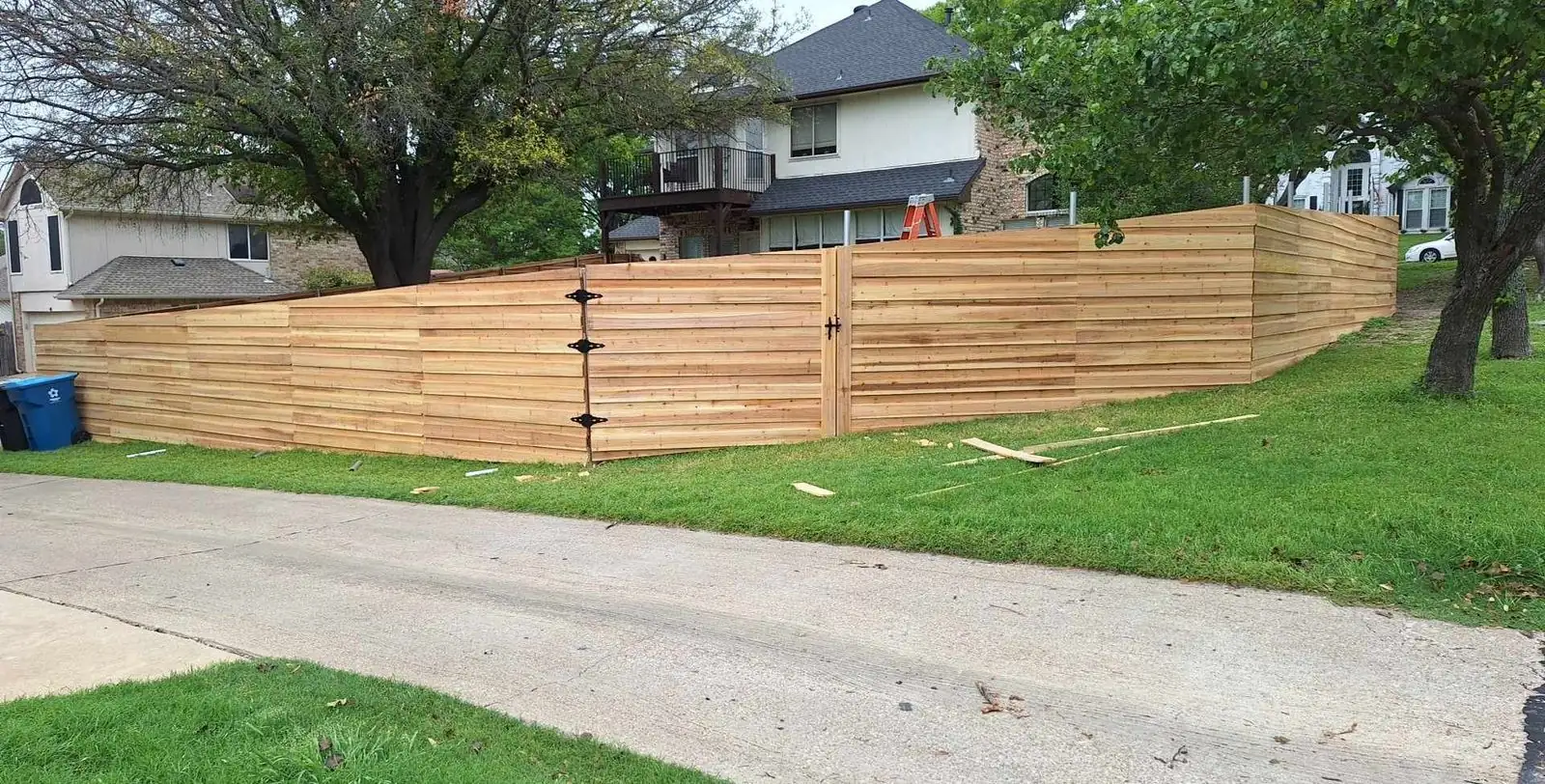
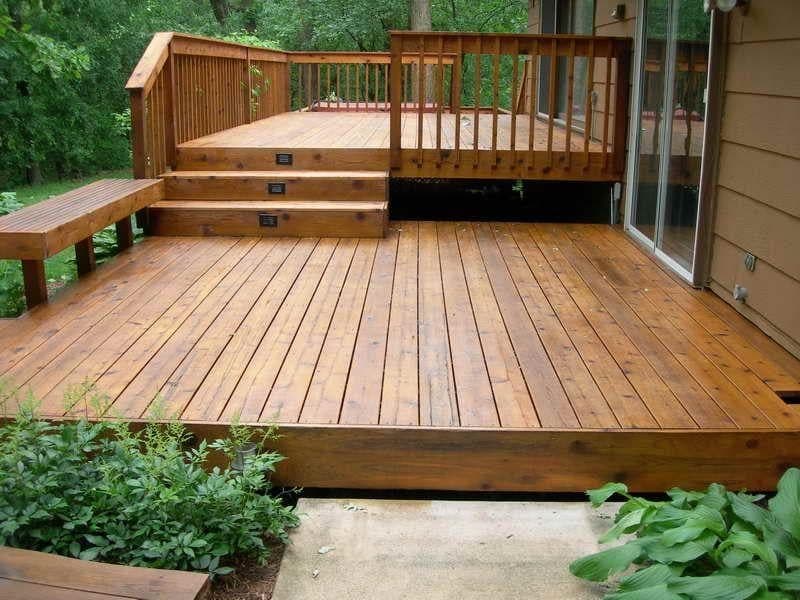
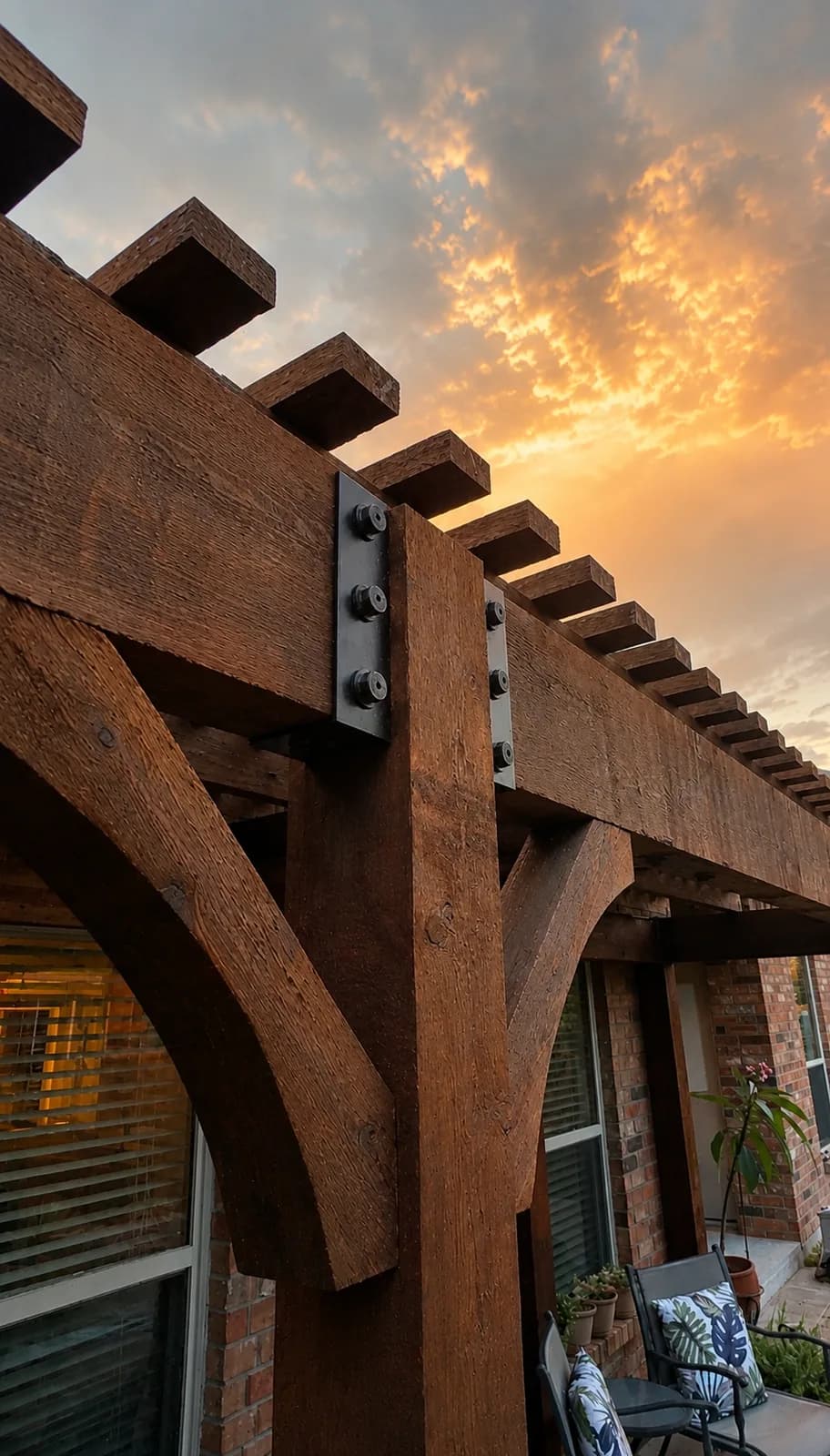
Fences, decks and patio covers.
What the City of Plano requires
Plano splits its fence rules between two documents. Chapter 6, Article VII of the city code covers permits, materials and upkeep, and Article 20 of the zoning ordinance sets the heights.
- A permit is required to build, alter or add to a fence.
- Repairs are exempt only while they stay under 25 percent of the fence’s area in any twelve months, and past that it is a permit.
- The residential fence fee is $75.00 under the building inspections fee schedule adopted by Ordinance 2025-11-4: a $65.00 permit fee plus a $10.00 day laborer fee.
- Fence companies register with the city as general contractors, $100.00 a year, so it is fair to ask any bidder whether theirs is current.
- Eight feet maximum behind the front yard setback, measured from the grade of the adjacent property, and still eight feet when the fence sits on a retaining wall.
- In the required front yard: 40 inches, and at least 50 percent open.
- On a corner lot with two front yards, the second may be fenced like a side yard on a street, with a corner clip that runs from the front setback to a point at least 15 feet from the lot line.
- Where an alley meets a street, nothing over 30 inches inside an eight foot triangle; where two streets meet, the clear triangle runs 45 feet along the curb lines.
- Not allowed: rope, string, chicken wire, hog wire and other welded or woven wire, chain, live bamboo, netting, corrugated metal panels, galvanized sheet metal, plywood, fiberglass panels, or anything not manufactured to be fencing.
- Barbed wire is limited to the LI-1 and LI-2 industrial districts, and chain link has to be 11 gauge or heavier.
- Build a new fence parallel to and within three feet of an old one on the same lot and the old one has to come out.
- A fence also counts as unmaintained once it leans more than ten degrees or has 20 square feet or more of broken, loose or missing parts.
- Sliding gates go inside the fence line, not on the alley side, and Plano’s amendments to the residential code require a fence with a rolling gate to have a trash pad beside it, set back four feet from the edge of the alley.
- No fence goes in a drainage or floodway easement unless the city engineer has told the building official in writing that it will not impair the flow of water.
- Masonry fences, brick columns and retaining walls over four feet need a design sealed by a Texas registered engineer.
- Plano’s code sets no post size, depth or spacing for a wood fence, which leaves that to whoever digs the hole.
Source: Read from the city’s own code, zoning ordinance, fee schedule and fence permit handout on 8 October 2026. Codes and fees change and city staff interpret them, so we confirm for your address before we pull the permit.
Patio covers, pergolas and decks
Plano builds to the 2024 International Residential Code, adopted by Ordinance 2025-6-15. An attached patio cover is reviewed as an addition to the house, so it follows the house’s own rules, and the city’s patio cover handout puts it plainly: a patio cover shall not be erected in any required front, side or rear yard.
- In most single-family districts the house has to stay at least ten feet off the rear property line, and the house and every accessory building together may not cover more than half of the back half of the lot, measured behind a line joining the midpoints of the two side lot lines.
- The cover’s footprint also counts against the district’s overall lot coverage.
- The same handout says a patio cover may not be anchored or attached to brick or siding veneer, which on a brick house changes how the cover is carried, and it is a detail we settle before you see a drawing.
- The city asks for a site plan at one inch to 20 feet with the setbacks dimensioned, a floor plan, a roof framing plan showing how the new roof ties into the old, elevations, construction details, the foundation and footing depths, and the electrical for fans and lights.
- A detached cover, pergola or gazebo is an accessory structure: at least three feet from the side and rear lot lines, never in an easement or right of way, no taller than ten feet inside a required rear or side yard, and within ten feet of a rear or side lot line it has to be screened by a six foot solid fence or wall.
- A detached patio cover needs at least two open sides.
- One-story detached structures up to 120 square feet need no building permit.
- Decks are the one place Plano kept the model code as written: a deck needs no permit only if it is 200 square feet or less, no more than 30 inches above grade at any point, not attached to the house and not serving the required exit door.
- Miss any one of the four and it needs a permit.
- Plano’s fee schedule has no line for a deck or a patio cover by name, so we confirm with the city which line applies before it goes on your estimate.
The ground under a Plano fence
Clipped to the city limits, the USDA soil survey puts about 54 percent of Plano on Houston Black clay, the Texas state soil, and about 18 percent on Austin silty clay.
- Of the ground the survey rates, 68 percent is high or very high for shrink-swell across the top three feet, which is where a fence post or a patio cover pier lives, and 64 percent is in the very high band.
- That is a little below Collin County’s 74 percent, and the Austin is the reason.
- The USDA describes Houston Black as very deep and very slowly permeable, with cracks half an inch to four inches wide reaching 12 inches deep or more when it dries, open 90 to 150 cumulative days in most years.
- Austin is different ground: a moderately deep soil formed in chalk, with the chalk about 29 to 30 inches down in the USDA’s typical profile.
- It moves less, but an auger can meet chalk at about the depth a footing wants to reach, and where it does the footing is designed for that rather than stopped short.
- The small part of Plano that lies in Denton County, on the west side, is mostly Stephen silty clay, which the USDA describes as shallow, with chalk 7 to 20 inches down.
- So a long run in Plano can cross three kinds of ground, and we size footings for the worst of them.
Source: Soil figures computed by us from USDA-NRCS SSURGO map units clipped to the city limits, rated by linear extensibility over the top 36 inches, the method that returns the 74 percent this site publishes for Collin County; these are city-level figures, not parcel-level. A specific address needs its own lookup, which we do before quoting a long run.
Our Services in Plano
What we build.
Fence Installation and Repair
Board-on-board, horizontal, and ornamental steel. Priced by the foot, quoted on the run.
From $40/LF
Deck Building and Restoration
New builds, rebuilds, and bringing a weathered deck back rather than replacing it.
Quoted from the walk
Patio Covers, Pavilions and Pergolas
Roofed cedar pavilions and open-top pergolas, on flatwork built to carry them.
Covers from $22,200
Outdoor Kitchens
Built-in grill islands and full outdoor kitchens, with the utilities run properly and a roof over them.
Quoted from the walk
Concrete Patios, Walks and Driveways
Reinforced patios, walks, pads and driveways, built on a base that expects the clay to move.
From $19/SF
Travertine Patios, Walkways and Pool Decks
French pattern and straight lay, patios, walkways, steps and pool decks, set on a base built to hold them.
Last courtyard $8,500
Retaining Walls
Stone and block walls for slopes, raised beds and level yards, built for the clay they sit in.
Quoted from the walk
French Drains and Yard Drainage
French drains, surface drains, buried downspout lines and regrading, so water leaves the yard instead of sitting in it.
Quoted from the walk
Room Additions, Sunrooms and Garage Conversions
Closing in a covered patio as a sunroom, converting a garage, screening a porch, or building from the slab up to a Certificate of Occupancy.
From $95/SF
High-End Kitchen Remodeling
Whole-room remodels, taken back to the studs where the plan needs it. Not refacing, and not a countertop swap.
Quoted on the plan
High-End Bathroom Remodeling
Primary baths, taken back to the studs and rebuilt. Not a tub-to-shower kit, and not a cosmetic refresh.
Quoted on the plan
Keep reading
Before you build in Plano
Guides
Neighborhoods we serve in Plano
From Avignon Windhaven, Shoal Creek and Denham Village to Hunters Creek Estates, Country Place, Kings Ridge and the Whiffletree sections, we build fences, decks and patio covers across Plano, along US 75, the Dallas North Tollway, the President George Bush Turnpike and SH 121. Plano ISD and Frisco ISD both serve parts of the city. Plano’s own permit handouts send you to your HOA for its deed restrictions as a separate step.
- Avignon Windhaven
- Shoal Creek
- Denham Village
- Hunters Creek Estates
- Forest Creek Estates
- Glenhollow Estates
- Country Place
- Kings Ridge
- Whiffletree
Plano Questions
Home project questions in Plano
Do I need a permit to repair my fence in Plano?
Not while the repair stays under 25 percent of the fence’s area over any twelve months. Past that it needs a permit, and the residential fee is $75.00. We tell you which side of that line the job is on before we start.
How tall can a front yard fence be in Plano?
40 inches, and it has to be at least 50 percent open. Behind the front setback the limit is eight feet, measured from the grade of the neighboring property.
Can a patio cover attach to my brick?
Not to the veneer. Plano’s patio cover handout says a cover may not be anchored or attached to brick or siding veneer, and an attached cover is reviewed as an addition to the house, inside the house’s setbacks. We work out the connection before you see a price.
How close to my back fence can a pergola go?
A freestanding pergola stays at least three feet from the side and rear lot lines. Inside a required rear or side yard it can be no taller than ten feet, and within ten feet of the lot line it has to be screened by a six foot solid fence or wall.
Does a small deck need a permit in Plano?
Not if it is freestanding, 200 square feet or less, no more than 30 inches above grade and not serving the required exit door. Plano kept that exemption whole. Attach the deck to the house or go past any one of those limits and it needs a permit.
I am putting in a new fence beside the old one. Can the old one stay?
Not if the new fence runs parallel to it and within three feet on the same lot. Plano’s code requires the existing fence to be removed, so we price the tear-out in from the start.
Get a written estimate in Plano
Tell us what you are looking at and roughly how much of it. We price the scope, and the price does not move unless the scope does.
indicates a required field
Step 1 of 2: Project info