i30 Builders · Residential
Retaining Wall Builder in Rockwall and DFW
Stone and block walls for slopes, raised beds and level yards, built for the clay they sit in.
Written scope and locked price before any deposit · One-year workmanship warranty
Start Here
A retaining wall fails from the water behind it.
The wall is the part you see. What decides whether it is still standing in ten years is behind it: the base it sits on, the drainage stone and pipe that let water out, and, on a taller wall, the reinforcement tying it back into the soil.
Blackland Prairie clay makes that more important here than almost anywhere. It swells when it is wet and shrinks when it dries, and a wall with nowhere for the water to go is holding back saturated clay every time it rains. That pressure is what bows, leans and cracks a wall that looked fine the day it was finished.
Height is the other number. A low garden or bed wall is a straightforward build. Past about four feet, most cities here want an engineered design and a permit, and the wall is a structure rather than landscaping.
Pricing
We quote retaining walls from the walk.
Two walls the same length can be different jobs: one holding back a flower bed on flat ground, the other holding a slope with a driveway above it. Height, what sits above the wall, and where the water goes set the number, and none of them is knowable from a phone call.
A site walk, then a written scope with a real number in it, including the drainage and, where the height needs it, the engineering.
The Work
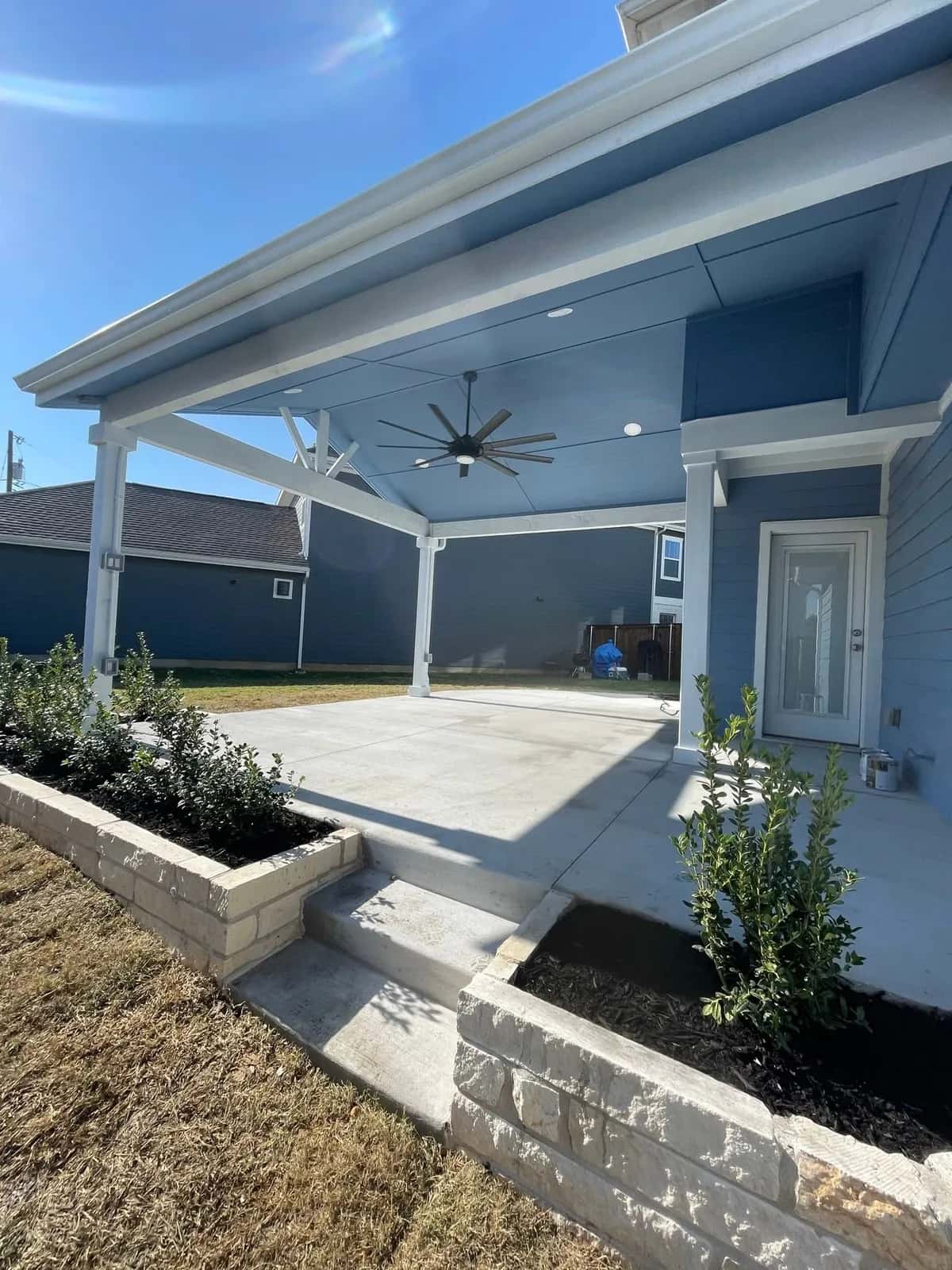
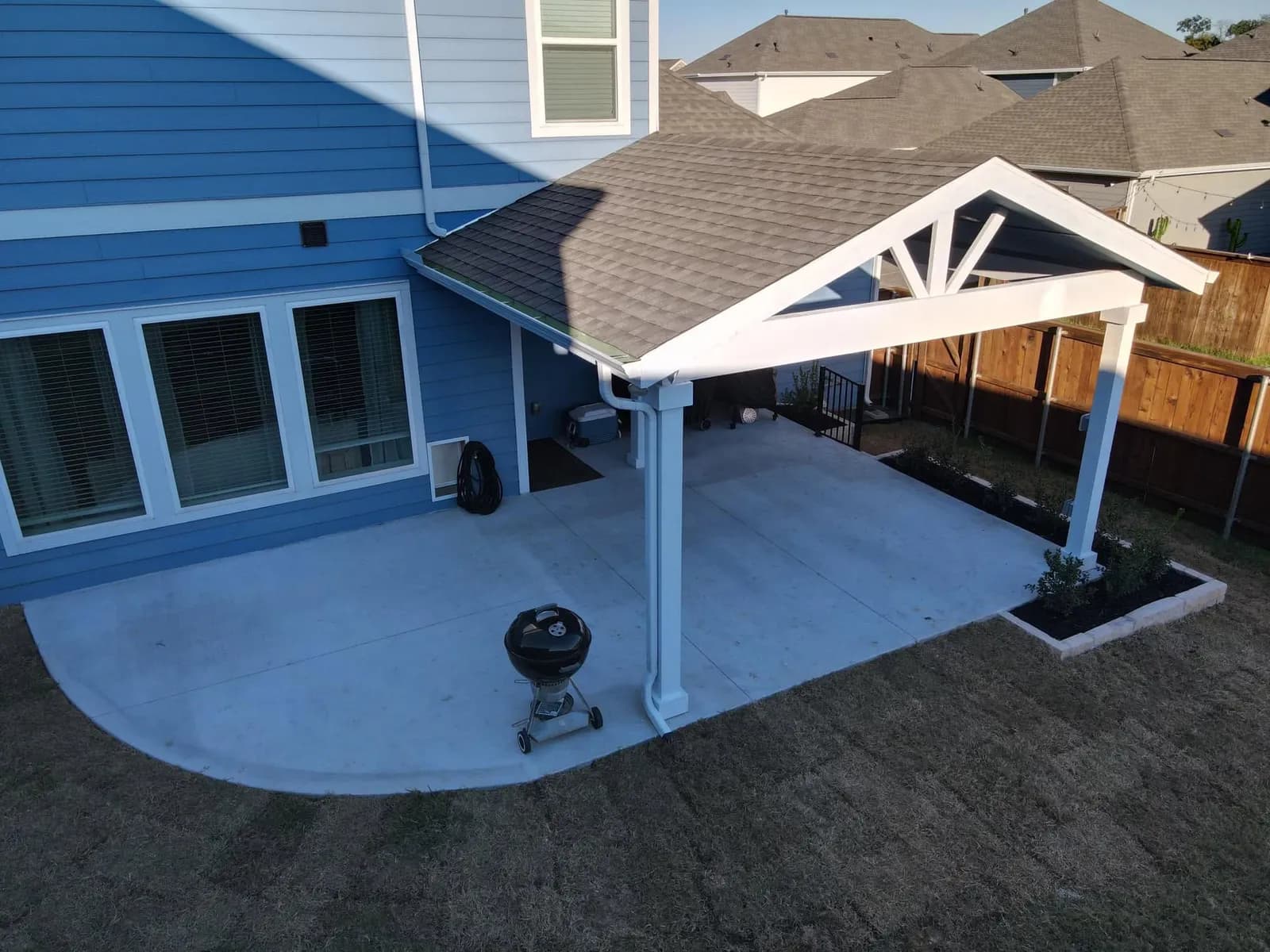
Retaining walls we have built.
Already in the price
- Excavation to a compacted base below grade, not stone set on topsoil
- Drainage stone and a perforated drain pipe behind the wall, daylighted or tied into the yard drainage
- Reinforcement tied back into the soil wherever the design calls for it
- Engineered design and a permit wherever the height requires them
- Haul-off of the excavated soil and any failed wall that is coming out
- One-year workmanship warranty
How we quote it
A site walk, then a written scope back within five business days. The scope names the work, the materials and the price, and the price does not move unless the scope does.
Anything found behind a wall or under a slab that changes the work gets priced and approved before we touch it. That is a change of work, in writing, not a surprise on the final invoice.
Payment is by ACH, card, check or cash, on the schedule written into the contract.
What Moves the Number
Up and down, before you ask for a quote.
Pushes price up
- Height, which past about four feet brings engineering, a permit and reinforcement
- A driveway, pool, structure or slope above the wall, which adds load behind it
- Natural stone rather than segmental block
- Poor access, where every stone and every yard of base comes in by hand
- Removing a failed wall first, and whatever the water has done behind it
- Drainage problems in the yard that the wall has to solve, not just survive
Keeps price down
- A low wall on flat ground, such as a raised bed or garden border
- Segmental block, which is engineered to stack and interlock
- Terracing two short walls instead of one tall one
- Good equipment access to the back of the yard
- A site where the water already drains away from the wall
Common Questions
What does a retaining wall cost?
We quote retaining walls from a site walk rather than publishing a rate, because height and what sits above the wall move the number more than its length does. A knee-high limestone bed wall and a five-foot wall holding up a driveway are different jobs, and the second one includes engineering and reinforcement the first never needs. Tell us the length, the height and what is above it, and you will get a written number.
Do I need a permit or an engineer for a retaining wall?
Usually not for a low garden or bed wall. Taller walls are a different matter: in most cities here, once a wall passes about four feet, or holds up a driveway, a structure or a slope, it needs an engineered design and a permit. The exact threshold varies by city, and we tell you which side of it your wall lands on at the walk, before anything is ordered.
Why do retaining walls fail?
Almost always water. A wall with no drainage stone or drain pipe behind it is holding back saturated soil every time it rains, and North Texas clay swells when it is wet, which adds pressure on top of the weight. That is what makes walls bow, lean and crack. The second cause is a base that was never dug and compacted, so the wall settles unevenly from the bottom.
Can you fix a leaning or bowing wall?
Sometimes a short section can be taken down and rebuilt on a proper base with drainage behind it. More often, a wall that is leaning has been failing for a while, and patching the face does not fix the water behind it. We look at why it moved before quoting either, because rebuilding a wall the same way it was first built gets the same result.
Stone or block?
Cut limestone and natural stone look the most at home here and suit lower walls, beds and borders. Segmental concrete block is engineered to interlock and take reinforcement, which makes it the practical choice for taller walls. Many yards use both: block where the wall has to work hardest, stone where it is seen.
How long does a retaining wall take?
A low bed or garden wall is often a few days. A longer or taller wall runs a week or more, depending on how much soil moves and how the site is reached. Where engineering and a permit are required, that review happens first and usually takes longer than the build.
Get a Written Scope
Tell us what you are looking at and roughly how much of it. We price the scope, and the price does not move unless the scope does.
indicates a required field
Step 1 of 2: Project info