5.0 Google$1M GL + $1M Umbrella1-Year Workmanship WarrantyAll Trades Under One ContractCustom, Limited-Volume Builder
Core Scope
Core Systems: What “Lease-Ready” Means in Practice
Demising walls (fire-rated where required)
HVAC ductwork, VAVs, diffusers, and controls
Electrical panel and branch circuit distribution
Lighting (lay-in or surface, per spec or building standard)
Plumbing rough-in and restroom fixtures
Sprinkler modifications (where applicable)
Ceiling grid or drywall
ADA compliance scope
Fire & life safety coordination
City inspections and permit closeout
Common Questions
What is white box condition?
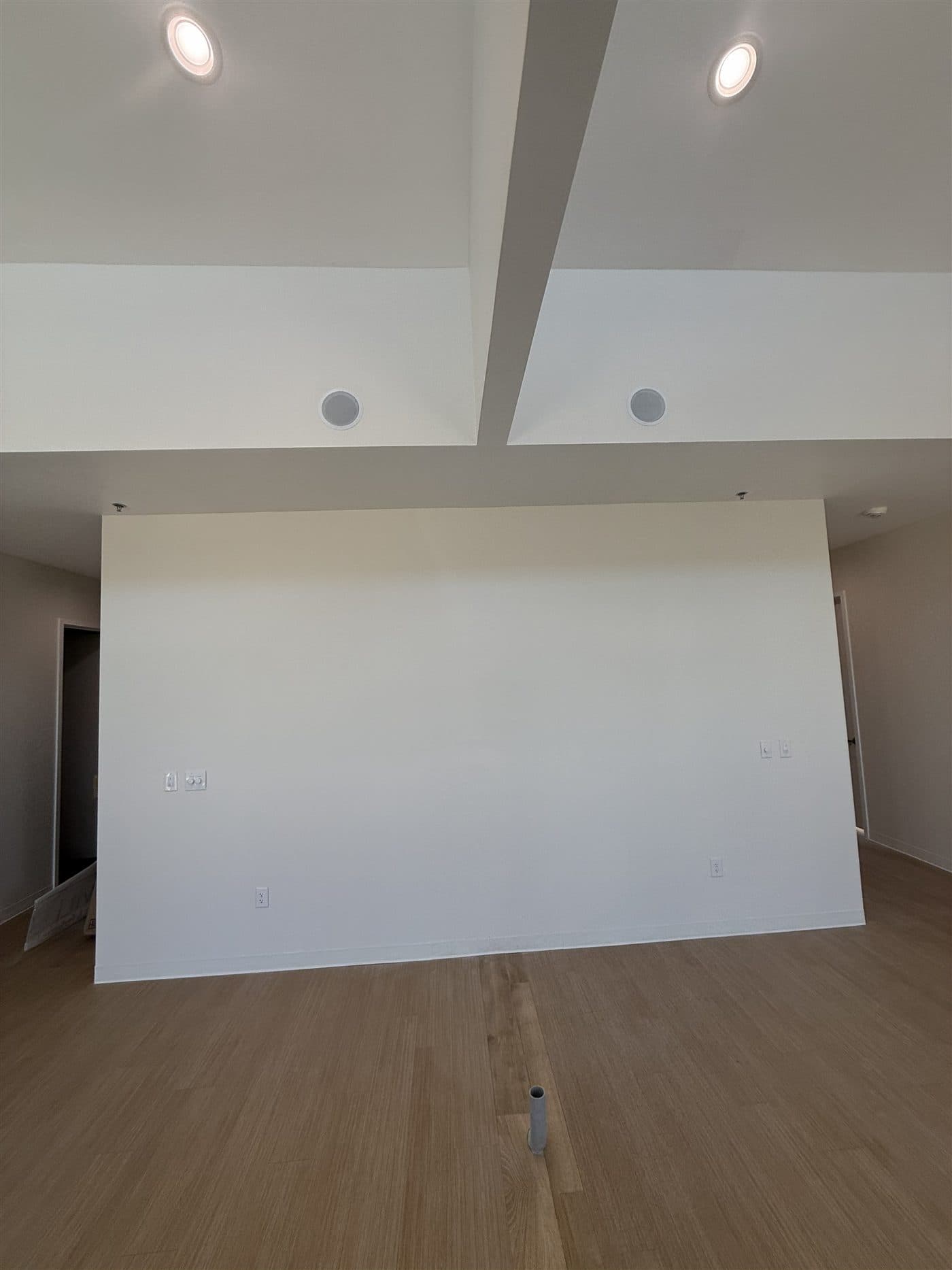
White box, sometimes called vanilla shell or vanilla box, is an intermediate delivery condition: finished demising walls, a level floor, a ceiling grid, basic lighting, HVAC distribution, one or more code-compliant restrooms, and electrical service to a panel. It is not finished space. There is no layout for your business, no branded finishes, and usually no data or specialty power. The important part is that the term is not standardized. What your lease calls a white box and what another landlord means by it can differ by tens of thousands of dollars, so read the delivery specification rather than the label.
What should a 'lease-ready' white box include?
At minimum: fire-rated demising walls, HVAC distribution to the space (ductwork, diffusers, thermostat), electrical panel with branch circuits, restroom rough-ins and fixtures (code-compliant for occupancy load), ceiling grid or drywall, and lighting. We scope each to city and lease requirements so tenants can move in without surprises.
What are the typical long-lead items in a shell finish?
HVAC equipment (rooftop units, VAV boxes), electrical gear (panels, switchgear), and specialty fixtures often have 4 to 10 week lead times. We identify and order these during the permit window so they don't delay your construction sequence.
Do you coordinate with the building's base systems?
Yes. We review the building's MEP capacity, coordinate tie-ins to base HVAC and electrical distribution, and work with the property engineer or management company when base-building shutdowns or tie-in windows are required.
What inspections will be required?
Typically: framing rough-in, MEP rough-in (electrical, plumbing, HVAC), fire-stop, insulation, and final occupancy. We schedule with the city, manage inspection windows, and provide documentation to both the municipality and your landlord.
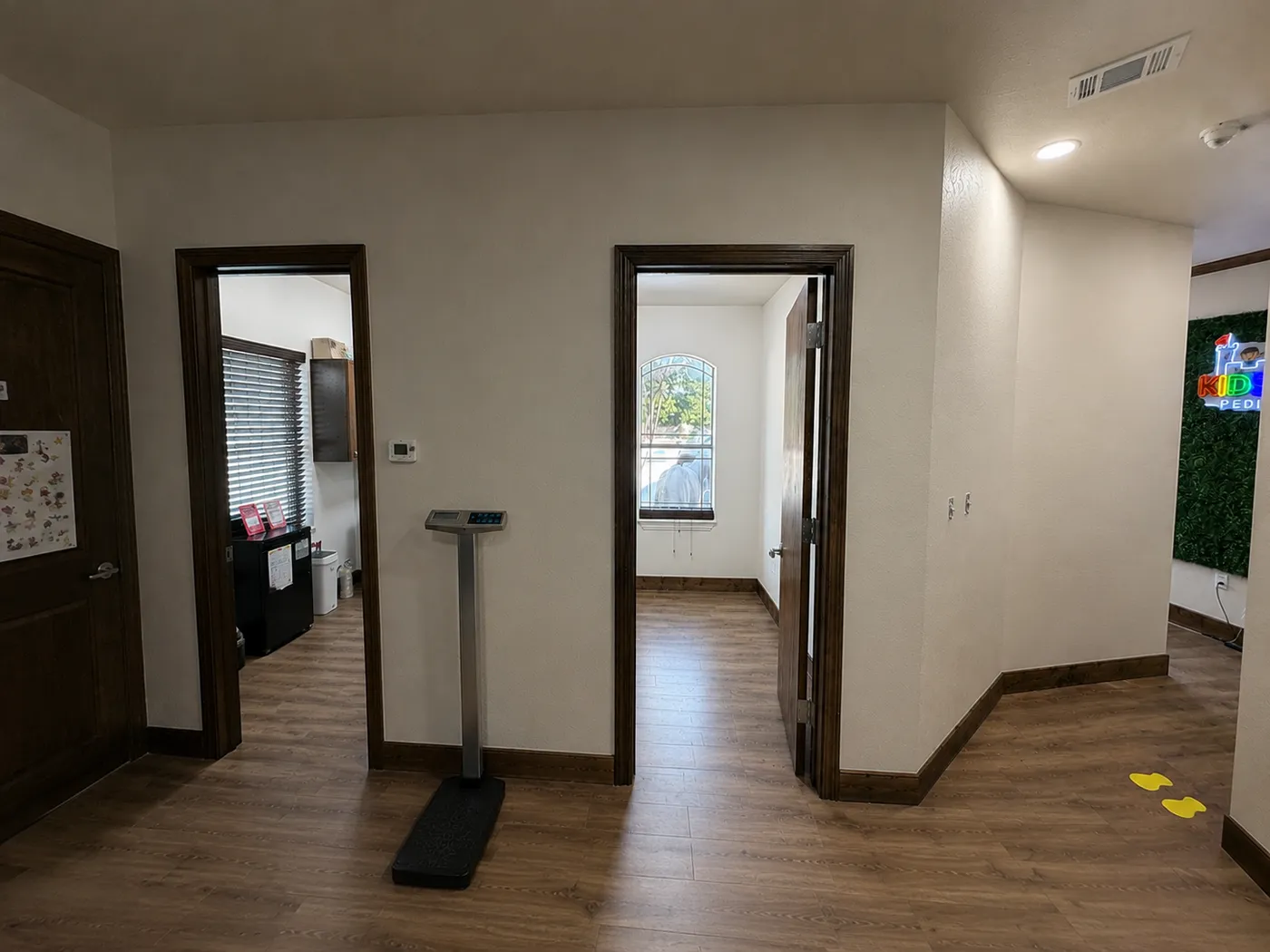
Full interior build-out of a pediatric clinic in Mansfield, taken back to bare structure with the ceiling opened up, then rebuilt. Partition walls were framed to the taped floor layout, and MEP was coordinated and inspected overhead before anything closed up. Exam rooms and the corridor were finished in plank flooring with stained trim and doors, plus casework, lighting and interior signage.
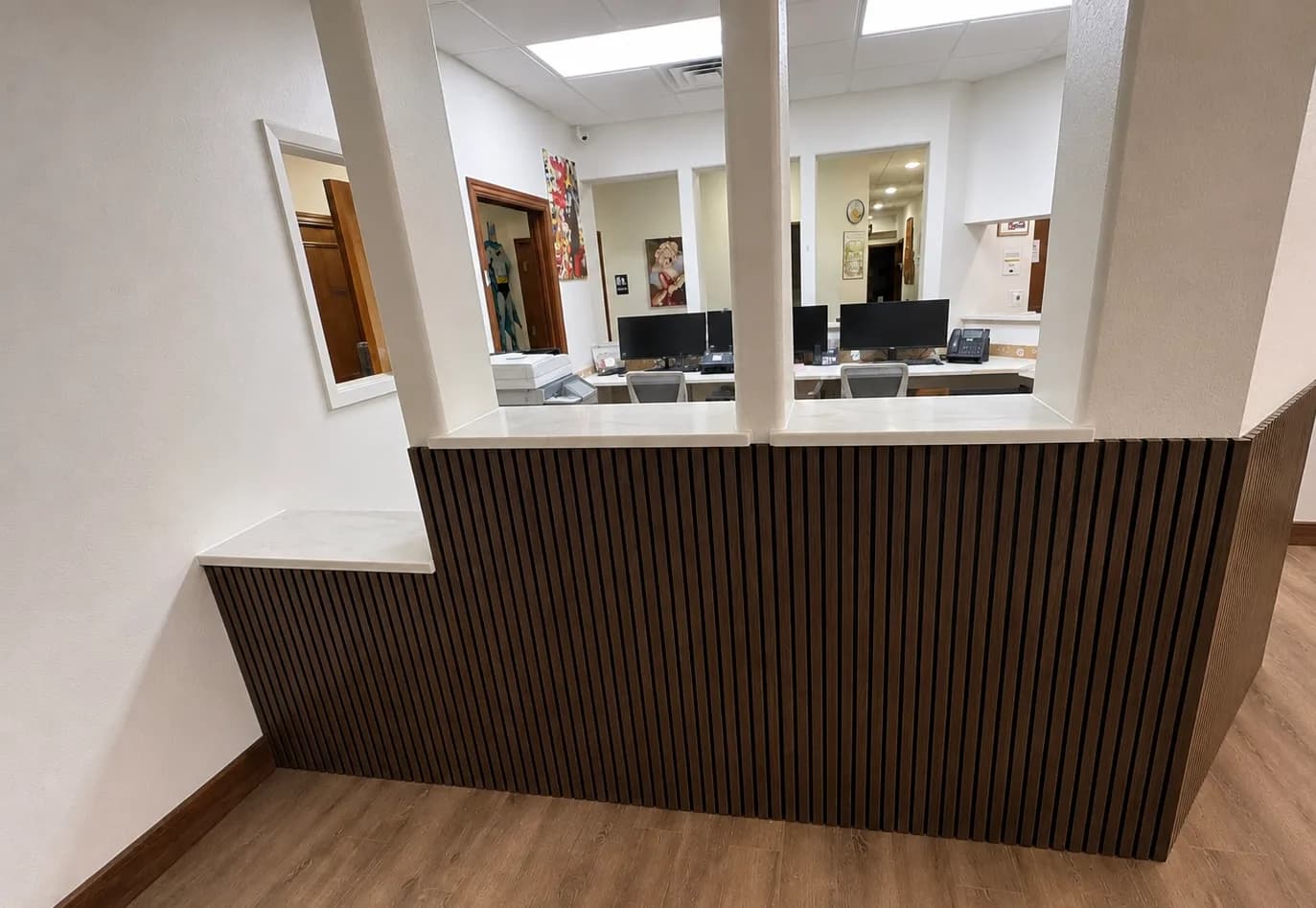
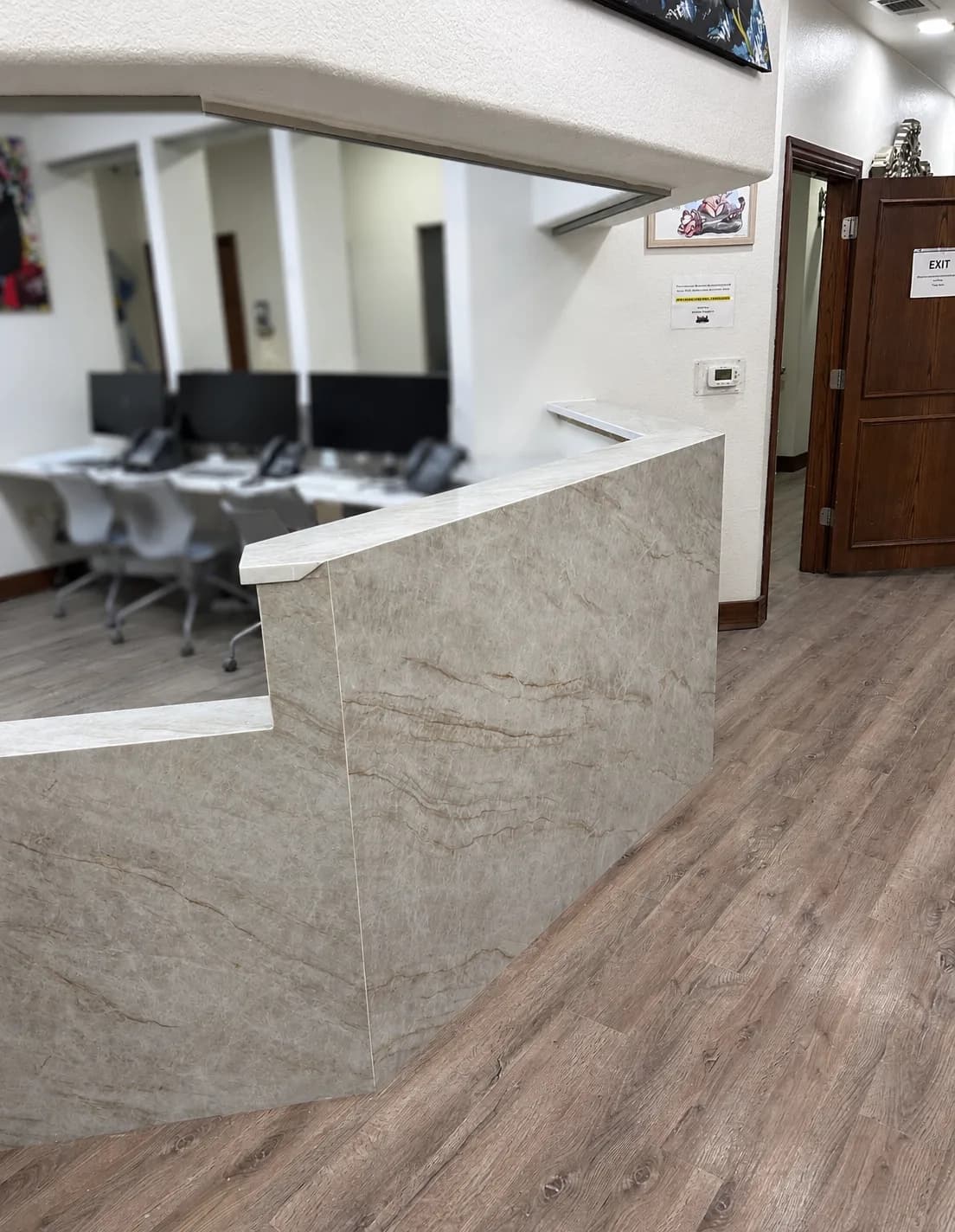
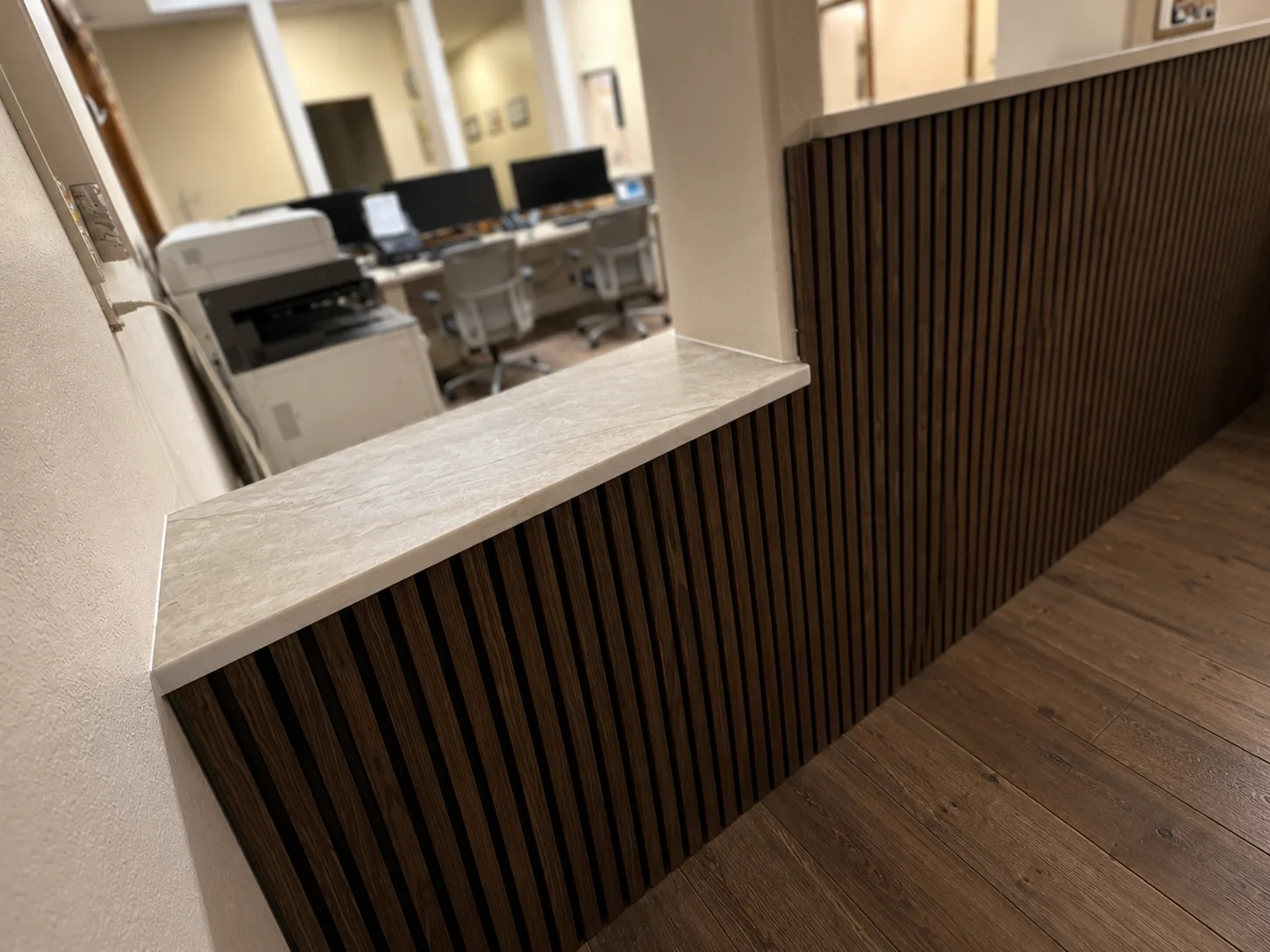
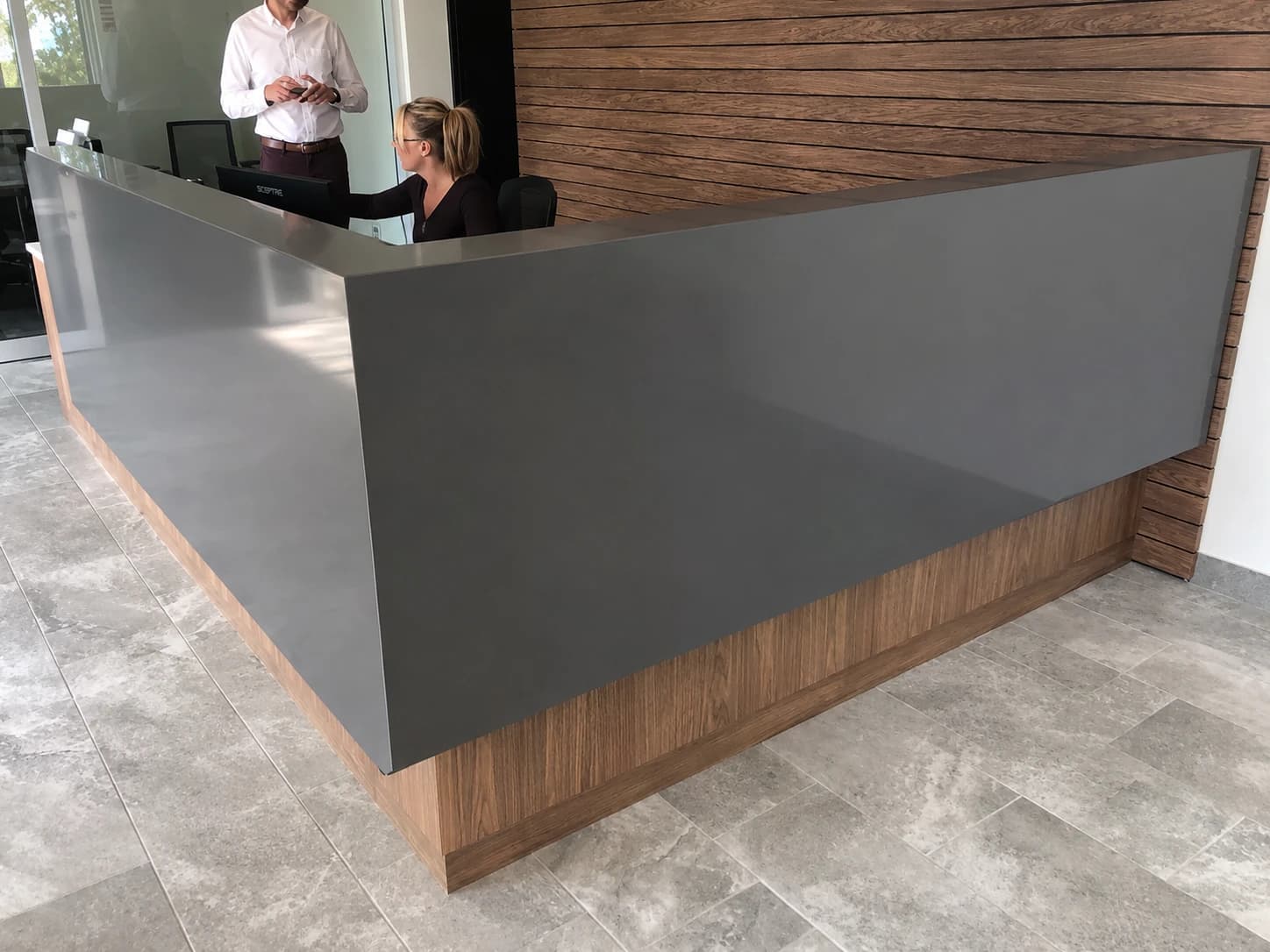
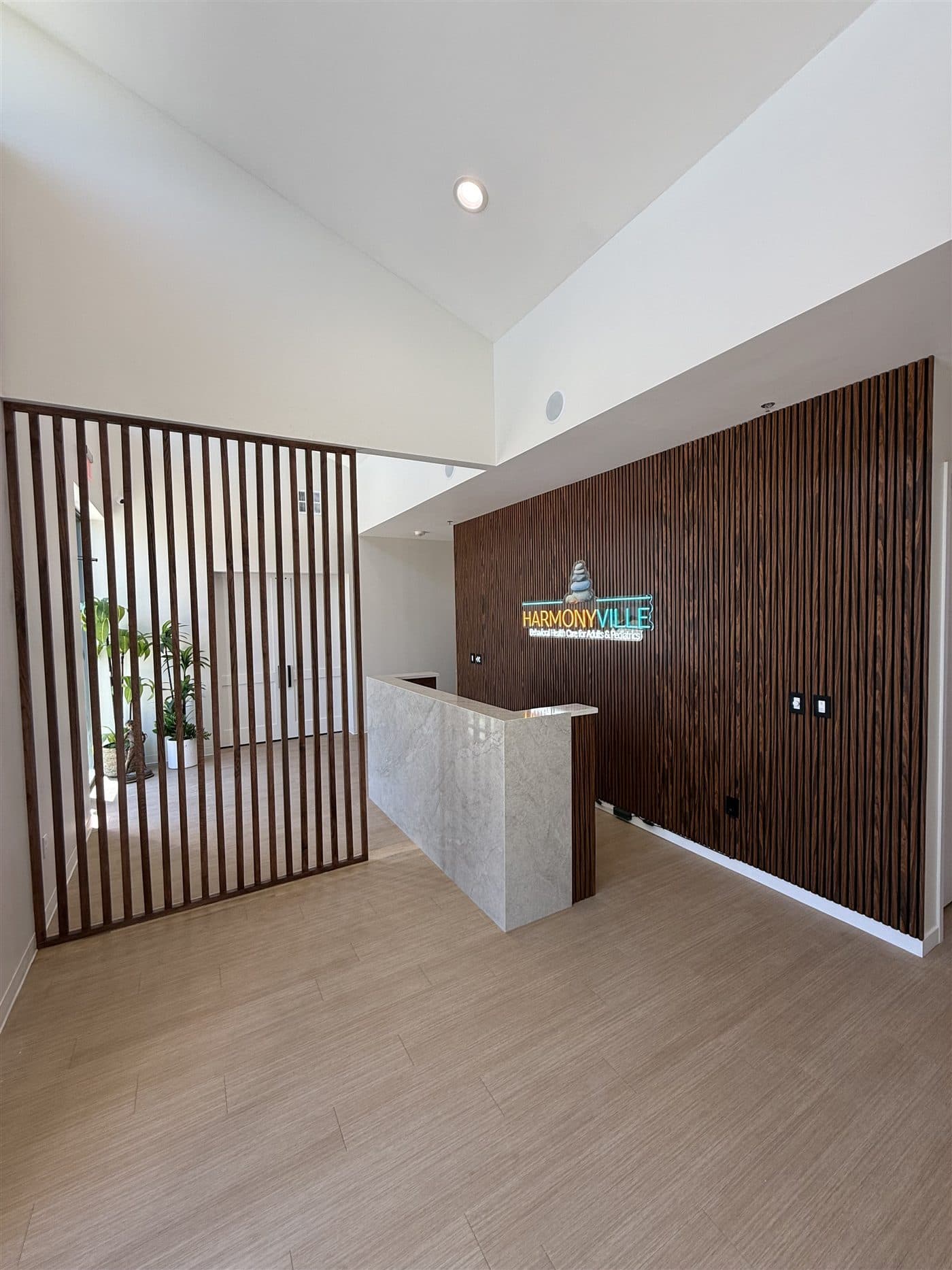
Reception rebuilt in a doctors' office in Mansfield. The glass-enclosed check-in window came out, the openings were reframed with painted mullions, and the counter was rebuilt with a dark wood slat front under a light stone-look top, mitered and returned down the end of the run. A lower counter section sits at the end of the run beside a pass-through to the adjoining room.