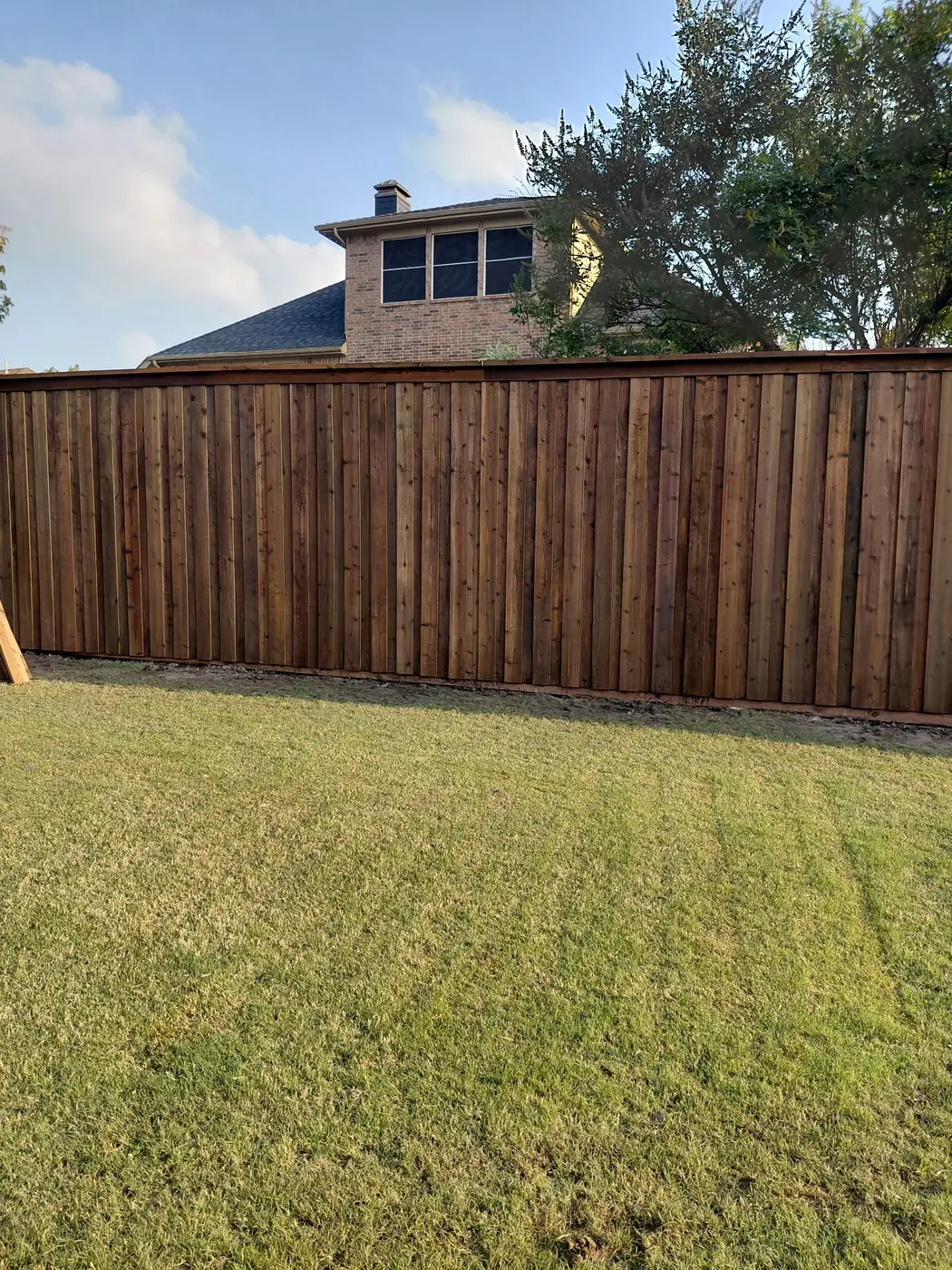
Repair a cedar fence when the posts are sound and only the rails and pickets are worn out; replace it when the posts are leaning, loose or rotted at the ground. New rails and pickets on good posts is the smaller job, because the posts, the footings and the digging stay put. The posts decide which one you are buying. i30 Builders prices either one in writing after a site walk, and the price does not move unless the scope does. Typical per-foot ranges for both are in our fence cost guide.
Why do the posts decide it?
Pickets and rails are the parts you see, and they are the cheap parts to swap. The posts carry the whole fence and they are the part that fails here. North Texas clay swells when it is wet and shrinks when it is dry, and a post sits right in the layer that moves most. A fence that leans after a dry summer is almost always a post problem, not a picket problem. The fence posts in clay guide covers depth, concrete and steel.
Before you ask anyone for a price, walk the fence and check each post:
- Push the top of each post. A sound post does not rock. One that moves an inch or more is loose in its footing or broken below grade
- Look at the line where a wood post meets the ground. Soft, dark or crumbling wood there is rot, and it is where wood posts fail first
- Look for footings that have heaved up out of the soil or cracked apart
- On steel posts, look for rust that has eaten through near the base
- Stand at one end and sight down the run. A section that leans or bellies is following the posts under it
A few bad posts on an otherwise sound fence is a repair. Most of the posts going at once is a rebuild, because by then the repair is paying for new pickets on a fence that is about to need new posts anyway.
What does rail-and-picket replacement cover?
The existing rails and pickets come off, new pressure-treated rails go on the existing posts, new pre-stained cedar pickets go on the rails, the gate is rebuilt with its hardware, and the old material is hauled off. It is the right job for a fence whose posts are straight and solid and whose wood has simply weathered out.
Post replacement is not part of that job. The whole point is that it reuses the posts, so any post found unsound once the old pickets are off is priced as a change order, in writing, before it is replaced, not quietly added to the invoice. That is also why we check every post at the walk: the fewer surprises behind the old pickets, the less chance the scope changes.
When is a full replacement the better money?
A new board-on-board cedar fence, 6 ft or 8 ft, includes demolition and haul-off of the old fence, new posts set in concrete, a kickboard, top cap and trim, factory pre-stained cedar pickets and walk gates with locking hardware.
What you pay for on top of a repair is new posts in concrete, a kickboard and a cap. If the posts are leaning, if several are rotted at grade, or if the fence is old enough that the posts are near the end of their life, that extra buys a fence that starts its life over rather than new boards on old ground.
A rebuild is also the moment to meet the current code. Several cities around here now write the post into the ordinance: Rockwall requires metal posts in concrete on solid wood fences over 48 inches, Fate requires metal posts on every residential fence, Royse City defines a fence post as galvanized steel pipe set two feet deep in concrete, Forney requires galvanized steel posts in three-foot footings on fences over 52 inches, and Princeton requires schedule 40 steel posts for wood fences. The walk confirms what your city requires before anything is priced.
What drives the cost each way?
| Rails and pickets on sound posts | Full rebuild | |
|---|---|---|
| Length of the run | Sets most of the cost | Sets most of the cost |
| Posts | Reused; any bad ones priced as a change order | All new, set in concrete |
| Height | Matches the existing fence | 6 ft or 8 ft; taller means longer posts and more cedar |
| Gates | Rebuilt with new hardware | New, with locking hardware |
| Tear-out | Rails and pickets only | The whole fence, posts and old concrete |
| City post rules | Usually not triggered | Steel posts where the city requires them |
Written Scope
Planning this type of project?
Tell us your space, city, and timeline. We return a written scope with lump-sum pricing, no obligation.
On a long run with good posts, the repair is real savings. On a short run, the gap closes, because a crew, a truck and a cedar delivery cost about the same at 60 feet as at 120. When the two are that close, the new posts are usually worth it.
Do you need a permit to repair a fence?
It depends on the city, and the rules run in both directions. Rockwall is the strict one: replacing 25 feet or more of fence, or five or more posts, needs a fence repair permit, and the fence permit fee is $75. A 120 foot rail-and-picket job in Rockwall needs one. Several neighboring cities tie the trigger to a share of the fence instead:
- Rowlett exempts repairs that do not exceed 25 percent of the fence area
- Fate requires a permit when 25 percent or more of the fence length is replaced within 18 months
- Sachse requires one to replace or relocate posts or to repair more than 25 percent of the fence, though pickets alone can be swapped without one
- Wylie allows one pole, or a short run of pickets or rails, in any 30 days without a permit, and anything more needs one
- Princeton requires a permit for any fence work over 20 feet, repairs included
- Lucas requires a permit for new fencing but not for repairs
- Royse City says a permit is required for all fences and publishes no repair threshold, so we ask the city before treating any repair as exempt
HOA approval is separate from all of this. Many neighborhoods want to approve a stain color or picket style change even when the city does not need a permit. The fence permit guide covers fees, post rules and HOA steps city by city, and we pull the permit either way.
Can new pickets be stained to match the old fence?
New pickets arrive factory pre-stained, but a fence that has weathered for years will not match them on day one. If you are repairing one side and want the rest of the fence to read as one color, staining the existing run to match is priced per run at the walk. How much of the fence there is, how weathered it is and whether both sides are stained all change that number, so we price the run you actually have.
What about a wrought iron fence?
A leaning or damaged wrought iron fence can usually be repaired rather than replaced. The repair covers excavation at the existing posts, straightening and resetting the posts that can be saved in new concrete, replacing damaged panels in matching ornamental steel, welding, and coating the repaired areas. The cost comes from the length of fence, how many posts need work and how many panels are damaged. A post that turns out to be unsound once it is dug out is replaced, and the written price says up front how that is handled so it is not a surprise.
Not sure which one your fence needs?
We walk the fence, check every post, and hand you a written price that says whether it is a repair or a rebuild and why. Call (469) 721-0146, or see fence installation and repair.
Frequently Asked Questions
Common questions about this topic from North Texas homeowners.
How long does a cedar fence last?
With the posts set properly and a stain every few years, a cedar privacy fence commonly lasts 15 to 20 years or more in North Texas. Skip the maintenance and it can look tired in half that time. In our clay the posts usually decide how long it stays straight, more than the pickets do.
Can I replace just the pickets?
Yes, if the rails and posts are sound. Our standard repair replaces the rails and pickets together on the existing posts, because weathered rails are usually why pickets loosen. A handful of loose pickets is usually too small to make sense as a job on its own.
Do I need a permit to repair a fence in Rockwall?
Often, yes. Rockwall requires a fence repair permit when you replace 25 feet or more of fence, or five or more posts. The fence permit fee is $75. Smaller repairs do not need one. We pull it when it is needed.
How do you price a fence repair?
In writing, after a site walk. We check every post, measure the run, note the gates and the city's rules, and put the price on paper before any deposit. The price does not move unless the scope does, and an unsound post found behind the old pickets is priced as a change order before it is replaced.
About the author
Yelp
General contractor, Royse City, TX
Commercial tenant improvement, build-out and renovation, and residential outdoor living, fencing, additions and high-end kitchens and baths across Dallas-Fort Worth and East Texas.