Most commercial renovation we run happens inside a business that stays open. The scope is rarely the hard part. The schedule is, because every night has to end with the space ready to trade the next morning.
The nightly cycle
Work starts after your last customer leaves. Containment goes up, protection goes down on floors and surfaces that are staying, and material comes in through a route that does not cross your customer areas. The trades work their sequence. Then, before anyone leaves, the site is cleaned, the containment is either sealed or struck, and the space is reset so it looks like nothing happened.
That reset is the part people underestimate. It is a real cost every single night, and it is why occupied work carries a multiplier over the same scope in an empty suite.
What the multiplier actually pays for
- Night and weekend labour rates across every trade on site
- The nightly clean, protect, and reset cycle
- Dust and noise containment between the work and the occupied area
- Working in smaller zones, which means more mobilisations for the same total work
- Inspections scheduled around your operating day rather than the build
- Landlord rules on freight elevator access and MEP shutdown windows
We state that multiplier as its own line in the scope rather than folding it into the per-square-foot rate. You should be able to see what phasing costs, because sometimes it is the wrong choice.
When closing is cheaper
If a week of lost revenue is smaller than the phasing premium, close. We will tell you when that is the case and schedule it that way. The point of pricing phasing separately is that you can actually run that comparison instead of guessing at it.
The common middle path is a partial close: phase most of the work after hours, then take one planned closure for the genuinely disruptive day, the slab cut or the panel changeover, rather than stretching it across three weeks of nights.
Written Scope
Planning this type of project?
Tell us your space, city, and timeline. We return a written scope with lump-sum pricing, no obligation.
Two examples
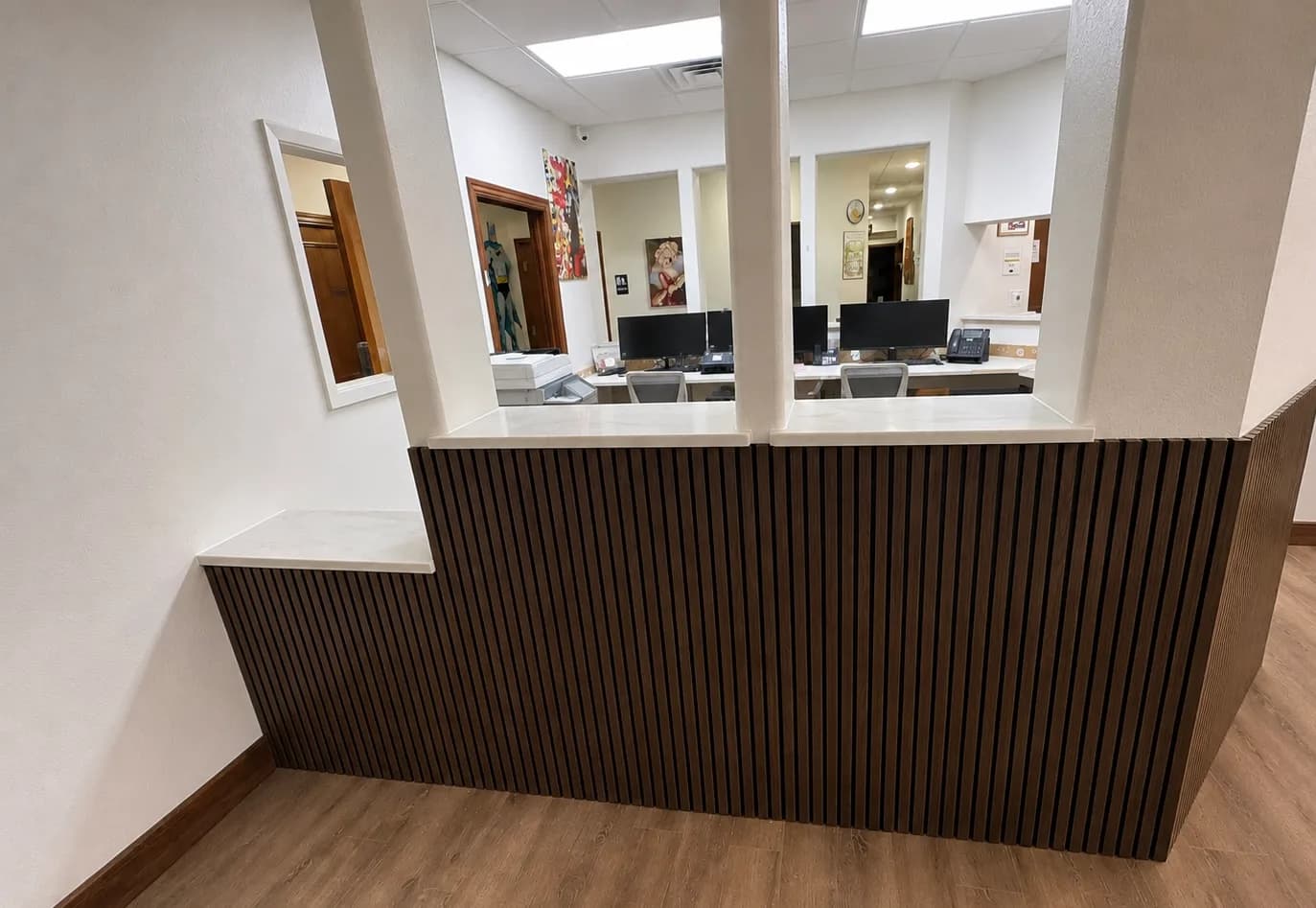
At a Mansfield medical office we rebuilt the front desk and check-in area across multiple phases, entirely after hours, with nightly cleanup and reset for next-day patient care. The suite never closed a business day.
In Rowlett we delivered a conference room build plus a full suite repaint across hallways, common areas, and private offices inside a three-day window, and the client left a five-star review the day after wrap.
What to ask a contractor before you commit
- Is the phasing premium a separate line, or is it hidden in the rate?
- Who does the nightly reset, and is it in the price or an extra?
- How is dust contained, and what happens in a clinical or food setting?
- What is the plan when an inspection falls in the middle of the operating day?
- What happens if a night runs over and the space is not ready at open?
Get a phased scope in writing
We price the phasing premium as its own line so you can weigh it against closing. Free site walk, written scope, real completion date before you pay anything. Call (469) 721-0146.
Frequently Asked Questions
Common questions about this topic from DFW tenants, landlords, and business owners.
Does after-hours work really cost more?
Yes, and any contractor who says otherwise is either absorbing it or planning to find it later. It pays for night and weekend labour, the nightly clean and reset, containment, and more mobilisations because work happens in smaller zones. We show it as its own line rather than burying it in the rate.
Can you really hand the space back every morning?
That is the standard we work to. On a recent Mansfield medical office we rebuilt the front desk and check-in area entirely after hours, and the suite never closed a business day.
How do you keep dust out of the occupied area?
Containment partitions, negative air where the scope calls for it, protected routes for material in and debris out, and a nightly reset that covers the shared areas your customers walk through. In clinical settings that extends to infection-control containment.
Is it ever better to just close?
Often. If your revenue for the closure period is less than the phasing premium, closing is the rational choice, and we will say so. Pricing phasing separately is what makes that comparison possible.
What if a night runs over?
The scope defines what happens: the space is reset to operating condition regardless, and the remaining work moves to the next phase. Nobody opens to a construction site.
About the author
Yelp
General contractor, Royse City, TX
Commercial tenant improvement, build-out and renovation, and residential outdoor living, fencing, additions and high-end kitchens and baths across Dallas-Fort Worth and East Texas.