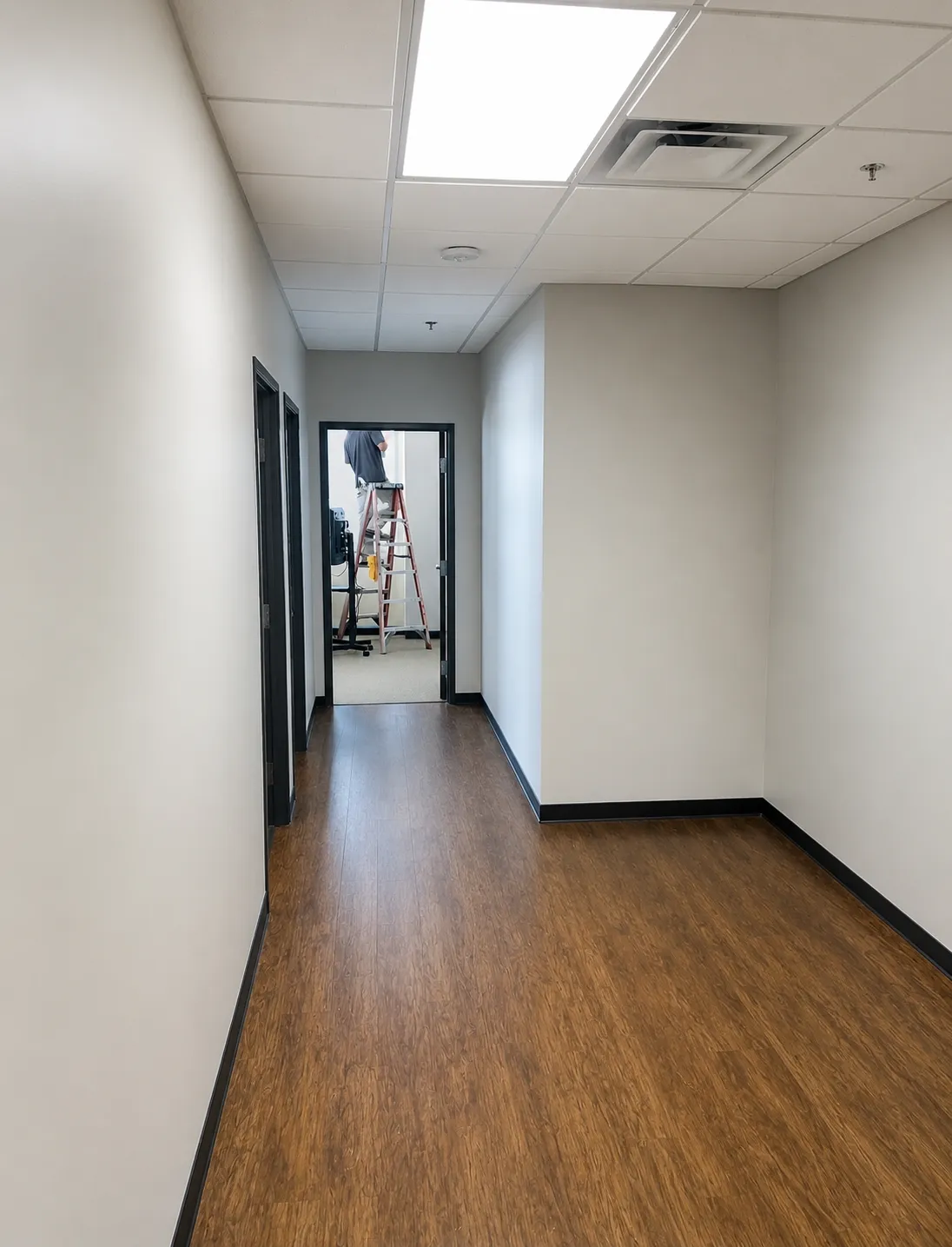
Buying the building changes the math. You are not spending a landlord's allowance or working around a lease deadline. You own it, and the goal is to update the space so your business can move in and operate. That freedom comes with the full responsibility for code, permits, and whatever the previous owner left behind. This is the order we walk DFW owners through so the renovation does not stall after you already hold the keys.
Step 1: Verify the Certificate of Occupancy and Zoning
Before you plan a single wall, confirm the certificate of occupancy and the zoning actually allow your use. A building that was a retail shop may not be approved for a restaurant or a medical use without a change of occupancy, which can trigger parking, accessibility, and life-safety requirements. We confirm the current CO and the allowed use for your address up front, because finding out after demolition is the most expensive way to learn it.
Step 2: Inspect for What the Building Is Hiding
Older DFW buildings hide cost in the places you cannot see. Before budgeting, we assess the roof, the structure, and the mechanical, electrical, and plumbing capacity, and we flag the conditions an inspector should test for, asbestos and lead paint in anything built before the late 1980s, undersized electrical service, and aging HVAC. Knowing these early turns surprises into line items instead of mid-project stoppages.
Step 3: Code and ADA Upgrades the Renovation Triggers
Once you open up an older building, current code applies to the work you touch. A renovation commonly triggers ADA upgrades (restrooms, entrances, parking, and routes) plus electrical, fire, and energy-code items the original building predates. We scope these as part of the budget instead of letting the plan reviewer surface them later, so your number is real and your timeline holds.
Step 4: Permits and the DFW Timeline
Updating an existing building is usually faster than ground-up construction (weeks to a few months rather than the better part of a year), but the permit still governs the schedule. DFW jurisdictions vary, and Dallas in particular has run long on commercial review. We submit complete, correctly formatted drawings the first time, because missing documents and outdated code references are the single biggest cause of lost weeks, and we work the schedule backward from the date you need to be operating.
Step 5: Renovate, or Rebuild?
Written Scope
Planning this type of project?
Tell us your space, city, and timeline. We return a written scope with lump-sum pricing, no obligation.
Most of the time, remodeling an existing building beats tearing it down. It is less complex, less expensive, and far faster. But when the structure, the systems, and the layout all fight your use, a partial rebuild can be the better long-term value. We give you the honest comparison for your building and your business, not the answer that books the biggest job.
Step 6: Phase It to Open on Time
You rarely have to do everything before day one. We phase owner renovations so the spaces you need to operate come online first and the rest follows without shutting you down, useful whether you are moving in fresh or keeping part of the building running during the update. Sequencing the work around your move-in date is often what keeps the project on budget and gets you open when you planned to.
Pre-Move-In Renovation Checklist
- Confirm the certificate of occupancy and that zoning allows your use
- Inspect roof, structure, and MEP capacity; test for asbestos and lead in older buildings
- Identify ADA, electrical, fire, and energy-code upgrades the renovation triggers
- Build the budget with 8 to 15% soft costs and a 5 to 10% contingency
- Confirm permit path and work the schedule backward from your move-in date
- Decide refresh vs full renovation per area, and phase the work around operations
Get a Free Owner Walk-Through
Just bought a building? We walk it with you, confirm the CO and code triggers, flag the hidden conditions, and hand you a phased scope and budget to get your business moved in. Call (469) 721-0146. Response within 1 business day.
Frequently Asked Questions
Common questions about this topic from DFW tenants, landlords, and business owners.
I bought a commercial building. What do I check before renovating?
Start with the certificate of occupancy and zoning to confirm your use is allowed, then inspect the roof, structure, and MEP capacity and test older buildings for asbestos and lead. Those three steps decide most of the budget and timeline before any design begins.
Does renovating an older DFW building trigger code upgrades?
Usually yes. Once you open up the building, current code applies to the work you touch, commonly ADA upgrades to restrooms, entrances, and parking, plus electrical, fire, and energy-code items. We scope these into the budget rather than letting plan review surface them late.
Is it faster to renovate or rebuild a commercial building?
Renovating is usually faster and cheaper (weeks to a few months versus the better part of a year for ground-up) because it is less complex. When the structure, systems, and layout all fight your use, a partial rebuild can be the better long-term value. We give you the honest comparison.
Can you renovate while I keep part of the building running?
Yes. We phase owner renovations so the areas you need come online first and the rest follows without shutting you down, sequencing the work around your move-in or operating schedule to keep the project on budget and on time.
About the author
Yelp
i30 Builders Editorial Team
AuthorEditorial and Field Operations
Internal content and field documentation team
i30 Builders Field Leadership
Expert ReviewerFounder-Led Field Operations
General contractor, field project management