Rent usually starts before you are ready to trade. That gap is the most expensive part of any build-out, and it is decided by schedule discipline rather than by construction speed.
Work backward, not forward
Start at the date you need to open and subtract, rather than starting today and adding; the schedule planner runs that subtraction for your space type. The subtraction exposes the constraints immediately:
- Opening day, minus a few days of your own fit-out, stocking, staff training
- Certificate of occupancy, which needs building, fire, and sometimes health inspections passed
- Construction, which is the part everyone estimates and the part least likely to surprise you
- Long-lead material, ordered against the approved scope rather than the issued permit
- Permit approval, averaging three to four weeks from design across our markets
- Scope and drawings, which can start the moment the space is identified
Run that arithmetic honestly and most people discover the schedule was decided weeks before they thought it started.
Where the float actually is
Not in construction. Trades can be added to a floor to a point, and past that point you are paying overtime for diminishing returns. The float is at the front, in overlapping things that do not have to happen in sequence.
- Pre-filing the permit while finishes are still being selected
- Ordering long-lead items against the approved scope, not the issued permit
- Submitting fire and health review alongside building rather than after it
- Getting landlord drawing approval running in parallel with city review
- Confirming shell condition before signature so no time is lost re-scoping
Long-lead items deserve naming
Written Scope
Planning this type of project?
Tell us your space, city, and timeline. We return a written scope with lump-sum pricing, no obligation.
Custom millwork, glass-front office systems, specialist equipment, and anything with a manufacturer lead time can quietly become the critical path. They should be identified in the scope and ordered early rather than discovered when everything else is finished and waiting.
What we commit to
A written scope with a real completion date before you pay a deposit. Where a date requires overtime or a larger crew to hit, that shows up in the scope as a cost rather than as a promise. And if a review cycle threatens the date, you hear it immediately rather than at the end.
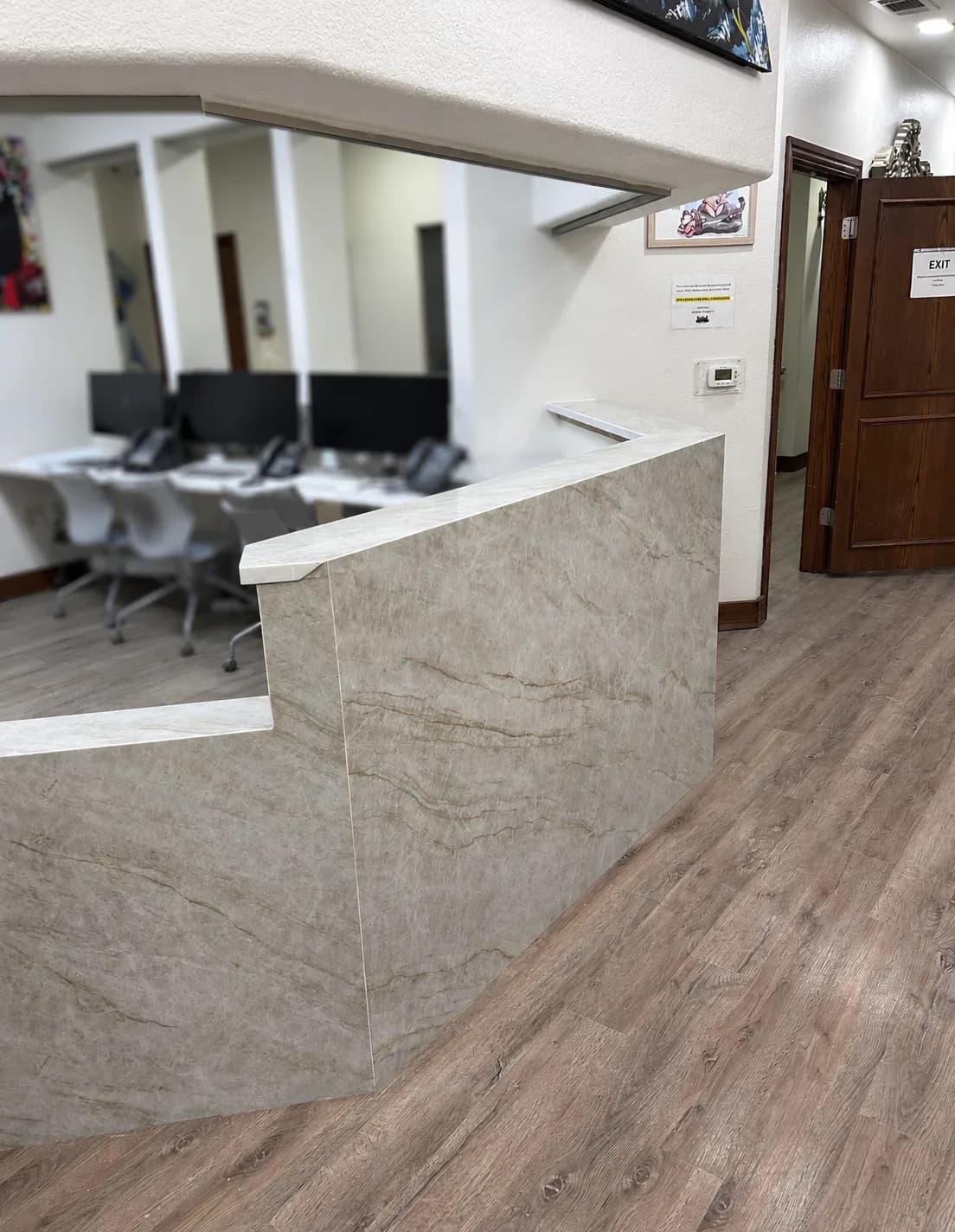
In Rowlett that discipline produced a conference room build and full suite repaint inside a three-day window. At a Mansfield medical office it produced a multi-phase front-desk rebuild without the suite closing a single business day.
Build backward from your date
Tell us when you need to open. We will tell you honestly whether it is achievable and what it costs to make it so. Call (469) 721-0146.
Frequently Asked Questions
Common questions about this topic from DFW tenants, landlords, and business owners.
When should I bring in a contractor?
Before you sign, ideally while you are still choosing between spaces. Shell condition and permitting path differ enough between candidate spaces to change the opening date by weeks.
Can you compress a schedule if my date is tight?
To a point, with overtime and larger crews, and that cost appears in the scope as a line rather than as a promise. What cannot be compressed is plan review and manufacturer lead times, which is why the front of the schedule matters most.
What is usually the critical path?
Permit approval at the start and long-lead material at the end. Construction itself is the most predictable phase and rarely the thing that slips.
Does rent really start before I can open?
Usually. Commencement is typically tied to possession or delivery rather than to your opening, which is why the gap between them is worth engineering down.
What if the schedule slips?
You hear about it when we know, not at the end. Where possible we re-sequence unaffected work so the whole job does not sit idle waiting on one item.
About the author
Yelp
General contractor, Royse City, TX
Commercial tenant improvement, build-out and renovation, and residential outdoor living, fencing, additions and high-end kitchens and baths across Dallas-Fort Worth and East Texas.