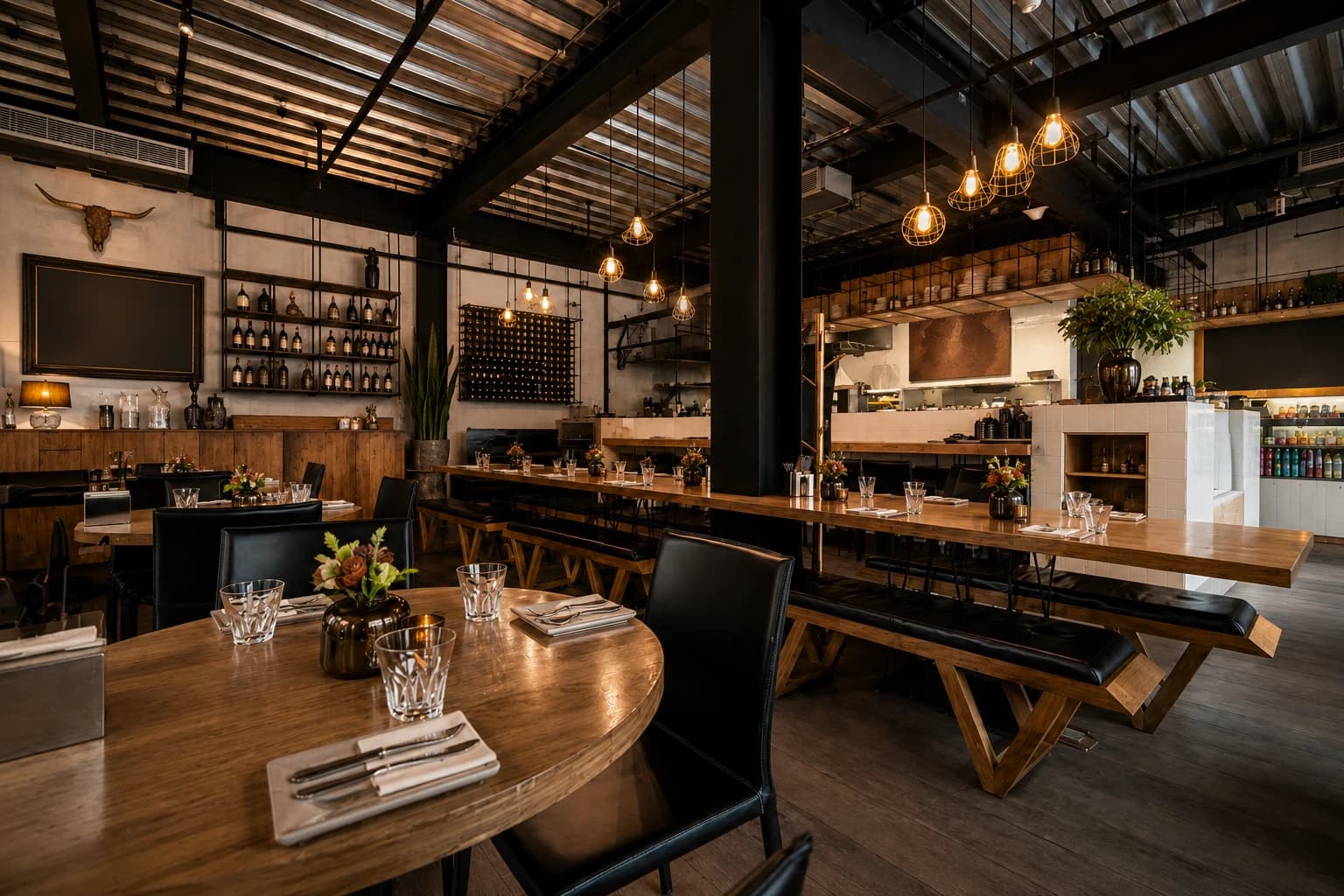
A restaurant finish-out in DFW runs $100 to $160/SF to rework a second-generation restaurant whose hood, interceptor and gas stay, and $265 to $380/SF to build a full-service kitchen and dining room from a shell, on the rate card i30 Builders publishes. A cafe that cooks nothing that needs a Type I hood sits lower, from $45 to $90/SF for a refresh of a former food space. The spread comes almost entirely from kitchen infrastructure, and four items decide most of it: the hood, the grease interceptor, the electrical service and the rooftop HVAC.
These are typical ranges only. Every job is priced in writing after a site walk. Scope, access, finishes, and landlord requirements change the number.
What does a restaurant build-out cost per square foot?
| Scope | Published range | When it applies |
|---|---|---|
| Cafe refresh, second-generation food space | $45 to $90/SF | Changing the look, not the systems |
| Cafe or bakery in a vanilla shell, no Type I hood | $140 to $200/SF | Landlord delivers HVAC, a restroom and power |
| Cafe or bakery from a cold shell, no Type I hood | $220 to $300/SF | Every system in the space is yours to build |
| Full-service restaurant, second-generation remodel | $100 to $160/SF | Hood, interceptor and gas in place and staying |
| Full-service restaurant from shell | $265 to $380/SF | Full kitchen and dining room built from a shell |
Kitchen equipment, FF&E, design and engineering, health-department plan review fees and landlord fees are outside every range. The restaurant and cafe build-out cost page lists what each tier includes.
Which four items decide a restaurant's number?
| Adder | Published range | When you need it |
|---|---|---|
| Type I hood system: hood, fire suppression, grease duct, fan, curb, makeup air | $45,000 to $75,000 | Any appliance producing grease vapor that is not UL 710B listed or ventless |
| Exterior grease interceptor: tank, sawcut, trench, paving patch | $20,000 to $45,000 | No existing interceptor, or one undersized for your fixture count |
| Electrical service upgrade | $20,000 to $50,000 | The panel cannot carry the kitchen |
| New rooftop HVAC unit with curb and duct | $25,000 to $50,000 | No unit, or one undersized for the kitchen heat load |
Worked for an 1,800 square foot cafe in a vanilla shell: $252,000 to $360,000 before any adder. Add a Type I hood because the menu needs a fryer, and the hood alone is $45,000 to $75,000 on top. That is why the equipment list should be settled before the lease is: the menu decides the hood, and the hood decides the budget.
Why does a second-generation restaurant save the most?
Nowhere does a second-generation space pay off more than in food service. Inheriting a working Type I hood, a properly sized grease interceptor and gas already run to the line removes the adders that do not scale with floor area. The catch is condition: an old hood that fails inspection, or an interceptor undersized for your fixtures, is not a saving. Walk the space with whoever will build it before you sign, and get in writing which existing systems you can keep and which the health department and code will make you replace.
What does the health department add to the permit path?
A restaurant carries a review most finish-outs do not: health-department plan review on top of the city building permit. The kitchen layout, hood, grease, finishes and hand-sink placement are all reviewed against the food-establishment rules, and a rejected set costs weeks. Coordinate the building and health submittals together, submit complete drawings the first time, and work the schedule backward from your target opening so the permit is not what makes you miss it.
Written Scope
Planning this type of project?
Tell us your space, city, and timeline. We return a written scope with lump-sum pricing, no obligation.
How should you negotiate the allowance on a food lease?
Landlords who want a food tenant will often negotiate a stronger allowance or a better delivery condition, but even a strong allowance rarely covers a full kitchen. The useful move is to price the adders before you sign, then negotiate on the items that do not scale: who provides the interceptor, whether the landlord delivers a rooftop unit sized for a kitchen, and whether the electrical service is upgraded as part of the shell. Those are line items worth tens of thousands each, and they are easier to win in the lease than to pay for afterward.
What should you confirm before you sign a restaurant lease?
- Is there an existing hood and grease interceptor, and do they pass inspection for your menu?
- Is gas service available and sized for your line, or does it need an upsize?
- Can the panel and electrical service carry a walk-in and the kitchen equipment?
- Who carries the health-department and building permits, and the certificate of occupancy?
- What is the required opening date, and does the schedule survive a permit cycle?
If you are remodeling a restaurant you already run rather than leasing a new one, the cafe remodel phasing guide covers staying open through the work.
Get a written kitchen scope before you sign
Send us the space and your equipment list. We walk it, tell you which kitchen systems you can keep, price the adders, and hand you a written lump-sum scope plus a permit-aware schedule to your opening date. Call (469) 721-0146. Response within 1 business day.
Frequently Asked Questions
Common questions about this topic from DFW tenants, landlords, and business owners.
How much does a restaurant finish-out cost in DFW?
On i30 Builders' published card, $100 to $160/SF for a second-generation restaurant remodel and $265 to $380/SF for a full-service build-out from shell, with the Type I hood ($45,000 to $75,000) and grease interceptor ($20,000 to $45,000) priced on top where you need them.
Why are restaurant build-outs so much more expensive?
The commercial kitchen: a Type I hood with makeup air and fire suppression, a grease interceptor, gas sized for the line, a walk-in, and health-code finishes. None of that exists in a standard shell, and the hood and interceptor cost the same whether the dining room is large or small.
Does a restaurant finish-out need health-department approval in DFW?
Yes. On top of the city building permit, the kitchen layout, hood, grease and finishes go through health-department plan review. Coordinate both submittals together and submit complete drawings to avoid the weeks a rejection costs.
How much can a second-generation restaurant space save?
Potentially the whole adder list: a working hood ($45,000 to $75,000 new) and a correctly sized interceptor ($20,000 to $45,000 new) that you inherit rather than install. The saving only counts if the existing systems pass inspection for your menu, which is what the pre-lease walk is for.
About the author
Yelp
General contractor, Royse City, TX
Commercial tenant improvement, build-out and renovation, and residential outdoor living, fencing, additions and high-end kitchens and baths across Dallas-Fort Worth and East Texas.