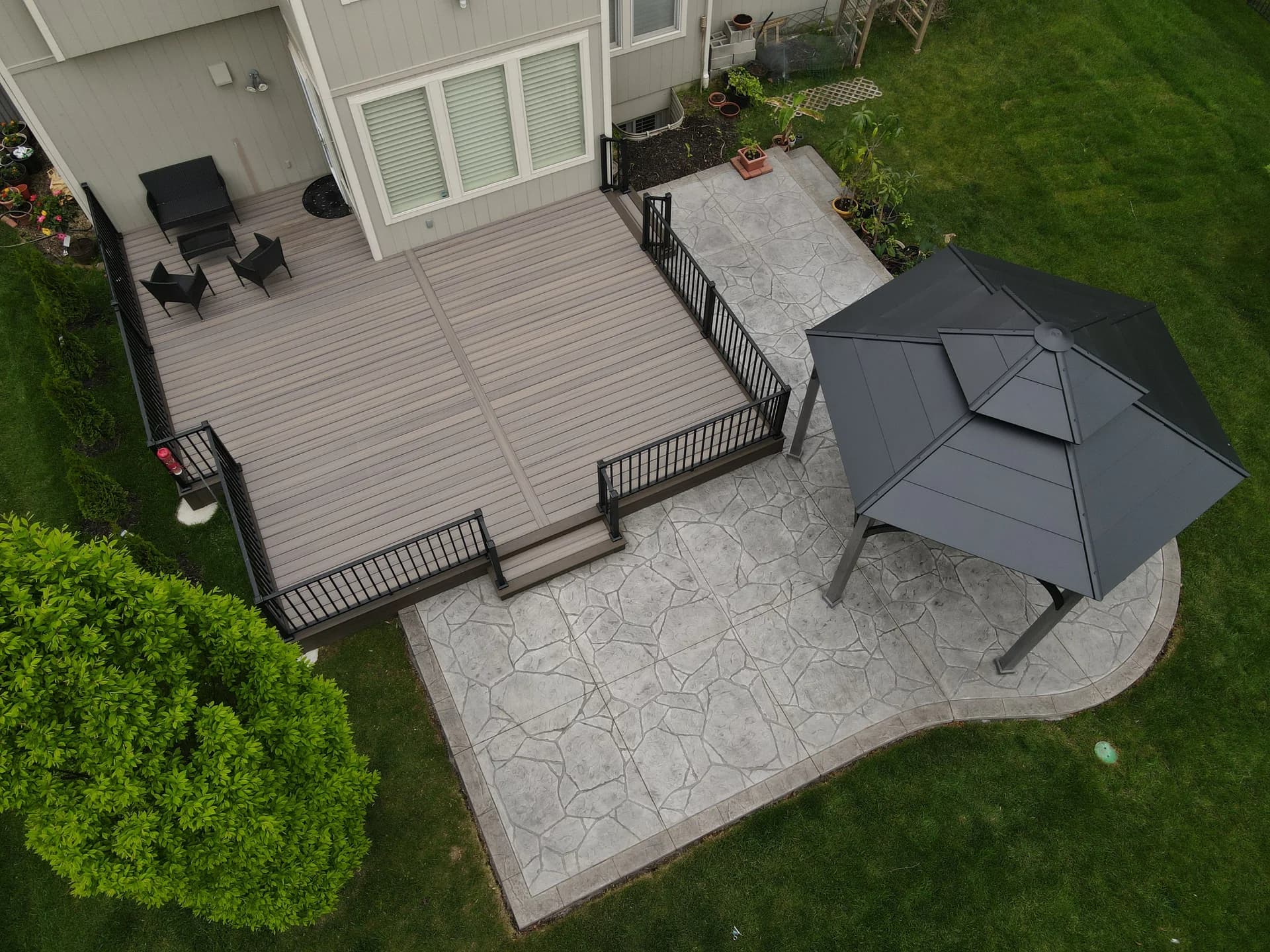
One of the most common questions we hear at deck consultations is: 'How long will this actually last?' It's a fair question — a deck is a significant investment, and the answer varies significantly by material. Here's an honest breakdown of realistic deck lifespans for the specific conditions of North Texas: intense UV exposure, temperature extremes that swing from 15°F to 110°F, clay soil heave, and humidity cycling.
Deck Lifespan by Material in North Texas
| Material | Expected Lifespan (North Texas) | Maintenance Required |
|---|---|---|
| Pressure-treated pine | 15–25 years | Annual cleaning, staining every 2–3 years |
| Western red cedar | 15–20 years | Annual cleaning, staining every 3–5 years |
| Composite (Trex, Fiberon) | 25–40 years | Annual cleaning, no staining |
| TimberTech AZEK (PVC-capped) | 30–50+ years | Annual cleaning, no staining |
| Ipe / hardwood | 25–40 years | Annual oiling, more intensive care |
Why North Texas Is Hard on Decks
Most deck lifespan data comes from national averages that include cooler, more stable climates. North Texas is harder on outdoor wood structures than almost any other region in the country, for three reasons.
First, UV intensity: DFW receives more annual UV radiation than virtually anywhere in the Northeast or Pacific Northwest. UV breaks down wood lignin (the structural polymer that gives wood rigidity), causing surface graying and micro-cracking that accelerates moisture penetration. Wood that would last 25 years in Seattle may last 15 in Dallas.
Second, temperature extremes: the swing from winter lows in the teens to summer highs above 100°F creates expansion and contraction cycles that stress fasteners, board connections, and structural joints. Boards that aren't properly fastened develop movement that leads to raised nails, loosened screws, and eventual structural issues.
Third, clay soil: the same expansive clay that causes fence post heave also affects deck footings and ledger boards. We set deck footings below the active clay layer (24–36 inches minimum) and use appropriate hardware to allow for slight seasonal movement without stress fractures.
Pressure-Treated Wood: What to Expect
Pressure-treated pine is the most affordable deck option and is perfectly suitable for North Texas when properly installed and maintained. The key word is maintained: pressure-treated wood left unsealed in DFW's UV environment will gray, crack, and splinter within 3–5 years. Stained and sealed on a 2–3 year cycle, a well-built PT deck routinely lasts 18–25 years. The structural framing (joists, beams, posts) typically outlasts the decking surface and can often be reused when the surface boards are replaced.
Composite Decking (Trex, Fiberon, TimberTech): The Long Game
Free Estimate
Planning this type of project?
Tell us your scope, city, and timeline. We follow up with clear pricing and next steps — no obligation.
Composite decking — particularly the capped composite products from Trex, Fiberon, and TimberTech — performs dramatically better than wood in North Texas's UV and heat conditions. Capped composite boards have a polymer cap on all four sides that resists UV fade, moisture penetration, and insect damage. Trex Transcend and TimberTech AZEK both carry 25–30 year limited fade and stain warranties.
The practical lifespan in our experience: capped composite decking installed properly on a sound pressure-treated substructure routinely lasts 25–40 years with nothing more than annual cleaning. The surface doesn't need staining, won't splinter, and won't rot. The upfront cost premium of 20–40% over pressure-treated typically pays for itself in eliminated maintenance cycles over 15–20 years.
TimberTech AZEK: The PVC Difference
TimberTech AZEK is a 100% PVC cellular material — no organic wood fiber content whatsoever. It has the best heat and UV stability of any major deck board we install. AZEK runs cooler underfoot than composite in direct Texas sun (meaningful when you're walking barefoot on a July afternoon), doesn't absorb moisture at all, and carries a 30-year warranty. It's the most expensive option and the one with the highest long-term return.
How to Make Any Deck Last Longer in North Texas
- —Seal wood decks at installation — don't wait for the wood to weather before applying the first coat. We seal at installation on every wood deck we build.
- —Use hidden fasteners on composite decks — they eliminate the exposed fastener holes that collect debris and create moisture penetration points.
- —Keep the area under the deck clear — debris accumulation under low-clearance decks traps moisture against the framing.
- —Inspect and tighten ledger board connections annually — the ledger attaches the deck to the house and is the most stress-loaded connection point.
- —Re-coat wood decks on a schedule, not when they look bad — waiting until the wood looks distressed means UV damage has already penetrated below the surface layer.
We bring material samples to every consultation
See and feel the difference between pressure-treated, cedar, Trex Transcend, and TimberTech AZEK in person before you decide. Our quotes include the specific product and grade for every material we specify.
Frequently Asked Questions
Common questions about this topic from DFW homeowners and project planners.
How long does a composite deck last in Texas?
Quality capped composite decking (Trex Transcend, TimberTech AZEK, Fiberon Paramount) lasts 25–40+ years in North Texas conditions. The polymer cap resists UV fade and moisture better than uncapped composite or wood. Both Trex and TimberTech back their premium lines with 25–30 year limited warranties. The pressure-treated substructure typically lasts 25–30 years with proper installation — composite surface boards are expected to outlast the structure in many cases.
Does a composite deck add more value than a wood deck?
At resale, composite decks typically add more value than comparable wood decks, primarily because buyers can see that maintenance has been eliminated. A pressure-treated deck that needs refinishing is a visible maintenance item; a composite deck in good condition is an asset with no near-term costs. In the $400K–$650K DFW market, composite is often specifically requested by buyers in deck-heavy neighborhoods.
How often does a wood deck need to be stained in Texas?
In North Texas's UV-intense climate, a wood deck should be cleaned and re-stained every 2–3 years for pressure-treated pine, and every 3–5 years for cedar. The first coat should be applied at installation — not after the wood weathers. Waiting until the wood shows visible gray and cracking means UV damage has already penetrated beyond the surface and stain will be less effective at restoring protection.
Can a wood deck be converted to composite?
Often yes — if the structural framing (joists, beams, posts, ledger) is in sound condition, the surface boards can be removed and replaced with composite decking boards. We assess the framing at consultation. A structural reboard typically costs 40–60% of a full deck replacement and is worth doing when the substructure has 10+ years of life remaining. We've done many frame-save composite conversions for homeowners in our service area.
About the author
Yelp
i30 Builders Editorial Team
AuthorEditorial and Field Operations
Internal content and field documentation team

Karson Lawrence
Expert ReviewerFounder and Project Lead
Licensed Texas contractor, field project manager