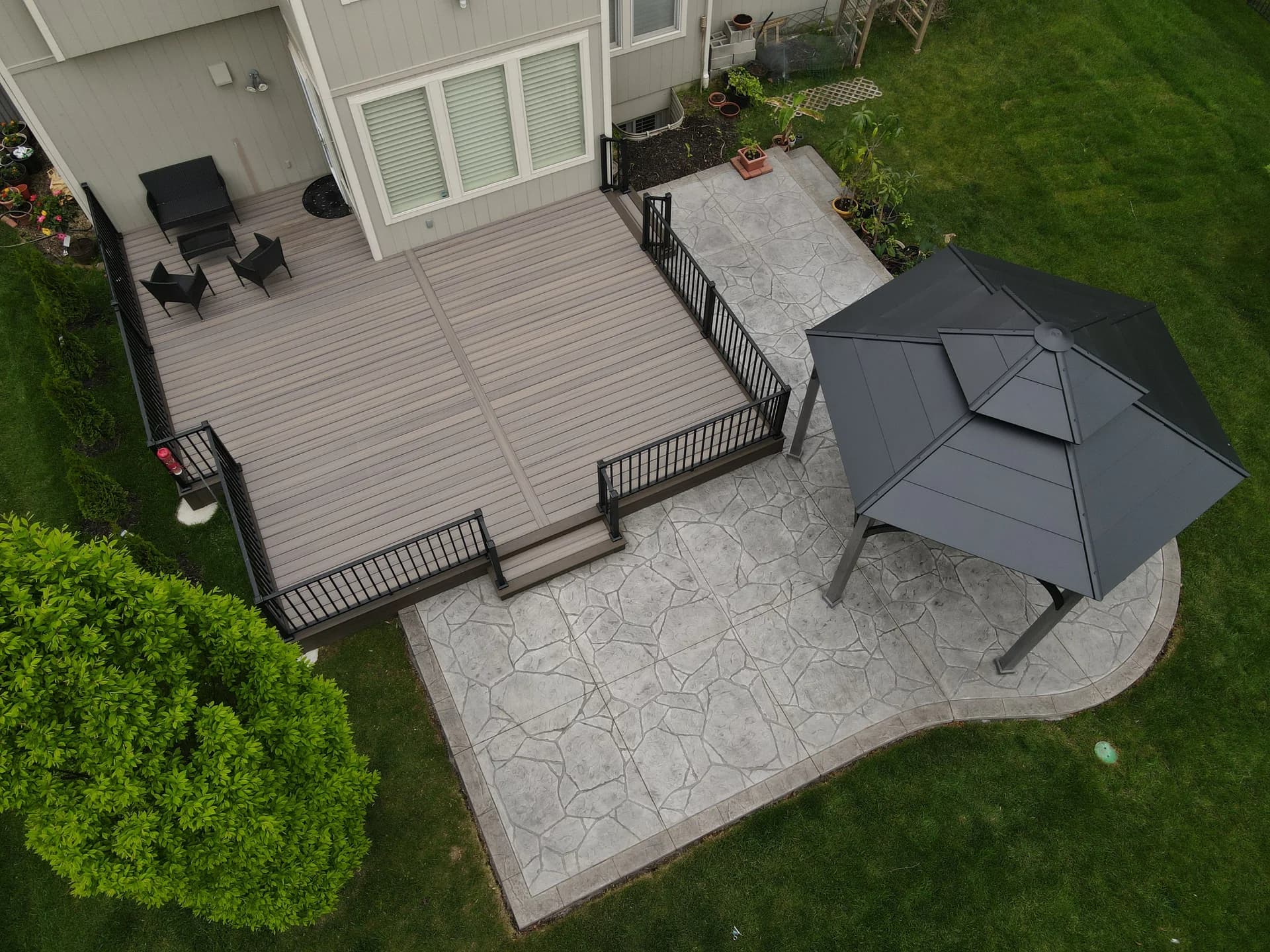
North Texas is one of the most demanding climates for outdoor wood. Summer surface temperatures on an exposed deck can reach 150–160°F. Humidity swings dramatically between spring rains and summer drought. And DFW sits on expansive clay soil that moves seasonally — putting stress on every fastener and board joint in the structure. The material you choose determines how much maintenance your deck requires and how long it looks good doing it.
We build both wood and composite decks across Hunt, Rockwall, Kaufman, and Collin counties. This is an honest comparison based on what we see in the field — not what manufacturers claim on spec sheets.
Pressure-Treated Lumber: The Workhorse
Pressure-treated pine is the most common decking material in North Texas for one reason: it's the most affordable. A 400 sq ft deck in PT lumber runs $14,000–$19,000 versus $24,000–$34,000 for the same deck in composite. For homeowners on a tighter budget or building a deck they plan to replace in 10–15 years, PT lumber is a practical choice.
The performance caveats are significant in our climate. PT lumber needs to be stained and sealed every 1–2 years in Texas, where the UV load is brutal. Skip a year and the boards start checking (developing surface cracks) and the color goes gray. Most homeowners underestimate this ongoing maintenance cost — typically $400–$900 per year for a professional staining job on a mid-sized deck.
PT lumber also moves. It expands in spring rain and contracts in summer heat. Boards installed tight will buckle; boards installed too loose will gap. A good installer accounts for this — but the movement is ongoing, and eventually boards cup, split, or need replacement. Typical lifespan for a well-maintained PT deck in DFW: 12–18 years before boards need replacing. The frame (joists, beams, posts) often outlasts the decking surface.
Cedar: The Middle Ground
Western red cedar is a premium wood option that outperforms PT lumber on almost every metric. It's naturally rot and insect resistant, it's dimensionally stable compared to pine, and it looks significantly better. The smell after a rainstorm is a bonus many homeowners genuinely love.
Cedar costs 30–50% more than PT lumber for the decking boards themselves. It still requires annual or biannual maintenance — staining, sealing — to stay looking sharp. In North Texas specifically, the UV degradation on cedar is faster than in the Pacific Northwest where cedar is most commonly specified. A quality penetrating oil stain every 18 months is non-negotiable if you want to maintain the color.
Cedar lifespan in DFW with proper maintenance: 15–25 years for the decking surface. The trade-off versus composite is mainly upfront cost savings versus long-term maintenance commitment.
Composite Decking: The Long Game
Composite decking — Trex, TimberTech AZEK, Fiberon — is engineered wood fiber and PVC or polyethylene polymer. The best products are capped composites: a solid polymer shell surrounds the composite core, creating a surface that resists moisture, UV, staining, and mold. These are the products we install most frequently for clients who ask for a low-maintenance option.
The honest cons of composite in a Texas climate: composite decking gets hot. Surface temps on a south-facing composite deck at 2 PM in July can reach 130–150°F — similar to PT lumber but more sustained. If you have kids who run barefoot or a dog who lies on the deck, lighter-colored composite boards perform noticeably better. Trex's lighter tones (Gravel Path, Clam Shell) run 20–25°F cooler than dark browns. We always discuss this with clients before specifying color.
Free Estimate
Planning this type of project?
Tell us your scope, city, and timeline. We follow up with clear pricing and next steps — no obligation.
Composite also costs more upfront — typically 60–90% more than PT lumber for the same square footage. The 25-year limited manufacturer warranty on boards like Trex Transcend and TimberTech AZEK partially offsets this. But the real calculation is maintenance cost over time:
| Material | Upfront Cost (400 sq ft) | Annual Maintenance | 10-Year Total |
|---|---|---|---|
| Pressure-Treated | $14,000–$19,000 | $400–$900/yr | $18,000–$28,000 |
| Cedar | $17,000–$24,000 | $400–$800/yr | $21,000–$32,000 |
| Composite (Trex/TimberTech) | $24,000–$34,000 | $0–$100/yr | $24,000–$35,000 |
Over 10 years, the total cost of ownership between a well-maintained wood deck and a composite deck is often within $2,000–$5,000 of each other. Over 15–20 years, composite wins clearly — especially when you factor in that wood decking surfaces typically need partial or full board replacement at year 12–15.
What We Recommend for North Texas Homeowners
If budget is the primary constraint and you're comfortable with annual maintenance, pressure-treated lumber is a legitimate choice. Get the framing in kiln-dried treated lumber (not wet-green), specify #1 grade decking boards, and plan to stain it every 18 months.
If you want a deck that looks good with minimal effort and you plan to be in your home for 10+ years, composite is the better long-term investment. We specify Trex Transcend and TimberTech AZEK Landmark most frequently — both perform well in our climate with proper installation. Choose lighter board colors for decks with significant south or west sun exposure.
Cedar is the right choice for homeowners who love the look and feel of natural wood and are committed to the maintenance schedule. It's a premium wood product and it shows when well-maintained. Don't specify cedar if you're not prepared to restain it every 18 months in DFW.
Not sure which material is right for your project?
We come out, look at your space, discuss how you'll use the deck, and give you an honest recommendation — not just the most expensive option. Free estimates, no pressure.
Frequently Asked Questions
Common questions about this topic from DFW homeowners and project planners.
Does composite decking get too hot to walk on in Texas summers?
Yes, composite (and wood) decks get very hot in direct sun — surface temps can reach 130–150°F on dark-colored boards. Lighter-colored composite boards (grays, light tans) run 20–25°F cooler than dark browns. If you have kids or pets, we recommend either a lighter color palette or adding a pergola for shade over the primary seating area.
How long does composite decking last in Texas?
Quality capped composite like Trex Transcend or TimberTech AZEK carries a 25-year manufacturer warranty and should realistically last 30+ years in Texas with minimal maintenance. The polymer cap resists UV fading, moisture absorption, and the surface cracking (checking) that affects wood in extreme heat cycles.
Is it worth spending more on composite in Texas?
For most DFW homeowners who plan to stay in their home 10+ years, yes. The 10-year total cost of ownership between a maintained wood deck and a composite deck is often within $3,000–$6,000 of each other. Beyond year 10, composite pulls ahead significantly as wood boards begin to need replacement.
What's the best decking material for a pool deck in North Texas?
For pool surrounds, we recommend capped composite decking in a light to medium color. The polymer surface resists pool chemical splash and chlorine exposure better than wood. Light colors keep surface temps more manageable for bare feet. TimberTech AZEK's lighter tones and Trex Transcend's Island Mist and Gravel Path are popular choices for our pool deck builds.
About the author
Yelp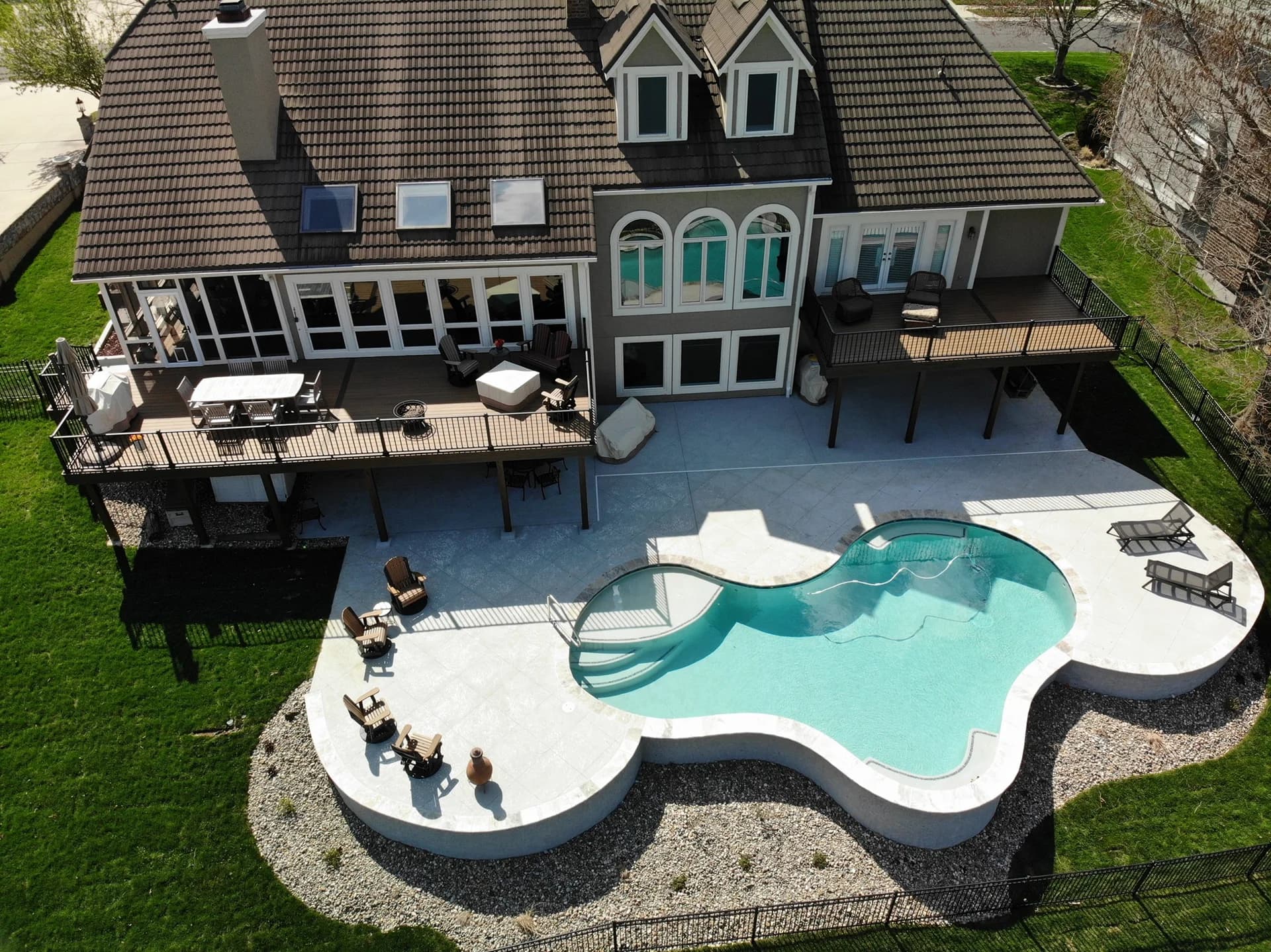
i30 Builders Editorial Team
AuthorEditorial and Field Operations
Internal content and field documentation team

Karson Lawrence
Expert ReviewerFounder and Project Lead
Licensed Texas contractor, field project manager