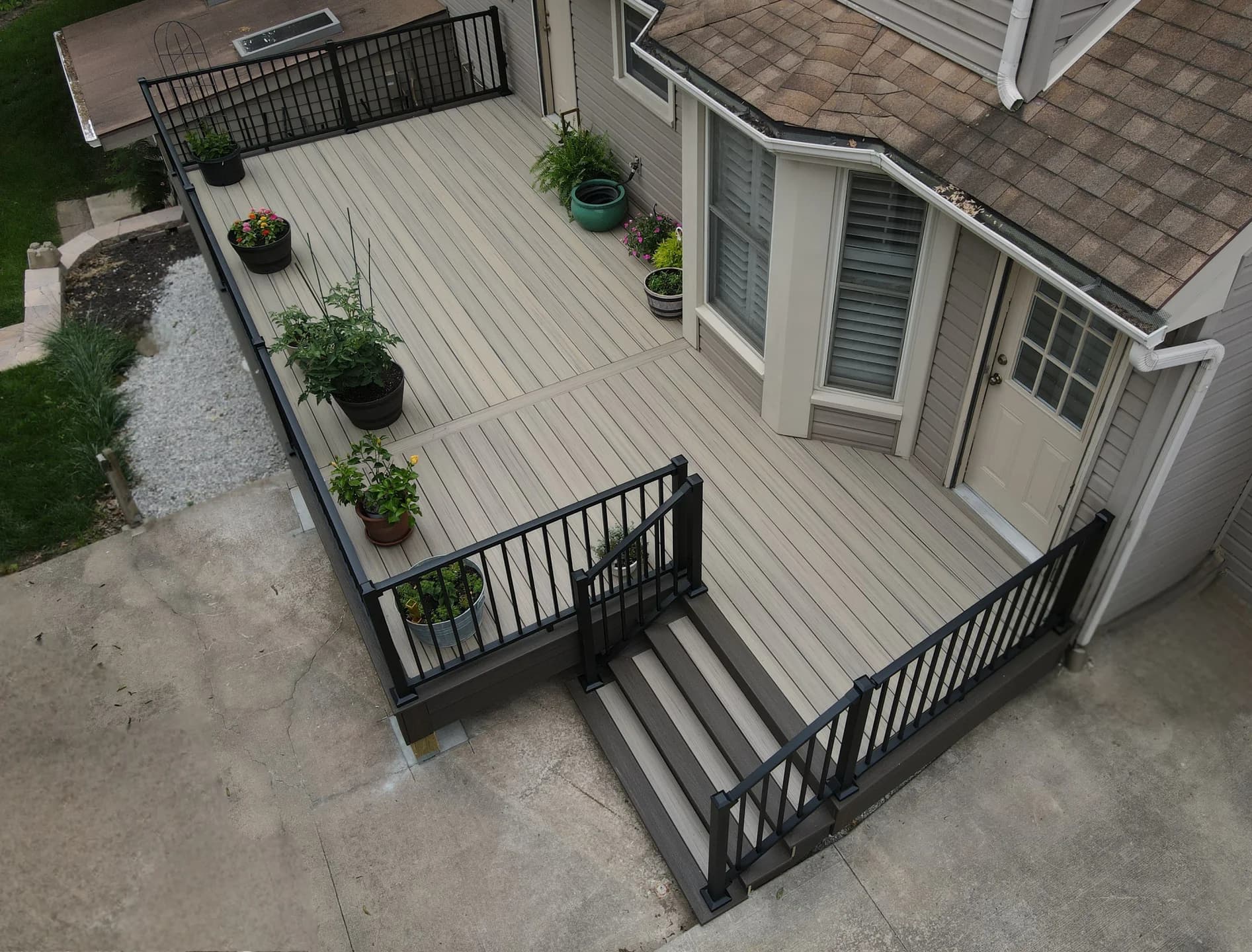
The DFW contractor market is large, competitive, and unfortunately full of unlicensed operators, door-knockers, and low-bid traps that result in failed fences, leaking decks, and permit problems. North Texas homeowners spend billions on outdoor living and home improvement every year, and a meaningful percentage of that goes to contractors who aren't licensed, don't pull permits, and disappear when problems arise. Here are the seven questions that will tell you — before you sign anything — whether the contractor in front of you is worth hiring.
7 Questions That Separate Good DFW Contractors from the Rest
1. Are you licensed with TDLR?
Texas Department of Licensing and Regulation (TDLR) is the state agency that licenses residential contractors in Texas. Any contractor building decks, screen rooms, pergolas, or other structures attached to a home in Texas should be registered. You can verify a contractor's license status directly at tdlr.texas.gov — it takes 60 seconds and will show you whether the license is active, expired, or has complaints against it. A contractor who can't give you their TDLR license number is a contractor who may not have one.
2. Will you pull the permit, or am I responsible for it?
In most DFW cities, building permits for decks, screen rooms, pergolas, and enclosed structures are required by law. When a contractor builds without a permit, two things happen: the work doesn't get inspected (meaning code violations may be hidden), and when you sell the home, an unpermitted structure can become a deal-breaker during the buyer's inspection. We pull all permits and handle all inspections on every project we build — no exceptions, and permit fees are included in our quotes.
3. What's your exact post depth for fence installations?
This question immediately sorts contractors who know North Texas soil from those who don't. The correct answer in DFW clay is a minimum of 36 inches for standard 6-foot fences, with corners and gates at 42 inches. The national standard answer of 24 inches is insufficient for expansive North Texas clay and results in fences that work loose within 4–8 years. Any contractor who gives you a vague or clearly incorrect answer to this question is setting your posts at the wrong depth.
4. Can I see an itemized written quote before signing?
A legitimate contractor should be able to give you a written, itemized quote that breaks down materials, labor, permits, and any subcontracted work as separate line items. A one-page quote that says '$12,000 for a deck' with no detail is a red flag — it means the contractor is giving themselves maximum flexibility to cut costs after you sign. Our quotes are 2–4 pages and include material specifications (board dimensions, material grade, hardware specs), permit fees, and a detailed scope of work.
5. Do you carry general liability and workers' comp insurance?
Ask for a certificate of insurance that names your address. General liability protects your property if the crew causes damage. Workers' comp protects you from liability if a worker is injured on your property — in Texas, workers' comp isn't mandatory for contractors, which means many smaller operators don't carry it. If an uninsured worker is injured on your property, you can be held liable. We carry both general liability and workers' comp insurance and provide certificates on request.
6. Who will actually be on the job site each day?
Free Estimate
Planning this type of project?
Tell us your scope, city, and timeline. We follow up with clear pricing and next steps — no obligation.
Some contractors win jobs and then subcontract the work to crews they don't directly supervise. This isn't always a problem, but it becomes one when quality issues arise and no one takes ownership. Ask whether the people building your project work directly for the company, whether there will be a supervisor on site daily, and how you should communicate project issues if something doesn't look right. We use our own direct crews, and the same lead carpenter who starts your project finishes it.
7. What does your warranty cover?
Get the warranty in writing and understand exactly what it covers. 'We stand behind our work' is not a warranty. You want to know: what is the duration (1 year? 3 years?), what specific defects are covered, what voids the warranty, and what the process is for a warranty claim. Our workmanship warranty is 1 year covering structural integrity, waterproofing, and installation defects — and it's written into every contract.
Red Flags to Watch For
- —Demands large upfront payment before work begins — reputable contractors collect a deposit to schedule and order materials, not a majority of the project cost upfront
- —Gives you a quote over the phone without seeing the project
- —Can't name the specific materials (brand, grade, dimensions) they plan to use
- —Pressures you to sign immediately with a 'today only' price
- —No physical address or business history — check Google, Yelp, and the BBB
- —Door-knocker who 'just happens to be in the neighborhood' — a common approach from unlicensed operators after storms
How to Verify a Texas Contractor License
Go to tdlr.texas.gov and use the license search tool. Enter the contractor's business name or license number. You'll see the license type, issue date, expiration date, and whether any complaints have been filed. This takes 60 seconds and is one of the most important steps in contractor selection that most homeowners skip.
We bring our license, insurance, and references to every consultation
We're happy to answer all seven questions above before you decide. Our certificate of insurance and reference list are on the table at every estimate.
Frequently Asked Questions
Common questions about this topic from DFW homeowners and project planners.
How do I verify a contractor's license in Texas?
Go to tdlr.texas.gov and search by business name or license number. The search shows license status (active, expired, suspended), issue and expiration dates, and any complaints filed. For construction-related work in Texas, look for a Residential General Contractor or Residential Remodeler registration. Always verify before you sign.
Do I need a permit for a deck or fence in DFW?
For most structural work — decks, screen rooms, covered patios, pergolas attached to the house — yes, a building permit is required in DFW cities. Fences generally require permits for commercial work and may or may not require them for residential work depending on the city. We determine permit requirements at consultation and handle all applications. Never build without a permit — unpermitted work can require demolition or create problems at sale.
What's a reasonable deposit for a remodeling project in Texas?
A deposit of 10–30% to secure your start date and order materials is standard and reasonable. Be very cautious of any contractor who requires 50% or more upfront before work begins — this is a red flag for financial instability or intent to cut scope. We collect a documented deposit to schedule and order materials, with payment structured to match actual project progress.
How many quotes should I get for a deck or fence project?
We recommend getting two or three quotes for any project over $8,000. The goal isn't to find the lowest price — it's to understand the scope of what's included. When comparing quotes, look for: same materials (cedar grade, composite product, hardware specs), same post depth for fences, same permit inclusion. A quote that's 30% lower than two others usually means something is different about what's being built.
About the author
Yelp
i30 Builders Editorial Team
AuthorEditorial and Field Operations
Internal content and field documentation team

Karson Lawrence
Expert ReviewerFounder and Project Lead
Licensed Texas contractor, field project manager