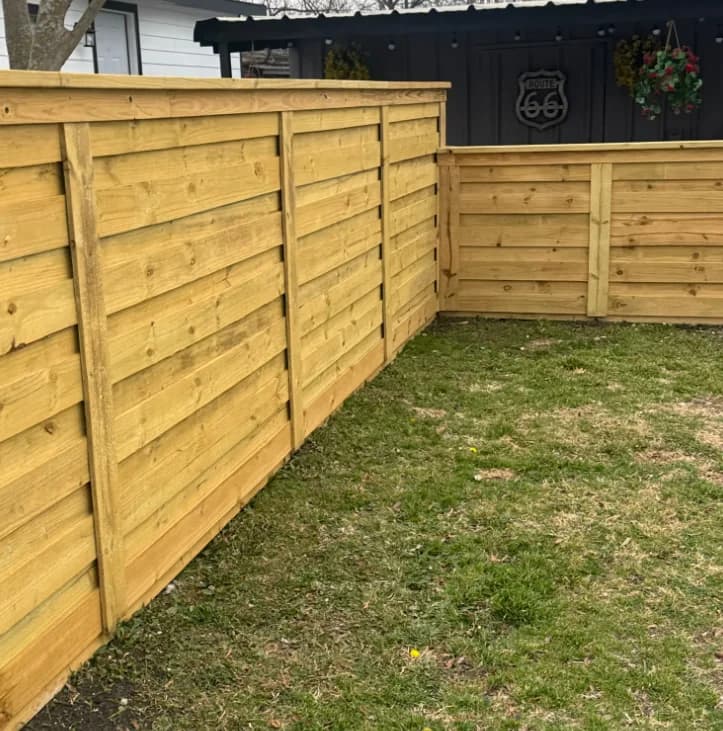
The average privacy fence in DFW costs between $4,500 and $9,000 for a standard residential lot. A simple 150-linear-foot cedar shadowbox fence typically runs $4,500–$6,500. A larger lot with 250+ linear feet, significant grade changes, or premium materials will push into the $9,000–$18,000 range. Pool fencing, wrought iron, and ornamental aluminum are priced differently and we cover those separately.
Fence pricing in North Texas is shaped by factors most homeowners don't anticipate — clay soil, permit requirements, HOA approvals, and the difference in labor between a flat suburban lot and a sloped or rocky property. Here's a complete breakdown.
Fence Cost by Material in DFW
| Material | Per Linear Foot | 200 LF Total | Lifespan |
|---|---|---|---|
| Cedar (dog-ear) | $22–$32 | $4,400–$6,400 | 10–15 years |
| Cedar (shadowbox) | $26–$38 | $5,200–$7,600 | 12–18 years |
| Cedar (horizontal slat) | $34–$52 | $6,800–$10,400 | 12–18 years |
| Pressure-Treated Pine | $18–$28 | $3,600–$5,600 | 8–12 years |
| Composite (vinyl/wood blend) | $38–$60 | $7,600–$12,000 | 20–25 years |
| Wrought Iron / Steel | $55–$90 | $11,000–$18,000 | 30+ years |
| Ornamental Aluminum | $48–$75 | $9,600–$15,000 | 25+ years |
These per-linear-foot prices include posts, concrete, pickets or panels, rails, and installation. They do not include gate hardware, demolition of an existing fence, or permit fees. Gates typically add $350–$800 each for a standard single gate or $600–$1,400 for a double drive gate.
The North Texas Clay Soil Factor
This is the most important thing to understand about fence pricing in DFW — and the single biggest reason fences fail prematurely in our area. Hunt, Rockwall, and Kaufman counties sit on some of the most expansive clay soil in Texas. When it rains heavily, the clay swells significantly. When summer drought hits, it contracts and shrinks away from fence posts.
A post set 24 inches deep in standard concrete — which is the common national practice — will work loose in North Texas clay in 3–7 years. You'll see the fence lean, posts rock, and panels pull away from horizontal rails. We set 4x4 fence posts 36–42 inches deep in concrete in our primary service area. Yes, this uses more concrete and takes more labor. It also means your fence stays plumb and solid for 12–18 years instead of failing in year 5.
This deeper footing adds approximately $1.50–$3.00 per linear foot to the total cost compared to contractors who use standard-depth installations. If you're getting quotes that are significantly lower than the ranges above, ask specifically what depth the posts will be set. That's where corners get cut.
Permit Requirements for Fences in DFW
Fence permit requirements vary significantly across the DFW metroplex. Some municipalities require permits for any fence over 4 feet in height; others have minimum-length thresholds; some have no fence permit requirement at all for residential properties. A few key examples:
Free Estimate
Planning this type of project?
Tell us your scope, city, and timeline. We follow up with clear pricing and next steps — no obligation.
- —City of Rockwall: Permit required for fences over 6 feet high or over 200 linear feet in most zones. $75–$175 fee.
- —Hunt County (unincorporated): No county-level fence permit required for most residential fences under 8 feet.
- —City of Royse City: Permit required for privacy fences over 6 feet. $50–$125 fee.
- —City of Greenville: Permit required. Must meet setback requirements from property line.
- —ETJ Properties: Rules depend on whether you're in a city's extraterritorial jurisdiction — some have city rules, some county rules. We verify this before pulling any permit.
HOA Fence Restrictions in DFW
If your neighborhood has an HOA, the HOA rules layer on top of city permit requirements. Most DFW HOAs specify: maximum fence height (usually 6 feet), approved materials (many restrict to cedar or approved composite — no chain link on side or back yards), approved colors and stain shades, and setback distances from property lines and corner lots. Some HOAs, particularly in planned communities in Rockwall and McKinney, prohibit horizontal slat fences or require pickets to face out (shadowbox style).
We submit design packets to HOA architectural control committees on behalf of our clients. We know what each HOA in our service area requires and design accordingly. This prevents the most common and costly outcome: building a fence that gets rejected and must be modified at your expense.
How Long Does Fence Installation Take?
Once permits are approved and materials are staged, most residential privacy fences install in 1–3 days. A 200-linear-foot cedar fence on a flat lot typically takes 1–2 days. Larger properties, significant grade changes, or tight access situations take longer. The pre-construction process — permitting, HOA approval, material lead times — typically adds 2–6 weeks before the crew arrives.
Get an itemized fence estimate — not a vague number
Every i30 Builders fence quote breaks down materials, posts, concrete, labor, gates, and permit fees separately. You'll know exactly what you're paying for before you commit.
Frequently Asked Questions
Common questions about this topic from DFW homeowners and project planners.
How much does a 6-foot privacy fence cost in DFW?
A standard 6-foot cedar shadowbox fence in DFW costs $26–$38 per linear foot installed, including posts set in concrete, rails, and cedar pickets. A 150-foot fence (typical for a suburban lot) runs $3,900–$5,700. A 200-foot fence runs $5,200–$7,600. Prices vary based on grade changes, gate count, and permit requirements.
Do fence posts need to be deeper in North Texas?
Yes. Hunt, Rockwall, and Kaufman counties have expansive montmorillonite clay that heaves fence posts set at standard 24-inch depth. We set posts 36–42 inches deep in our primary service area. This adds cost upfront but prevents the leaning, rocking fence posts that are common in DFW neighborhoods 4–6 years after a fence goes in.
How long does a cedar fence last in Texas?
A properly installed cedar fence with quality posts set in deep concrete footings lasts 12–18 years in DFW before boards need replacing. The rails and posts often outlast the pickets by several years. Annual or biannual staining and sealing extends board life. Lower-quality cedar (knotty grades) will start splitting and checking in 5–8 years.
Does my HOA need to approve my fence before I build it?
If your neighborhood has an HOA, yes — in virtually all cases you need Architectural Control Committee (ACC) approval before building any fence. Building without approval can result in fines and mandatory removal at your expense. We submit HOA design packets with full specifications, dimensions, and material samples and have a high first-submission approval rate across our service area.
About the author
Yelp
i30 Builders Editorial Team
AuthorEditorial and Field Operations
Internal content and field documentation team

Karson Lawrence
Expert ReviewerFounder and Project Lead
Licensed Texas contractor, field project manager